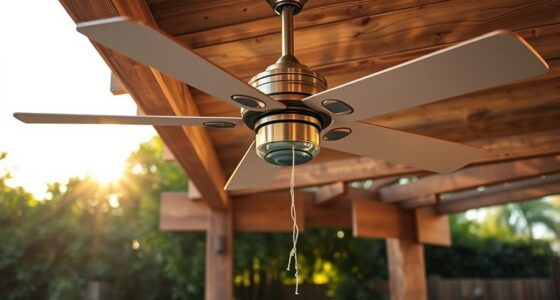

Installing GFCI outlets for outdoor fans is a smart safety upgrade that protects you from electrical shocks caused by ground faults. To do this, turn off the power, follow the manufacturer’s instructions, and make certain the outlet is weatherproof with proper wiring and enclosure materials. Proper placement and regular testing are key to maintaining safety. Keep your outdoor space secure and functional—there’s more to know if you want to do it right.
Key Takeaways
- Turn off power at the breaker before installing the GFCI outlet to ensure safety.
- Use weatherproof, outdoor-rated GFCI outlets with waterproof covers to withstand environmental elements.
- Follow manufacturer instructions carefully to correctly wire the GFCI and connect grounding for safety.
- Install the GFCI outlet at accessible, strategic outdoor locations near fans, ensuring proper enclosure protection.
- Regularly test the GFCI using the built-in test button and inspect for environmental damage to maintain safety.

Are your electrical systems ready to handle modern demands? Upgrading your home’s electrical setup is vital to guarantee safety and functionality, especially when it comes to outdoor wiring. Installing GFCI outlets for outdoor fans isn’t just about convenience; it’s a critical step in protecting yourself and your family from electrical hazards. GFCI outlets are designed to detect ground faults and shut off power immediately, reducing the risk of electric shock. If you haven’t already, it’s wise to replace standard outdoor outlets with GFCI versions to enhance circuit safety. This upgrade is simple but highly effective, providing peace of mind during outdoor activities or when using electrical devices outside.
Upgrading to GFCI outlets enhances outdoor safety and protects your family from electrical hazards.
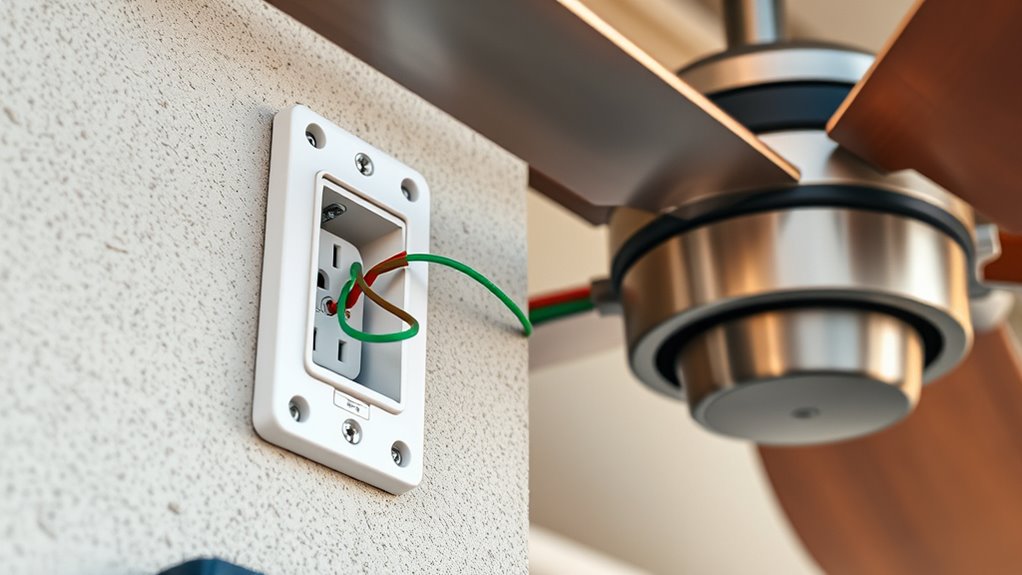
When considering outdoor wiring, always prioritize safety and compliance with local electrical codes. Proper outdoor wiring involves using weather-resistant materials that can withstand the elements, such as UV protection and waterproof covers. This prevents moisture from entering the wiring system, which could cause shorts or corrosion over time. Before installing GFCI outlets, turn off the power at the breaker and double-check that the circuit is de-energized. This guarantees you avoid accidental shocks during installation. Connecting the GFCI outlet correctly is essential; follow the manufacturer’s instructions carefully, making sure the grounding wire is properly attached to maintain circuit safety. Ensuring your outdoor wiring is compliant with electrical safety standards is crucial for long-term durability and safety.
Think about where you want your outdoor fans and how accessible the outlets are. Installing GFCI outlets at strategic locations not only improves safety but also makes it easier to enjoy your outdoor spaces without worry. Remember, outdoor wiring must be done with weatherproof enclosures and covers that keep out dirt, debris, and water. When mounting the GFCI, ensure it’s securely fixed and that the wiring is neat and protected from environmental damage. Also, consider installing a circuit breaker dedicated to outdoor outlets, which adds an extra layer of safety in case of electrical faults.
Finally, don’t forget to test your GFCI outlets regularly. Most units have a built-in test button—use it monthly to confirm they’re functioning properly. If the outlet trips or doesn’t reset, have a qualified electrician inspect the system. Performing these upgrades not only enhances circuit safety but also guarantees your outdoor wiring is robust enough to handle current and future outdoor fans or devices. Upgrading your electrical system in this way makes your outdoor spaces safer and more enjoyable, giving you confidence that your wiring is up to modern standards and ready for any outdoor activity.
Frequently Asked Questions
Can GFCI Outlets Be Used With All Outdoor Fans?
You might wonder if GFCI outlets can be used with all outdoor fans. Generally, GFCI outlets are compatible with most outdoor fan setups, but you should check the outdoor fan’s electrical requirements and compatibility. Keep in mind GFCI outlet limitations, such as potential nuisance tripping or voltage issues. Always verify the outdoor fan’s specifications and consult local electrical codes to guarantee safe, proper use with GFCI outlets.
How Often Should GFCI Outlets Be Tested and Replaced?
Think of GFCI outlets as vigilant guardians of your outdoor space. You should test them monthly to verify they’re alert and functioning properly, much like checking your security system. Follow the replacement guidelines, typically every 10 years or if they trip repeatedly. Regular testing and timely replacement keep your outdoor fans safe, preventing shocks or electrical hazards. Stay proactive, and your outdoor oasis remains both beautiful and secure.
Are There Specific Outdoor Fan Models Compatible With GFCI Outlets?
When choosing an outdoor fan, you’ll want to guarantee it’s compatible with GFCI outlets for outdoor fan safety. Most modern outdoor fans are designed with GFCI compatibility in mind, but always check the product specifications. Look for models labeled as weather-resistant or outdoor-rated, as they typically support GFCI outlets. Ensuring compatibility helps prevent electrical hazards, keeping you safe while enjoying your outdoor space.
Do GFCI Outlets Require Special Wiring or Grounding?
GFCI outlets generally don’t require special wiring or grounding requirements beyond standard electrical codes. You do need to make certain wiring compatibility, like using the correct gauge wire and proper connections, to guarantee safety and functionality. Grounding is essential for overall safety, but GFCI outlets themselves provide protection without needing additional grounding in most outdoor installations. Always follow local electrical codes and consult a professional if you’re unsure.
Can I Install GFCI Outlets Myself Without Professional Help?
Thinking about tackling DIY installation of GFCI outlets? While it might seem straightforward, electrical safety is essential. If you’re comfortable working with wiring and understand local codes, you could attempt it, but if you’re unsure, it’s wise to seek professional help. Proper installation ensures safety and reliable operation, especially for outdoor fans. Remember, taking shortcuts might save time now but could pose risks later.
Conclusion
By upgrading to GFCI outlets for your outdoor fans, you’re planting a sturdy shield in your home’s electrical garden. Think of these outlets as vigilant guardians, ready to spring into action at the first sign of trouble. With this simple upgrade, you’re not just installing a device—you’re sowing peace of mind and reaping a safer, more vibrant outdoor space. Protect your sanctuary and let your outdoor fans dance freely under the watchful eye of safety.