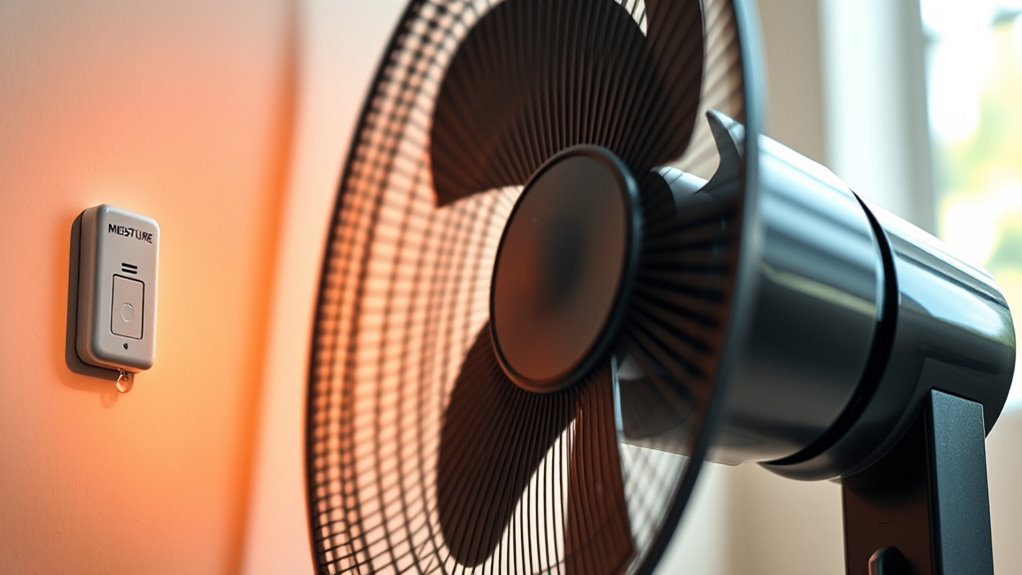

To prevent mold growth around fans, you should regularly monitor moisture levels with a hygrometer in areas like bathrooms or basements. Keep humidity between 30% and 50%, and adjust ventilation or use a dehumidifier if levels rise. Proper fan placement promotes good airflow and helps moisture evaporate. Maintaining clean fans and controlling humidity are key steps. Keep going to learn more about effective strategies for moisture control and mold prevention.

Get garden gear delivered free with Prime
- Fast, free delivery on millions of items
- Prime Video, Amazon Music and more included
- Member-only deals all year
Key Takeaways
- Use hygrometers near fans to regularly measure humidity levels and detect excess moisture early.
- Position fans in well-ventilated areas and avoid direct contact with damp surfaces to promote airflow and reduce moisture buildup.
- Maintain indoor humidity between 30-50% to create an environment less conducive to mold growth around fans.
- Increase ventilation or employ dehumidifiers if humidity exceeds recommended levels around fan zones.
- Keep fans clean and free of dust and mold spores to prevent spreading moisture and mold in the vicinity.

If you want to prevent mold growth around fans, monitoring moisture levels is vital. Mold thrives in damp environments, and even small amounts of excess moisture can create the perfect conditions for it to develop. To effectively manage this, you need to focus on humidity control and strategic fan placement. Keeping indoor humidity levels in check is your first line of defense. Ideally, aim for a humidity level between 30% and 50%. Using a hygrometer can help you keep an eye on these levels, allowing you to make adjustments as needed. If the air feels damp or you notice condensation on windows, it’s a clear sign that humidity control should be prioritized.
Monitoring moisture levels is essential to prevent mold growth around fans and in your home.
When it comes to fan placement, you want to position your fans in a way that promotes good airflow without creating pockets of moisture. Fans should be placed in areas prone to dampness, such as bathrooms, kitchens, or basements, but not directly against walls or in corners where air circulation can be restricted. Proper placement ensures that moisture doesn’t gather in hidden spots, reducing the risk of mold growth. Additionally, avoid directing fans toward damp surfaces, as this can increase localized humidity and foster mold growth. Instead, position fans to improve overall air circulation, helping moisture evaporate and disperse evenly throughout the space.
Maintaining the right balance between humidity control and fan placement involves regular monitoring. Check your hygrometer frequently, especially during humid weather or after activities like showering or cooking. If you notice humidity levels rising above the recommended range, use dehumidifiers or increase ventilation to bring the moisture down. Proper fan placement can also support this process by preventing stagnant air, which tends to trap moisture. When fans are correctly placed, they don’t just improve comfort—they actively work against mold by reducing dampness.
Furthermore, integrating smart sensors that monitor humidity and temperature can automate moisture control efforts, making mold prevention more effective and less labor-intensive. Maintaining clean fans regularly is also essential, as dust, dirt, and mold spores can accumulate on fan blades, spreading spores into the air if not cleaned properly. This can contribute to mold growth nearby or in the ducts. By maintaining clean fans and keeping an eye on moisture levels, you create a less hospitable environment for mold. Remember, mold prevention is a continuous process that hinges on consistent moisture management and thoughtful fan placement. When you stay attentive to these factors, you substantially cut down the risk of mold developing around your fans and in your home overall.
digital hygrometer for humidity monitoring
As an affiliate, we earn on qualifying purchases.
As an affiliate, we earn on qualifying purchases.
Frequently Asked Questions
How Often Should Moisture Levels Be Checked Around Fans?
You should check humidity monitoring around fans regularly, ideally once a week, to prevent mold. Proper fan placement helps reduce moisture buildup, but consistent monitoring ensures moisture levels stay low. If you notice any humidity spikes, increase the frequency of checks. Keep an eye on your environment and adjust your fan use or ventilation as needed to maintain ideal humidity levels and prevent mold growth.
What Are the Signs of Mold Growth Caused by High Moisture?
Spotting signs of mold growth means spotting suspicious symptoms like a mold smell and discoloration spots. You’ll notice a musty, moldy odor that lingers, hinting at hidden trouble. Discoloration spots may appear on walls, ceilings, or near fans, signaling moisture buildup. If you see these signs, don’t delay—address the moisture issue promptly to prevent mold from multiplying and causing health hazards. Stay vigilant for visible and olfactory clues.
Can Low Humidity Levels Cause Other Indoor Air Quality Issues?
Low humidity levels can cause indoor air quality issues like dry skin, irritated eyes, and breathing discomfort. To prevent these problems, you should focus on dehumidifier maintenance and ventilation improvement. Properly maintained dehumidifiers help keep humidity balanced, while good ventilation ensures fresh air circulates. Together, these steps create a healthier environment, reducing discomfort and promoting better overall air quality inside your home.
Are There Specific Fan Types More Prone to Mold Issues?
Certain fan designs are more prone to mold issues because of their moisture absorption and airflow patterns. Fans with poor ventilation or those placed directly in damp areas tend to trap moisture, creating ideal mold growth conditions. Look for fans with smooth surfaces and good drainage, and avoid designs that retain water or have crevices. Proper maintenance and placement help reduce mold risk, ensuring your indoor air stays clean and healthy.
What Are Effective Ways to Reduce Moisture Around Fans?
To reduce moisture around fans, you should consider dehumidifier installation to lower humidity levels effectively. Ventilation improvements, like adding exhaust fans or ensuring proper airflow, help keep moisture from accumulating. Regularly cleaning fans and maintaining a dry environment also prevent mold growth. These steps work together to create a less humid space, protecting your home from mold issues caused by excess moisture.
dehumidifier for basement and bathroom
As an affiliate, we earn on qualifying purchases.
As an affiliate, we earn on qualifying purchases.
Conclusion
Monitoring moisture levels around your fans is key to preventing mold growth. Did you know that indoor moisture levels above 60% markedly increase mold risk? By regularly checking humidity and ensuring proper ventilation, you can keep moisture in check and protect your home’s health. Staying proactive with these simple steps helps you avoid costly mold removal and maintains a healthier living environment. Keep an eye on moisture, and mold won’t stand a chance.
air circulation fan for mold prevention
As an affiliate, we earn on qualifying purchases.
As an affiliate, we earn on qualifying purchases.
As an affiliate, we earn on qualifying purchases.
Fall yard work Picks
leaf blowers
As an affiliate, we earn on qualifying purchases.