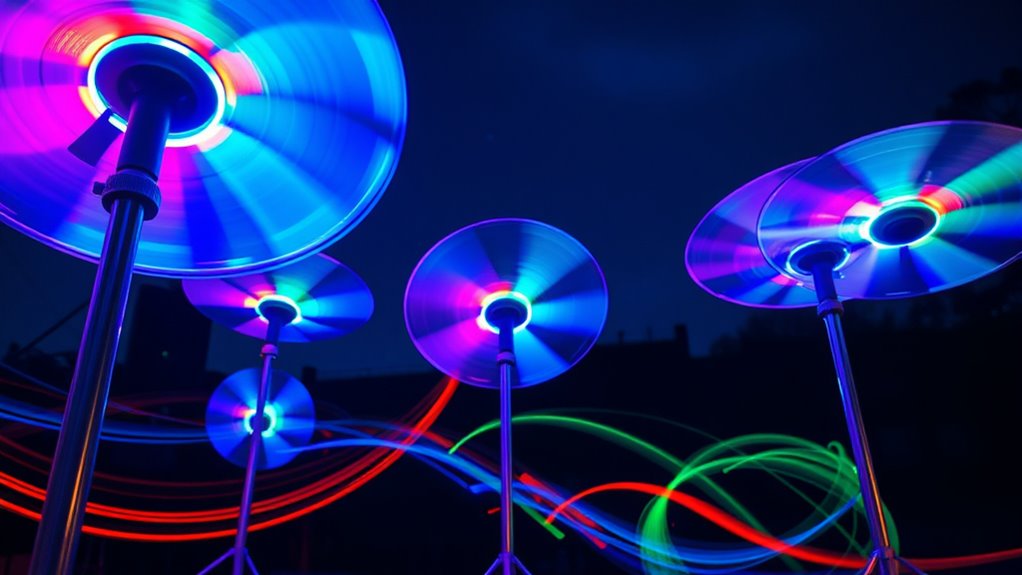

To create interactive light shows with LED fans and outdoor speakers, you’ll want to synchronize your lighting with music using a custom controller, like an Arduino or Raspberry Pi. Connect your audio sources to the system and program your lights to respond to beats, bass drops, or melodies for a dynamic display. Experimenting with different effects and adjustable sensitivity settings can enhance the experience. Keep exploring how you can combine these elements for mesmerizing outdoor events and more.
Key Takeaways
- Use microcontrollers like Arduino or Raspberry Pi to synchronize LED fans with music for dynamic light shows.
- Connect outdoor speakers to audio sources and program lighting responses based on sound signals and beats.
- Customize lighting patterns and sensitivity settings to match the mood and enhance audience engagement.
- Follow tutorials and open-source projects to build and program DIY controllers for seamless integration.
- Combine audio-reactive lighting with outdoor setups to create immersive, memorable visual experiences at events.

Creating interactive light shows allows you to transform ordinary spaces into dynamic, immersive experiences. When you sync your LED fans with music, you can craft mesmerizing displays that respond directly to the rhythm and energy of any soundtrack. This level of synchronization makes your lighting not just decorative but an integral part of the atmosphere, whether you’re hosting a party or setting up an outdoor event. To achieve this, you’ll need to focus on music synchronization, which involves programming your LED fans to change colors, patterns, or intensities in time with the beats and melodies. The key is understanding how to connect your audio source to your lighting system, often through a computer or a microcontroller that interprets sound signals. Once you get this setup right, every bass drop or snare hit energizes the lights, creating an interactive visual experience that enthralls your audience.
If you’re interested in customizing your setup further, DIY controller design becomes an exciting avenue. Instead of relying solely on commercial controllers, you can build your own, tailoring features to match your specific vision. This involves selecting microcontrollers like Arduino or Raspberry Pi, which serve as the brain of your system. You’ll learn to program these controllers to process sound inputs and send signals to your LED fans, dictating how they respond to music. Designing your controller also gives you the flexibility to incorporate additional controls, such as remote operation, adjustable sensitivity, or custom lighting patterns. By building your own controller, you gain a deeper understanding of the technical aspects and enjoy the satisfaction of creating a truly unique system. Additionally, understanding how to integrate lighting synchronization with your audio setup ensures a seamless and captivating show. Getting started with DIY controller design may seem intimidating at first, but countless tutorials and open-source projects make it manageable. You’ll need basic electronic components, some programming knowledge, and a bit of patience. Once assembled, you can integrate your controller with existing music playback devices or even set up standalone systems that react to live music or pre-recorded tracks. The process allows you to experiment with different lighting effects and synchronization techniques, giving you full creative control. With a well-designed DIY controller, your LED fans will respond seamlessly to whatever music you play, making your outdoor shows more engaging. Combining music synchronization with custom controller design empowers you to craft truly interactive light displays that leave lasting impressions and elevate any outdoor gathering.
Frequently Asked Questions
What Safety Precautions Are Needed for Outdoor LED Fan Setups?
To guarantee safety, you should prioritize electrical safety by using weatherproofing measures like waterproof connectors and enclosures for your outdoor LED fan setup. Always check that all electrical components are rated for outdoor use and properly grounded. Keep cables organized and away from water or foot traffic. Additionally, avoid overloading circuits and unplug devices during storms or bad weather to prevent electrical hazards. These precautions protect both your equipment and your safety.
How Do Weather Conditions Affect Outdoor Speaker Performance?
Weather impact can critically affect your outdoor speaker performance. Rain resistance is essential; if your speakers aren’t weatherproof, rain can cause damage or malfunctions. Extreme temperatures, wind, and humidity also influence sound quality and equipment durability. To guarantee ideal performance, use weather-resistant speakers, avoid exposing them to harsh conditions, and consider protective covers. Regular maintenance helps prevent weather-related issues, keeping your outdoor sound system dependable and enjoyable.
Can These Light Shows Be Synchronized With Live Music?
Imagine conducting an orchestra where each instrument aligns perfectly with the conductor’s baton. You can achieve this with your light show by enabling music synchronization, seamlessly integrating your LED fans with live performance. This setup allows your visuals to dance in harmony with the music, creating an immersive experience. With precise timing, your light displays respond instantly to live music cues, elevating your outdoor event’s impact and engaging your audience fully.
What Are the Best Power Sources for Prolonged Outdoor Displays?
You should consider battery options like high-capacity portable power stations or deep-cycle batteries, which provide reliable, long-lasting energy for extended outdoor displays. Solar power is also a great choice; it’s eco-friendly and can continuously recharge during the day, reducing the need for frequent replacements. Combining solar panels with battery storage offers a sustainable, independent power source, ensuring your light show runs smoothly even in remote locations.
Are There Any Legal Restrictions on Outdoor Noise and Light Shows?
You should be aware that noise ordinances and permit requirements can influence your outdoor light and sound displays. Local regulations often set quiet hours and sound level limits, so your show remains enjoyable without disturbing neighbors. Before you start, check with local authorities to understand any restrictions. Securing necessary permits guarantees your event stays compliant, avoiding potential fines or disruptions, and keeps your vibrant display shining smoothly through the night.
Conclusion
By combining LED fans and outdoor speakers, you create mesmerizing, interactive light shows that impress any audience. Did you know that over 70% of event attendees say they feel more engaged with visually dynamic displays? With just a bit of creativity and tech know-how, you can transform any space into an unforgettable experience. So, go ahead—start experimenting, and watch your light shows come alive, captivating everyone and elevating your outdoor entertainment to new heights.