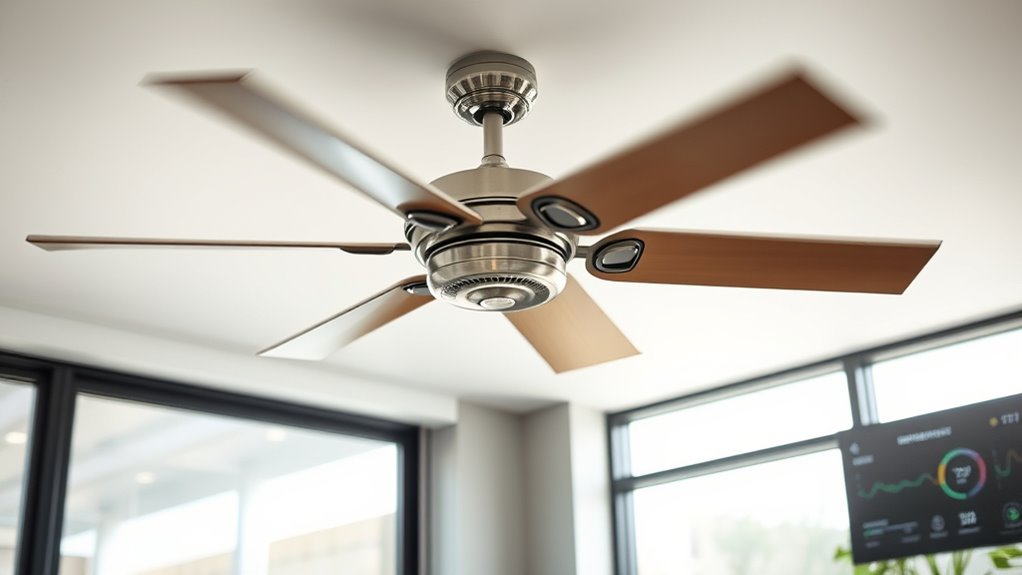

By using smart fan scheduling and adaptive speed controls, you can cut your energy bills while maintaining comfort. These systems automatically adjust fan speeds based on room conditions or occupancy, ensuring airflow is efficient and waste is minimized. This not only reduces unnecessary energy use but also promotes a more sustainable environment. To discover how these methods can transform your energy savings and indoor climate, explore the details below.
Key Takeaways
- Smart fan scheduling aligns operation times with occupancy to minimize energy use during inactive periods.
- Adaptive speed control adjusts fan speeds dynamically based on room temperature and airflow needs.
- Targeted airflow regulation prevents over-ventilating, reducing unnecessary energy consumption.
- Lower fan speeds during low demand decrease power usage and noise, enhancing comfort and efficiency.
- Integration with sensors and weather data allows proactive adjustments, optimizing energy savings over time.
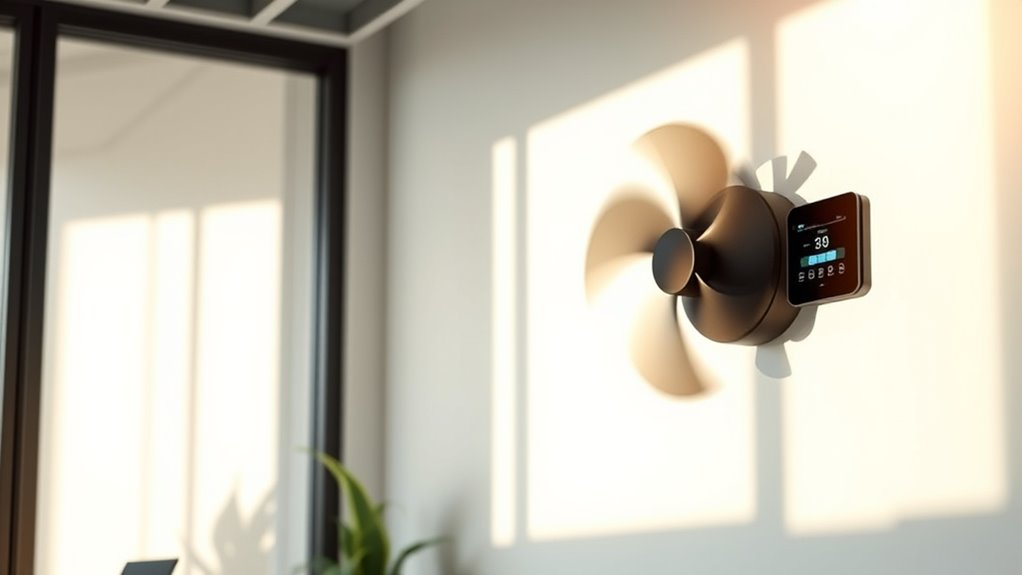
Using smart fan scheduling and adaptive speed control can considerably reduce energy consumption in your home or workplace. When you enhance how and when your fans operate, you not only save on electricity but also elevate overall ventilation efficiency. Instead of leaving fans running at full speed all day, smart systems adjust their operation based on real-time demand, ensuring airflow is delivered only when necessary. This targeted approach prevents unnecessary energy waste and promotes a more sustainable environment.
With adaptive speed control, your fans automatically modify their speed according to current conditions. For instance, if a room reaches a comfortable temperature or airflow needs decrease, the fan slows down, conserving power. Conversely, when more ventilation is required—say, during peak heat hours or when multiple people occupy the space—the fan ramps up to provide adequate airflow. This dynamic adjustment maintains comfort while markedly reducing energy consumption, making your system more efficient overall.
One of the key benefits of these smart systems is improved ventilation efficiency. By precisely regulating airflow, they eliminate over-ventilating spaces, which often results in wasted energy. Instead, you achieve ideal air exchange with minimal power usage. This precision not only enhances indoor air quality but also reduces the strain on your HVAC system, leading to lower utility bills and a smaller carbon footprint.
Another advantage is noise reduction. Traditional fans often operate at a constant high speed, creating unnecessary noise even when full power isn’t needed. Smart fan scheduling and adaptive speed controls help quieten your environment by lowering fan speeds when less airflow is sufficient. This results in a more peaceful atmosphere, especially during nighttime or work hours when noise can be disruptive. Reduced noise levels also mean less disturbance, enabling you to focus, relax, or sleep more comfortably.
Implementing these smart controls is straightforward and compatible with many modern HVAC systems. You can program your fans to operate during specific hours, sync them with occupancy sensors, or set preferences based on weather patterns. These features ensure your ventilation system works proactively, not reactively, saving energy without sacrificing comfort. Over time, you’ll notice the benefits extend beyond energy savings—your environment becomes quieter, more comfortable, and more efficient.
Frequently Asked Questions
How Do Smart Fans Differ From Traditional Ceiling Fans?
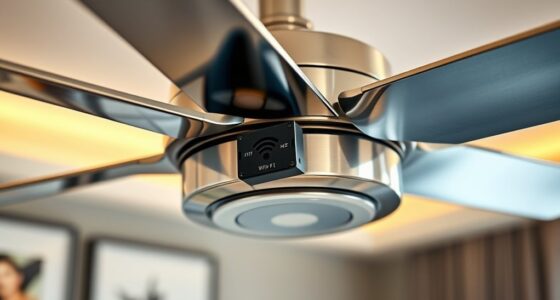
Smart fans differ from traditional ceiling fans by offering energy efficiency and user convenience through automated controls. Unlike standard fans, they adjust speed and operation based on room conditions or your preferences, saving energy and reducing costs. You can schedule their operation or control them remotely via apps, making your environment more comfortable without manual adjustments. These features help you optimize energy use while enhancing overall convenience in your space.
Can Adaptive Fan Speed Reduce Energy Costs in Commercial Buildings?
Adaptive fan speed can reduce energy costs in commercial buildings by up to 30%, enhancing energy efficiency while maintaining occupant comfort. When you implement smart fans that adjust their speed based on room conditions, you optimize airflow and temperature control. This targeted approach minimizes unnecessary energy use, helping your building operate more sustainably. As a result, you save money and create a more comfortable environment for everyone inside.
What Sensors Are Used to Enable Adaptive Fan Control?
You use humidity sensors and occupancy detectors to enable adaptive fan control. Humidity sensors monitor moisture levels, adjusting fan speed to maintain comfort and save energy. Occupancy detectors sense presence, turning fans off when spaces are empty and on when needed. These sensors work together to optimize airflow, reduce unnecessary energy use, and improve efficiency in commercial buildings. This smart system guarantees fans operate only when required, conserving energy effectively.
Is There a Significant Maintenance Difference With Smart Fan Systems?
You’ll notice that smart fan systems generally require less maintenance because they enhance maintenance efficiency through fewer mechanical parts and smarter operation. They also boost system durability by reducing wear and tear, which means fewer repairs and longer lifespan. Overall, these systems streamline upkeep, save you time, and ensure consistent performance, making them a more intelligent investment for long-term durability and energy savings.
How Quickly Can a Smart Fan System Adapt to Changing Conditions?
A smart fan system responds to changing conditions in real time, often within seconds, ensuring ideal comfort and energy efficiency. It uses sensor calibration to accurately detect temperature or occupancy changes, allowing quick adjustments. This real-time responsiveness means you won’t experience delays, and the system adapts seamlessly to evolving conditions, helping you save energy while maintaining a comfortable environment.
Conclusion
By adopting smart fan scheduling and adaptive speed, you can slash your energy use like a lightning bolt, turning your home into a model of efficiency. Imagine saving enough energy to power an entire city—without sacrificing comfort. These innovative techniques not only cut costs but also protect the environment, making your everyday choices feel like wielding a superpower. Embrace smart fan technology today and transform your space into an oasis of savings and sustainability.