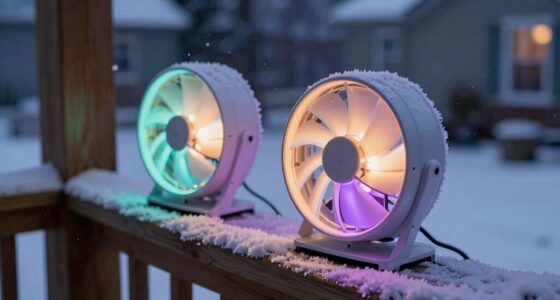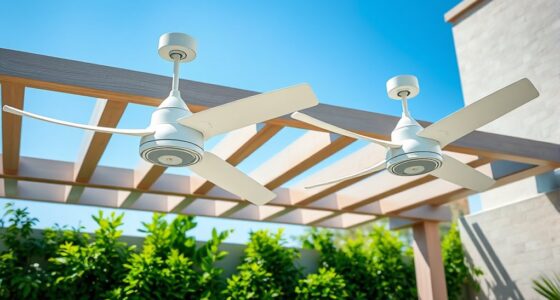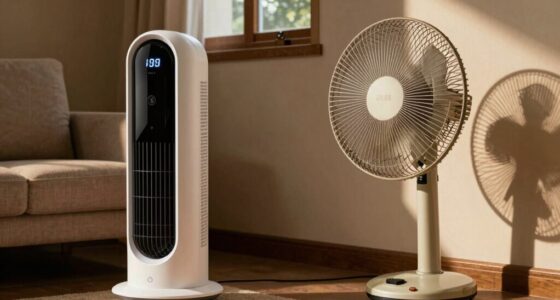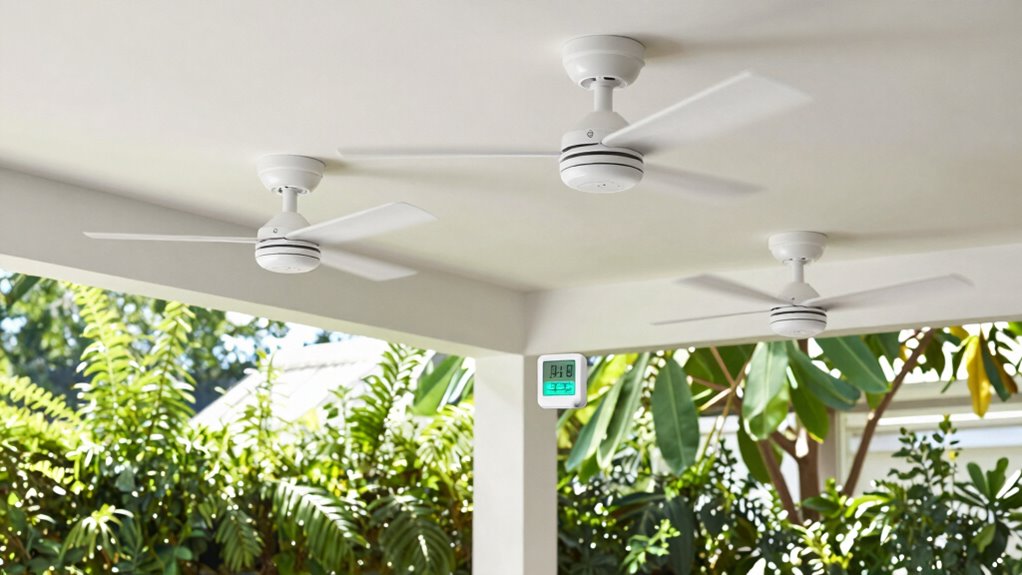

To prevent mold in your covered patio, you can use smart humidity sensors paired with automated fans. These sensors monitor moisture levels in real-time and trigger fans to increase airflow when humidity exceeds safe thresholds. This system helps reduce dampness and mold growth effortlessly. With data analytics, your setup learns patterns and adjusts responses for peak environment control. Keep exploring to discover how integrating these smart solutions can keep your outdoor space healthy and mold-free.
Key Takeaways
- Smart humidity sensors provide real-time moisture data to monitor patio environments effectively.
- Data analytics identify humidity trends, informing optimal smart fan activation times.
- Automated systems maintain safe humidity levels, preventing mold and mildew growth proactively.
- System integration allows remote notifications and manual control to enhance environment management.
- Continuous improvements in sensor accuracy and analytics ensure reliable mold prevention in covered patios.
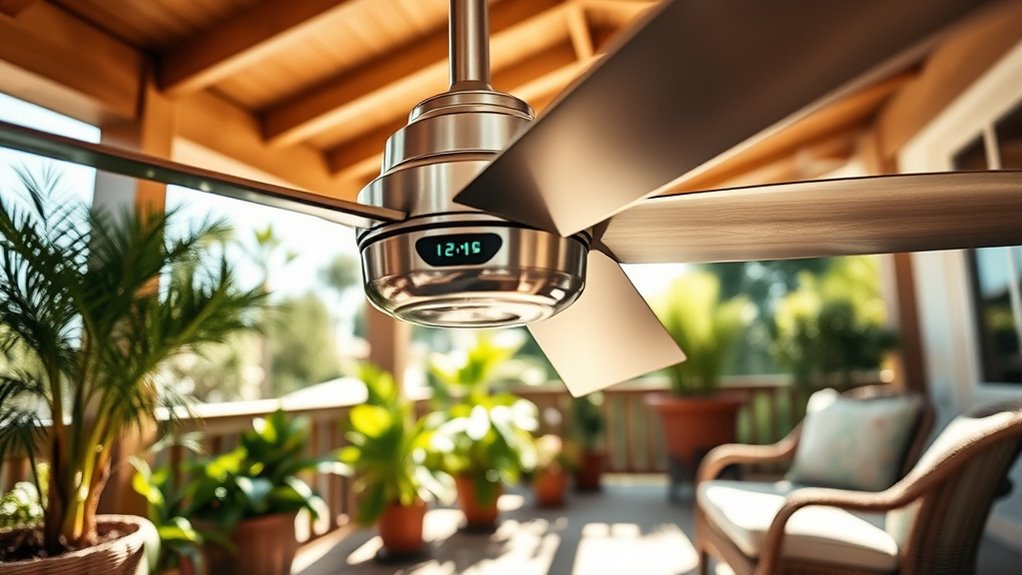
Ever wondered how you can monitor the moisture levels in the air around you? With the rise of smart technology, keeping an eye on humidity has become more accessible and accurate than ever. Smart sensors are at the forefront of this revolution, allowing you to measure air moisture with pinpoint precision. These sensors detect humidity levels in real-time, providing instant feedback that you can access via your smartphone or smart home system. By integrating smart sensors into your covered patio, you gain a clear picture of the current environment, helping you prevent issues like mold growth before they become serious problems. Data analytics then plays a vital role, processing the information collected by these sensors to identify patterns and trends. For example, if the sensors detect consistently high humidity during certain times of the day, data analytics can suggest ideal times to activate your smart fan. This automated insight means you don’t have to guess when to turn on a fan or worry about mold spores settling in. Instead, your system intelligently responds, maintaining perfect moisture levels for your outdoor space. Using these tools, you can set thresholds for humidity, guaranteeing the environment stays within safe limits. When levels rise above your preset threshold, your smart fan kicks in automatically, promoting airflow and reducing moisture buildup. This proactive approach minimizes the risk of mold, mildew, and other moisture-related problems, saving you time and potential costly repairs. The beauty of this system is its simplicity and accuracy—no more manual checks or guesswork. You simply install the sensors, connect them to your home’s Wi-Fi, and let the Data analytics do the heavy lifting. Over time, the system learns from the data, refining its responses and improving its precision. You’ll also receive notifications if humidity levels approach problematic ranges, allowing you to take manual action if needed. This ensures your covered patio remains a comfortable, healthy space for relaxing and entertaining. Plus, with ongoing updates and improvements in smart sensor technology, future systems will become even more intuitive and responsive. The combination of real-time data and intelligent analytics creates a seamless, automated process that takes the guesswork out of humidity control. A reliable sensor placement can significantly enhance the system’s effectiveness, ensuring accurate readings across your outdoor space. Ultimately, monitoring humidity with smart sensors and data analytics empowers you to maintain a balanced environment effortlessly. It’s a smart, efficient way to protect your outdoor space from mold and moisture damage, ensuring it stays inviting and safe year-round.
Frequently Asked Questions
How Accurate Are Smart Fans in Measuring Humidity Levels?
Smart fans with built-in humidity sensors generally provide good measurement accuracy, often within a few percentage points. However, their precision can vary depending on the quality of the humidity sensors used. You should regularly calibrate these sensors and make sure proper placement for the most reliable readings. While they’re not as precise as dedicated hygrometers, smart fans are usually accurate enough to help you manage humidity levels and prevent mold effectively.
Can Smart Fans Be Integrated With Existing Home Automation Systems?
Think of smart fans as the conductor of your home’s symphony—they can seamlessly integrate with your existing automation system. You’ll love the easy integration compatibility and system customization options that let you tailor controls to your needs. Whether you’re using Alexa, Google Home, or other platforms, these smart fans adapt effortlessly, giving you a harmonious blend of comfort and control, all managed with a simple tap or voice command.
Do Smart Fans Require Frequent Maintenance or Calibration?
Smart fans typically don’t require frequent maintenance or calibration if you keep them clean and follow manufacturer guidelines. You should check fan blades and sensors periodically to guarantee peak performance, but calibration frequency is usually minimal unless you notice inaccuracies in humidity or airflow readings. Regularly inspecting and cleaning your smart fan helps maintain efficiency, so you won’t need to perform extensive fan maintenance often.
Are Smart Fans Suitable for All Climate Zones?
You might worry smart fans aren’t suitable for all climate zones, but they’re quite adaptable. These fans are designed for regional efficiency, adjusting their operation to your local climate conditions. Whether you’re in a humid, dry, or moderate area, smart fans can help regulate humidity and airflow effectively. Their climate adaptability guarantees you get the best performance, making them a smart choice for preventing mold regardless of where you live.
What Is the Typical Cost of Installing Smart Fan Systems?
The installation costs for smart fan systems typically range from $200 to $600 per unit, depending on the model and features. Affordability factors include the complexity of your setup, whether professional installation is needed, and any additional smart home integrations. You can often save money with DIY installation or by choosing energy-efficient models. Keep in mind that investing in quality smart fans can reduce long-term energy costs and prevent mold issues effectively.
Conclusion
By monitoring humidity levels with smart fans, you can effectively prevent mold buildup in your covered patio. For example, imagine noticing rising moisture after a rainstorm and quickly activating your system. This proactive approach keeps the space dry and mold-free, saving you money and headaches. With real-time tracking, you stay ahead of potential issues, ensuring your outdoor area remains comfortable and safe year-round. Embrace smart technology to protect your home effortlessly.