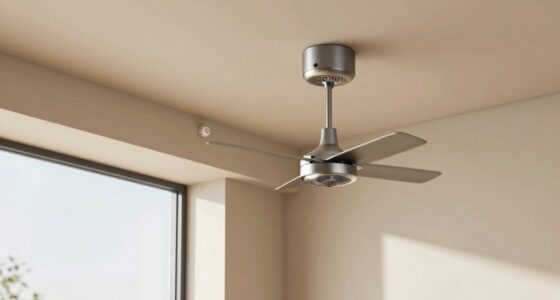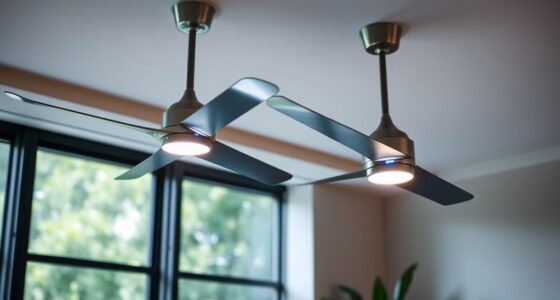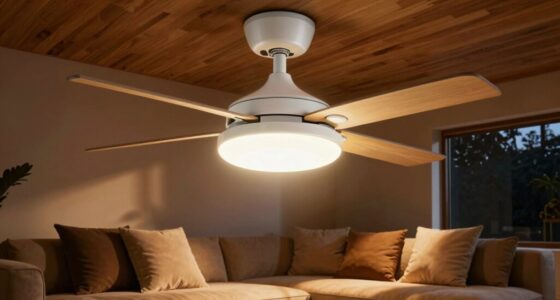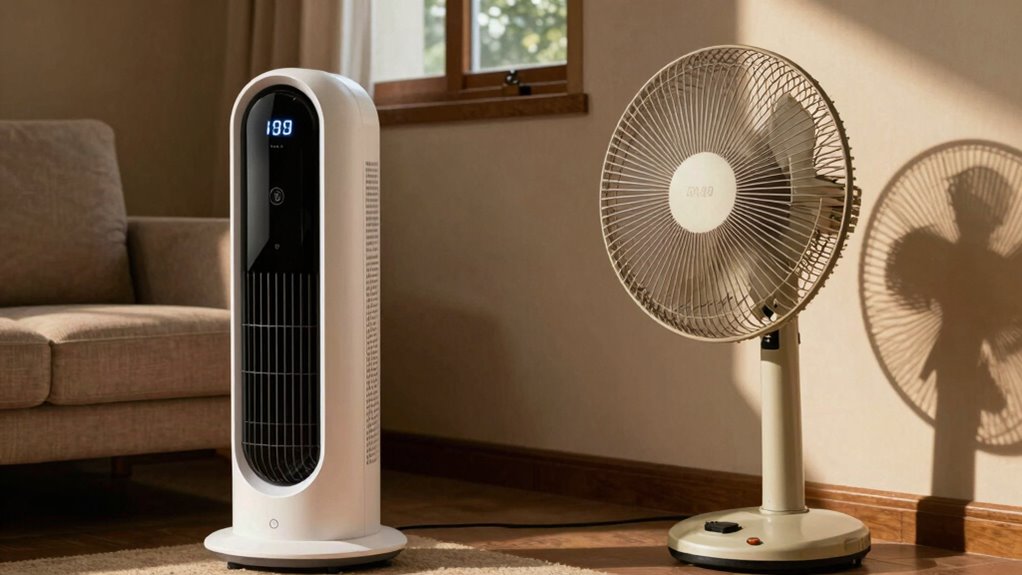

Investing in a smart fan during winter is worthwhile if you value energy savings and quiet operation. Smart fans adapt their speed and circulate warm air efficiently, reducing electricity bills and creating a more comfortable environment. They also integrate with smart home systems for seamless control. While they come with a higher initial cost, the long-term benefits often outweigh this expense. To discover how these features can work for you, explore further details below.
Key Takeaways
- Smart fans offer adaptive speed control, improving winter air circulation and energy efficiency compared to manual dumb fans.
- Automated scheduling and sensors in smart fans reduce energy waste, leading to long-term cost savings during colder months.
- Quiet operation of smart fans enhances comfort during winter, especially when running during sleep or relaxation.
- Dumb fans lack automation and may operate less efficiently, often consuming more energy with fixed speeds.
- The higher initial investment in smart fans may be justified by their energy savings and convenience in winter use.
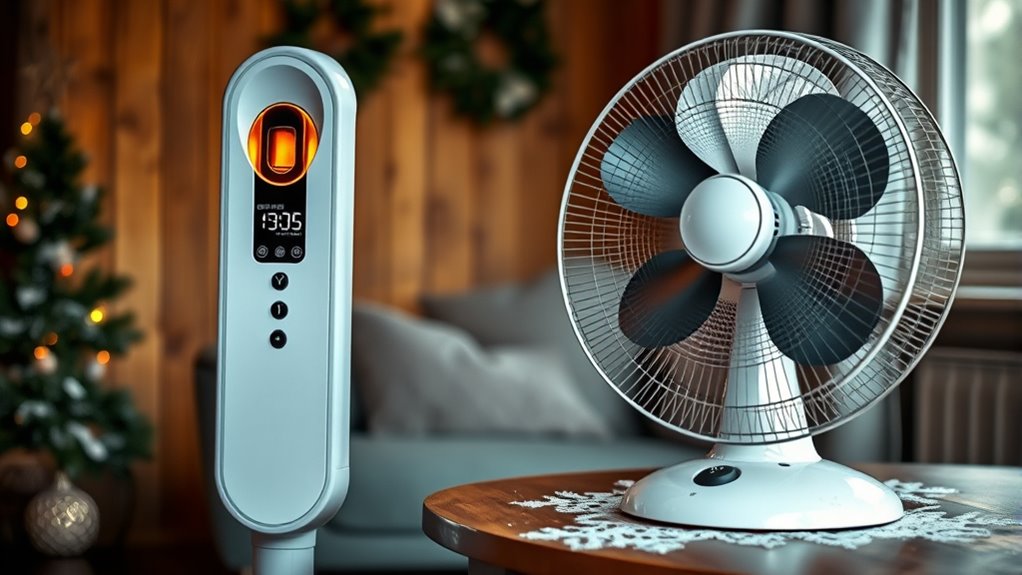
Fans come in many forms, but the difference between smart and dumb fans often boils down to their features and how you use them. When contemplating whether a smart fan is worth the extra cost for winter use, you should focus on key factors like energy efficiency and noise levels. Although fans are typically associated with cooling, they can also help circulate warm air during winter, making these considerations important year-round. Smart fans are designed to be more energy-efficient than their dumb counterparts. They often feature programmable settings, remote control access, and integration with smart home systems. This allows users to customize operation schedules and optimize energy consumption energy management. This means you can schedule your fan to run only when needed, reducing unnecessary power consumption. Over time, this can lead to lower electricity bills, especially if you tend to leave your fan running longer than necessary. Additionally, some smart fans come with sensors that detect room occupancy or temperature changes, automatically adjusting their operation to optimize energy use. In contrast, dumb fans usually require manual adjustments and lack the ability to adapt to changing conditions, which can result in higher energy consumption overall. Smart fans may also support local automation features, enabling seamless control alongside other smart devices in your home. Some models include adaptive speed control, which fine-tunes their performance for quieter operation and energy savings. This feature can also contribute to better air circulation, ensuring a more comfortable environment. Noise levels are another critical aspect to contemplate, especially during winter when you might want a quiet environment for relaxation or sleep. Smart fans tend to operate more quietly because they are built with modern motor technology and noise-reducing features. Their ability to run at lower speeds when full power isn’t needed means less disruptive noise. Dumb fans, on the other hand, often operate at fixed speeds, and their motors can become noisier over time due to wear and tear. If you’re sensitive to noise or share your space with others who are, a smart fan’s quieter operation can significantly enhance your comfort. The decision to invest in a smart fan for winter use hinges on whether these features align with your needs and habits. If you value energy efficiency and prefer a quieter environment, the extra cost might be justified. Smart fans can provide convenience and cost savings in the long run, thanks to their ability to adapt to your schedule and reduce energy waste. However, if you’re on a tight budget and only need a basic fan for occasional use, a simpler dumb fan might suffice. Ultimately, it’s about weighing the initial investment against the benefits of smarter operation, especially during the colder months when you might not use the fan as often but still want to maximize efficiency and comfort.
Frequently Asked Questions
Can Smart Fans Be Used Effectively in Extremely Cold Temperatures?
Smart fans can be used effectively in extremely cold temperatures, but you need to contemplate winter wind and cold airflow. They often have adjustable settings that help manage airflow, preventing the fan from blowing directly or intensifying the cold. However, in very low temperatures, traditional fans might be less effective or could freeze up. So, if you want precise control over winter wind, a smart fan offers benefits, but use caution in extreme cold.
Do Smart Fans Consume Significantly More Energy Than Dumb Fans?
Think of smart fans as the steady heartbeat of your home, sometimes beating faster, sometimes slower. Yes, they tend to consume more energy than dumb fans due to their advanced features, but their cost efficiency often balances out over time. You might pay a little more upfront, but smart fans optimize power use, reducing long-term energy consumption and saving you money, making them a smart investment for winter comfort.
Are Smart Fans Compatible With Existing Home Automation Systems?
Yes, smart fans are compatible with existing home automation systems. They often integrate seamlessly using Wi-Fi or Zigbee protocols, allowing you to control them via apps, voice control, or temperature sensors. This means you can set schedules, adjust speeds, or turn them on/off remotely. With these features, smart fans enhance your comfort and convenience, making them a worthwhile upgrade if you already have a compatible automation system.
How Durable Are Smart Fans in Harsh Winter Conditions?
Did you know that most smart fans are built to withstand temperatures ranging from 14°F to 122°F? They’re generally quite durable in harsh winter weather, thanks to high-quality motors and weather-resistant materials. While extreme cold can affect any device, smart fans designed for winter use are tested to make certain fan durability in winter weather, so you can rely on them to operate efficiently without damage during colder months.
What Is the Average Lifespan of a Smart Fan Compared to a Dumb Fan?
You can expect a smart fan to last around 8 to 10 years, slightly less than a dumb fan, mainly due to advanced electronics and batteries. Smart fans often have shorter battery life, requiring regular recharges, and may incur higher maintenance costs over time. Dumb fans tend to be more durable with minimal repairs, making them a cost-effective choice if longevity and low upkeep matter most to you.
Conclusion
Ultimately, choosing between smart and dumb fans depends on how much you value convenience and subtle sophistication. While smart fans offer effortless control and quiet elegance, dumb fans embrace simplicity and straightforwardness. If you’re willing to invest a little extra for a touch of modern grace during winter, a smart fan can gently elevate your space. But if you prefer a more understated approach, sometimes simplicity whispers the loudest, quietly serving your needs without fuss.