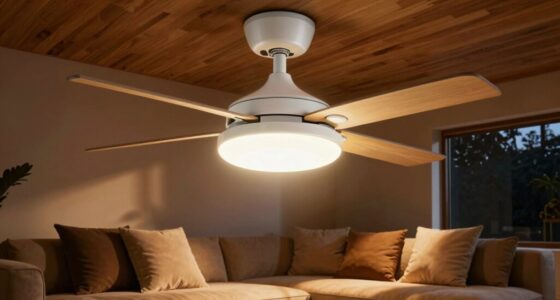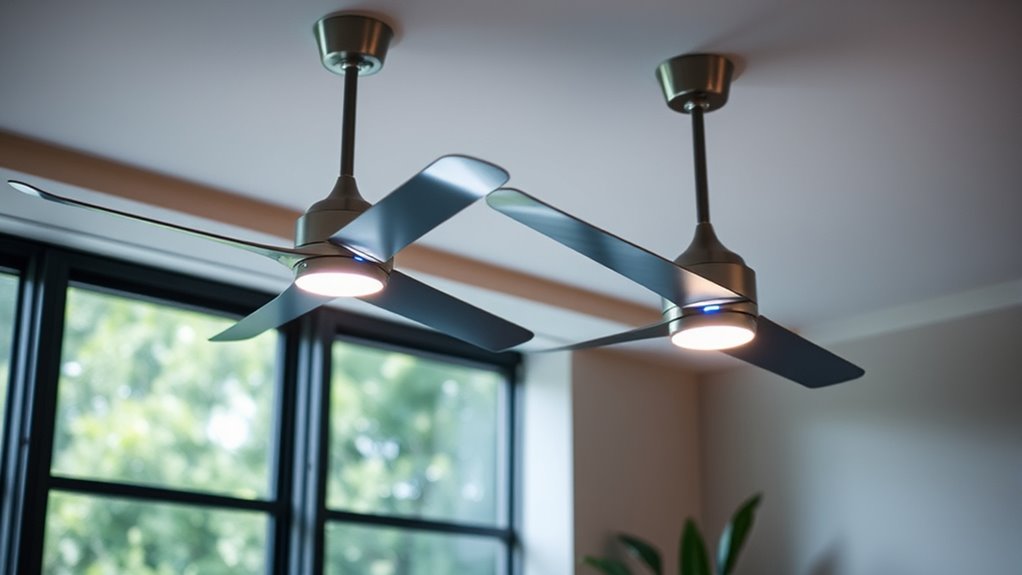

Multi-sensor automation allows your fans to automatically respond to changes in temperature and humidity, improving indoor comfort effortlessly. When sensors detect high humidity, fans can activate to reduce moisture and prevent issues like mold. If it gets too warm, they will turn on to cool the space. This smart system saves energy by adjusting fan operation based on real-time data. Stay with us to discover how these advanced solutions can make your environment more comfortable and efficient.
Key Takeaways
- Multi-sensor automation enables fans to adjust their speed based on real-time temperature and humidity data.
- Sensors detect environmental changes and automatically activate fans to maintain optimal indoor comfort.
- These systems prevent overheating, excess humidity, and condensation through dynamic fan responses.
- They enhance energy efficiency by operating fans only when needed, reducing unnecessary power use.
- Multi-sensor fans improve indoor air quality with precise, automated regulation of environmental conditions.
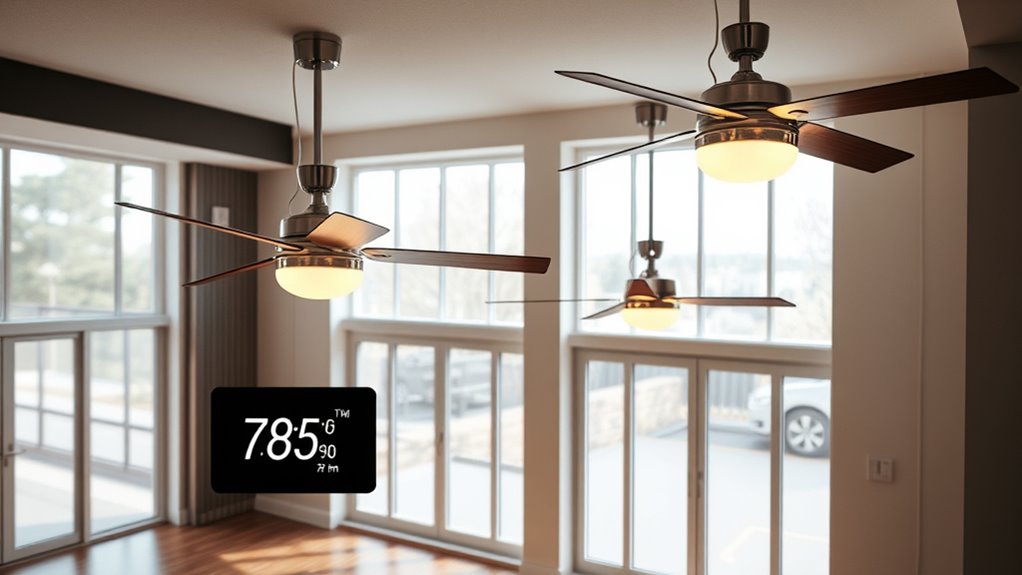
Multi-sensor automation is transforming how we gather and interpret data by integrating multiple sensors to work seamlessly together. When it comes to managing indoor environments, this technology allows you to enhance comfort and efficiency effortlessly. For example, by combining temperature sensors with humidity sensors, your ventilation control systems can respond dynamically to changing conditions, ensuring a consistent and comfortable atmosphere. Instead of manually adjusting fans or vents, the system detects fluctuations and automatically adjusts airflow to maintain ideal conditions. This means you don’t have to worry about overheating or excessive humidity, as the system continuously monitors and reacts in real time.
Multi-sensor systems automatically optimize indoor comfort by detecting and adjusting to environmental changes in real time.
Humidity regulation becomes more precise with multi-sensor setups. When sensors detect high moisture levels, the system can activate fans or dehumidifiers to dry out the air. Conversely, if the air becomes too dry, it can reduce ventilation to conserve humidity or even introduce moist air if the environment calls for it. This real-time responsiveness helps prevent issues like mold growth, condensation, or discomfort caused by dry air. You benefit from a healthier, more stable indoor climate without constantly fiddling with controls or relying on outdated, manual methods.
The integration of multiple sensors also enhances energy efficiency. Instead of running fans at full speed all the time, the system adjusts based on actual conditions, reducing unnecessary energy consumption. For instance, if the temperature is within the desired range but humidity is high, the system prioritizes humidity regulation, activating only the relevant components. This targeted approach conserves power while maintaining ideal comfort, saving you money on energy bills. Plus, because the sensors work together, you get a more complete picture of your environment, allowing the system to make smarter, more accurate decisions.
In essence, multi-sensor automation elevates your control over indoor air quality by providing a responsive, intelligent solution. It simplifies complex environmental management, turning what used to require manual intervention into an automated process that adapts instantly to changing conditions. Whether you’re managing a commercial space or your home, this technology ensures your ventilation control and humidity regulation are always aligned with your comfort and health needs. As sensors continue to improve and integrate further, expect even more precise and energy-efficient systems that make maintaining the perfect indoor climate effortless for you.
Frequently Asked Questions
How Do Multi-Sensor Fans Improve Energy Efficiency?
You’ll find that multi-sensor fans boost energy efficiency by adjusting airflow based on real-time data. They respond to changes in air quality, temperature, and humidity, so you don’t waste energy running fans unnecessarily. This targeted approach reduces noise levels and conserves power, making your space more comfortable and eco-friendly. By intelligently adapting to your environment, these fans help you save energy without sacrificing comfort or air quality.
What Compatibility Issues Exist With Existing Home Automation Systems?
You might face compatibility issues with your existing home automation system, especially around system integration and protocol compatibility. Some smart devices use different communication protocols, making it tricky to connect new multi-sensor fans seamlessly. You need to verify that your system supports the protocols used by these fans, like Zigbee or Z-Wave. Otherwise, you risk connectivity problems, limited functionality, or needing additional hubs or adapters.
Can Multi-Sensor Fans Be Integrated With Smart Thermostats?
You can integrate multi-sensor fans with smart thermostats, but you need to guarantee proper sensor calibration for accurate readings. Check if the fans support wireless connectivity compatible with your thermostat system. Some systems may require additional hubs or bridges for seamless operation. Once connected, your fans can respond automatically to temperature and humidity changes, improving comfort and energy efficiency in your home.
How Secure Is Data Collected by Multi-Sensor Fans?
You’re concerned about how secure the data collected by multi-sensor fans is. Rest assured, manufacturers implement strong cybersecurity measures like encryption and regular software updates to protect your data privacy. They also adhere to industry standards to prevent unauthorized access. While no system is completely foolproof, these security practices markedly reduce risks, ensuring your sensitive information stays safe as the fans monitor and respond to environmental conditions.
What Maintenance Is Required for Multi-Sensor Fan Systems?
You need to regularly check your multi-sensor fan system to keep it running smoothly. This includes sensor calibration to guarantee accurate readings and timely filter replacement to maintain airflow and efficiency. Keep an eye on the system’s performance, clean sensors if needed, and follow the manufacturer’s maintenance schedule. Doing so helps prevent malfunctions, prolongs the system’s lifespan, and keeps your environment comfortable and energy-efficient.
Conclusion
By integrating multiple sensors, you can make your fans smarter and more responsive to your environment. Did you know that multi-sensor systems can reduce energy consumption by up to 30%? This not only saves you money but also helps the environment. As you see your fans adapt seamlessly to temperature and humidity changes, you’ll appreciate how technology makes everyday life more comfortable. Embrace multi-sensor automation and enjoy a smarter, more efficient home.