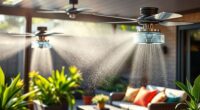
A comfortable outdoor space is more than a collection of furniture and plants. It is an environment shaped by shade, airflow, temperature, moisture, layout, and the way you intend to use it. A quiet reading corner has different needs from a greenhouse, an outdoor kitchen, or a patio designed for large family meals. The best results come from treating these elements as a connected system rather than adding cooling equipment as an afterthought.
This guide explains how to plan comfortable gardens, patios, pergolas, greenhouses, and other outdoor living areas. It covers the main cooling approaches, where different fan styles work best, how to account for weather exposure, and which practical details make an outdoor setup easier to use every day.
Start With the Space, Not the Fan
Before choosing equipment, observe how air, sunlight, and people move through the area. A fan can improve perceived comfort by moving air across the skin, but its effectiveness depends heavily on placement. It cannot fully compensate for intense afternoon sun, a heat-trapping roof, or furniture that blocks its airflow.
Begin by identifying the hottest times of day and the direction of direct sunlight. Note whether natural breezes already pass through the space or are stopped by fences, walls, screens, shrubs, or greenhouse panels. Then consider where people sit, stand, cook, work, and walk. These occupied zones should guide the direction and height of mechanical airflow.
Questions to Ask During Planning
- Is the area open, partially covered, screened, or fully enclosed?
- Does it have permanent electricity, occasional extension-cord access, or no convenient power source?
- Will the cooling equipment remain outdoors or be stored after each use?
- Is the goal to cool one seat, a dining table, a workbench, or an entire covered patio?
- Could children, pets, plants, table decorations, or cooking flames be affected by the airflow?
- Does the space need cooling only, or would shade and misting also help?
Answering these questions narrows the options quickly. A permanent covered structure may support ceiling or wall-mounted fans, while a flexible garden seating area may be better served by portable or clip-on models.

Depuley 52-Inch Ceiling Fan with Light: Black 3 Blade Outdoor Fans for Patios – Dimmable Indoor Fan with Remote Control Fandelier for Living Room Bedroom Porch Quiet Motor Reversible 6 Speed Timer
- Large 52-Inch Airflow Coverage: Ideal for medium to large spaces
- Lightweight Aerospace-Grade Blades: Reduces motor load for higher speeds
- Dimmable Light with Remote: Adjust brightness easily from anywhere
As an affiliate, we earn on qualifying purchases.
As an affiliate, we earn on qualifying purchases.
Build Comfort in Layers
Outdoor comfort is usually strongest when several simple measures work together. Shade reduces incoming solar heat. Ventilation helps warm air escape. Fans create useful air movement around people. In suitable conditions, misting can add evaporative cooling. Plants, screens, and furnishings can provide shelter, but they should be arranged without sealing off every path for airflow.
Control Sun Exposure First
Umbrellas, awnings, pergola covers, shade sails, and strategically placed planting can reduce direct exposure. The angle of the sun matters: an overhead cover that works at midday may provide little protection in the late afternoon. Adjustable umbrellas and movable screens are useful when sunlight enters from the side.
For a combined shade-and-airflow approach, explore patio umbrellas with solar fan attachments. This category can be especially relevant where seating arrangements change or permanent electrical work is undesirable. Consider canopy size, pole compatibility, available sunlight, and the area reached by the fan rather than assuming one umbrella will address the whole patio.
Create a Path for Hot Air
Covered patios and greenhouses can collect hot air overhead. Whenever possible, preserve openings that allow this heat to leave. Roof vents, side vents, open doors, and gaps around a covered structure can support natural circulation. Fans should reinforce this route instead of pushing warm air into a closed corner.
In a greenhouse, air movement also affects the environment around plants. Avoid aiming a powerful stream continuously at delicate foliage. A gentler circulation pattern distributed across the structure is often more useful than concentrating all airflow on one bench.

Rechargeable Solar Powered Camping Fan & Auto Oscillating, 【60H Runtime】Battery Powered Fan, Portable Outdoor Fan,5 Speeds,3 Lights,12H Timer for Travel, Fishing,Jobsite,Beach,Camping Essential
- Rechargeable Solar Power: Built for outdoor camping and activities
- Long Battery Life: 12 to 60 hours runtime with 20000mAh battery
- Wide Oscillation: 120° automatic and 180° manual adjustment
As an affiliate, we earn on qualifying purchases.
As an affiliate, we earn on qualifying purchases.
Choose the Right Fan Format
Fan categories differ not only in size but also in how they use space. The most suitable type is the one that reaches the occupied area without creating obstacles, requiring awkward daily adjustments, or exposing unsuitable components to outdoor conditions.
Ceiling Fans for Covered Living Areas
A ceiling fan can be an effective permanent solution for a roofed patio, gazebo, pavilion, or veranda. It keeps the floor clear and can distribute airflow across a broad seating or dining zone. Installation height, blade clearance, ceiling slope, structural support, and the fan’s outdoor-use designation all deserve attention.
Large spaces and bold architectural settings may suit industrial-style outdoor ceiling fans. Style should remain secondary to appropriate installation and exposure suitability. Damp and wet locations are not interchangeable, so match the equipment to the conditions it will actually encounter.
Wall-Mounted Fans for Directed Airflow
Wall mounting works well when overhead installation is impractical or when air needs to move across a specific zone. These fans can serve seating areas, outdoor worktables, covered grilling spaces, greenhouse aisles, or exercise corners while preserving valuable floor space.
Oscillation can widen the area reached by the airflow. The guide to wall-mounted outdoor oscillating fans provides a useful starting point for comparing this format. Before installation, check whether the wall and mounting hardware can support the unit, whether controls will remain accessible, and whether the sweep could blow toward a grill, loose objects, or an adjoining property.
Clip Fans for Small Personal Zones
Clip-on fans are useful when cooling needs to stay close to one person. They can attach to compatible poles, shelves, rails, or work surfaces without taking up a table. Their compact size makes them appropriate for reading chairs, potting areas, and individual seats under an umbrella.
If an umbrella is the intended mounting point, review outdoor clip fans for umbrella poles. Pole diameter, clip strength, fan weight, and the ability to angle the airflow are important. Position the fan so it cannot interfere with opening or closing the umbrella, and remove it before moving or storing the canopy when necessary.
Magnetic Fans for Workshops and Metal Structures
A magnetic base offers another flexible mounting method. It may be convenient around compatible greenhouse frames, metal shelving, workshops, sheds, trailers, or outdoor workstations. Because magnet performance depends on the surface, confirm that the mounting point is genuinely magnetic, flat enough for full contact, and stable under vibration.
The selection of portable fans with magnetic bases can help clarify the available designs. A magnetic attachment should not be treated as universal or used where a fall could damage plants, equipment, or people below.

Pro-Series Drip Irrigation System, 200FT 1/4" Garden Watering System with 32pcs 360° Bendable Copper Nozzles, Leak-Free Quick-Connect Misting Sprinkler Kit for Patio, Raised Beds, Yard, Greenhouse
- Complete Garden Irrigation Kit: Includes tubing, nozzles, connectors, accessories
- 360° Adjustable Copper Nozzles: Shape and lock spray angles precisely
- 4-Mode Flow Control: Switch between mist, drip, stream, spray
As an affiliate, we earn on qualifying purchases.
As an affiliate, we earn on qualifying purchases.
Use Portable and Wireless Cooling Strategically
Portable fans make sense when the same device must serve several locations. One fan might support a patio breakfast, afternoon greenhouse work, and an evening gathering elsewhere in the garden. Portability is especially valuable for renters and for seasonal spaces that do not justify permanent installation.
Battery capacity, charging method, carrying weight, stability, speed settings, and storage requirements are all relevant. A fan that is technically portable may still be inconvenient if it is heavy, difficult to charge, or unstable on uneven paving.
Remote operation can reduce interruptions when a fan is mounted out of reach or positioned across a large seating area. Compare the options in this guide to wireless fans with remote control. Keep in mind that “wireless” may describe control, power, or both, so verify what the term means for any specific model.

2 Pack 12 Ft Shade Sail Poles, Heavy Duty Metal Outdoor Support Post Kit, Rust-Resistant Shade Sail Support Poles, Adjustable Metal Sun Shade Poles for Patios, Courtyards, Backyards and Gardens
- Adjustable Height: Up to 12 feet with modular parts
- Heavy Duty Metal Construction: Durable steel with rust-resistant coating
- Enhanced Load Capacity: Thicker pipes for stability and strength
As an affiliate, we earn on qualifying purchases.
As an affiliate, we earn on qualifying purchases.
Decide Whether Misting Fits the Climate
Misting fans combine airflow with fine water droplets. They can be helpful in appropriate outdoor conditions, particularly where evaporation can occur efficiently. Results may be less satisfying in already humid air, and careless placement can leave furniture, paving, food, electronics, or people wetter than intended.
Models with integrated reservoirs avoid the need for a permanent water connection and can be repositioned more easily. The guide to patio misting fans with water tanks covers this portable category. When comparing options, consider reservoir handling, refilling access, cleaning, nozzle maintenance, and the distance between the mist outlet and occupied seating.
Use clean water as directed by the manufacturer, empty stagnant water, and maintain the tank and nozzles. Place the fan where overspray will not reach electrical connections or create a slippery walking surface. Misting should complement shade and airflow, not replace sensible heat precautions.
Plan Power and Weather Exposure Carefully
Outdoor electrical safety is fundamental. Use equipment, outlets, plugs, and connections intended for the relevant environment. Protect cords from water, hot surfaces, sharp edges, garden tools, and walking routes. Do not assume that a covered patio always remains dry; wind-driven rain can reach surprisingly deep beneath a roof.
Corded fans offer continuous operation where suitable power is available. Rechargeable models reduce cable clutter but require a charging routine. Solar-assisted products depend on panel position, sunlight, and their specific energy-storage design. Choose the power system based on how the space is actually used, including evening operation and cloudy periods.
Outdoor-rated construction also needs context. A fan sheltered beneath a deep veranda experiences different exposure from one installed near an open pergola edge. Follow the product documentation for placement, mounting, cleaning, and storage, and consult a qualified electrician for permanent wiring or uncertain outdoor circuits.
Make Controls Easy to Live With
Convenient controls determine whether a cooling setup gets used consistently. Pull chains may be awkward on high ceilings, wall controls require suitable wiring, and handheld remotes can be misplaced. App-based control can add flexibility but may not suit everyone in the household.
If an existing remote is lost or damaged, use the guide to fan remote replacements compatible with multiple brands as an orientation resource. Compatibility must be verified carefully; a similar appearance or shared brand name does not guarantee that a remote will communicate with a particular receiver.
Create a dedicated storage place for handheld controls and label them when several fans are present. Replace batteries when performance becomes inconsistent, and keep spare controls protected from weather and extreme heat.
Arrange Outdoor Living Zones Around Airflow
A single patio often contains several micro-zones: dining, lounging, cooking, gardening, and circulation. Each has different airflow needs. Diners usually benefit from a gentle cross-breeze that does not disturb napkins or lightweight tableware. Lounge seating can tolerate more direct personal airflow. Cooking areas require extra care so fans do not disrupt flames or send smoke toward guests.
Aim fans through occupied space rather than at empty walls. Avoid placing large furniture directly in the airflow path. In wide areas, several modestly positioned fans may create more even comfort than one unit operating aggressively from a distant corner.
Maintain the Whole Comfort System
Dust, pollen, grease, insects, and mineral deposits can accumulate on outdoor equipment. Inspect fan guards, blades, mounts, cords, plugs, batteries, and fasteners regularly. Disconnect power before cleaning and follow the manufacturer’s instructions. Misting equipment may need additional attention to tanks, filters, pumps, and nozzles.
Seasonal storage can extend the useful life of portable equipment. Clean and dry items before putting them away, store remotes with their matching units, and avoid leaving batteries neglected for long periods. For permanent installations, inspect mounting points after severe weather and before the main outdoor season begins.
Create a Space That Works as a System
The most comfortable garden or patio is rarely built around a single device. It combines appropriate shade, open ventilation paths, well-placed airflow, safe power, convenient controls, and furniture arranged for the people using it. Start with the conditions of the site, choose equipment that matches the scale and exposure, and refine placement after observing the space during real use.
Whether you need broad circulation from a ceiling fan, directed airflow from a wall-mounted unit, personal cooling under an umbrella, or a portable misting setup, the right solution should feel integrated into outdoor life. Thoughtful planning makes the space cooler, easier to maintain, and more inviting throughout the seasons.