
TL;DR

Get garden gear delivered free with Prime
- Fast, free delivery on millions of items
- Prime Video, Amazon Music and more included
- Member-only deals all year
Costa Farms horticulturist Justin Hancock says thin-leaved houseplants, including ferns and calatheas, are especially prone to moisture loss from warm, dry air near heating vents and fireplaces. He recommends moving plants out of direct airflow and monitoring their watering and humidity; the advice comes from a Homes & Gardens report, not a newly announced study.
A Homes & Gardens report featuring Costa Farms horticulturist Justin Hancock identifies thin-leaved plants such as ferns and calatheas as especially vulnerable to warm, dry air from indoor heating. Hancock advises moving plants out of direct airflow, a practical step for reducing winter moisture stress without turning off the heat.
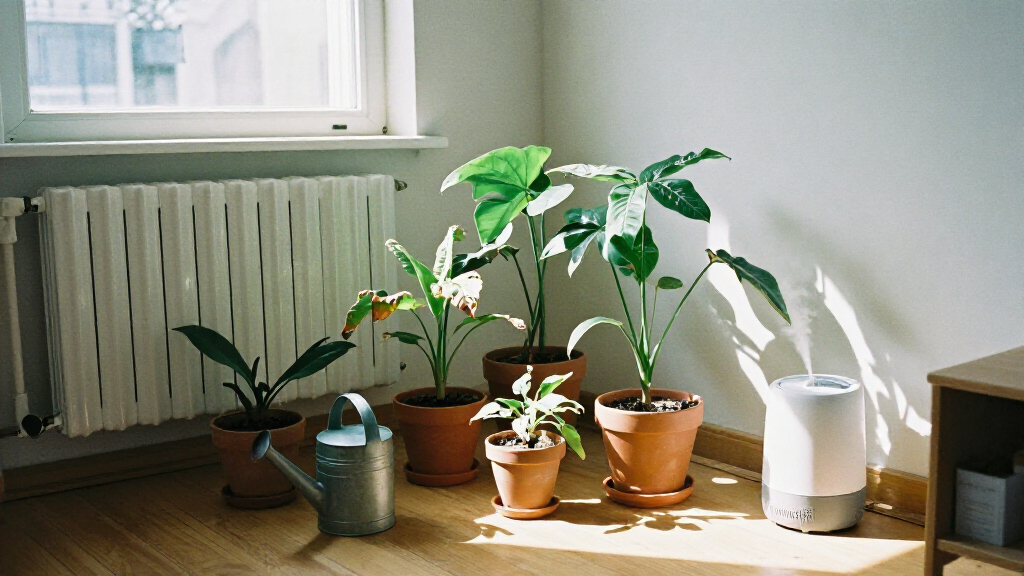
Hancock told Homes & Gardens that plants placed beside a heating vent or fireplace can experience warmer, drier air than the rest of a room. He says exposure may contribute to dehydration, yellowing or crisping leaves, and heat stress. The report says prolonged dry conditions can also favor spider mite problems.
The plants highlighted as more vulnerable include ferns, calatheas, peace lilies, prayer plants, ivy, polka dot plants and nerve plants. Hancock’s general rule is that plants with thinner leaves tend to be more sensitive to environmental changes. By contrast, the report says succulents, ZZ plants and snake plants can often cope better with dry periods because their fleshy or waxy leaves store more water.
His first recommendation is to check where warm air enters a room and move affected plants a short distance so they are no longer in the direct path. Other options cited in the report include grouping plants, using a pebble humidity tray or a portable humidifier, and checking soil before watering. Hancock also cautions against placing plants on a fireplace mantel if it exposes them to heat.
How Heating Can Stress Indoor Plants
Indoor heating can create a localized growing condition that differs from the room’s overall temperature: air near vents and fireplaces may be warmer and drier. For plants with less capacity to retain water, that exposure can contribute to visible leaf damage and make winter care more demanding.
The advice matters to readers because the fix does not require switching off household heating. Changing a plant’s position and watching its condition can reduce direct exposure while people keep their homes comfortable. The report also warns that dry conditions may be associated with faster spider mite reproduction, making regular inspection useful during heating season.
These points are general horticultural guidance, not a guarantee that every plant in the named groups will be damaged. Indoor conditions, plant health and distance from a heat source can vary from home to home.
Products Worth Considering

Orbit B-hyve XD 4-Port Smart Hose Watering Timer with Wi-Fi Hub

Orbit B-hyve Smart Indoor/Outdoor 12-Zone Sprinkler Controller

Orbit B-hyve XR 16-Zone Indoor/Outdoor Smart Sprinkler Controller
As an affiliate, we earn on qualifying purchases.
Why Leaf Type Matters in Winter
The report frames heating as one of several seasonal challenges for houseplants, alongside reduced daylight and changes in watering needs. It notes that people may think of indoor conditions as stable, while light and temperature inside homes shift with the seasons and with the use of heating systems.
Hancock, a horticulturist at Costa Farms with more than 25 years in the industry, explains that thin leaves generally hold less water than fleshy leaves. His comparison is a practical rule of thumb: ferns and calatheas may be less tolerant of dry-air changes than plants such as succulents, ZZ plants and snake plants. The supplied report also identifies Hancock as the author of a houseplant book scheduled for release on December 1, 2026.
The article gives 60–75°F as a general temperature range described as suitable for most plants, while stressing the importance of monitoring individual conditions. That range is not presented as a specific requirement for every species.
“As a general rule, the thinner the leaf, the more delicate a plant tends to be.”
— Justin Hancock, horticulturist at Costa Farms, speaking to Homes & Gardens
What the Report Does Not Establish
The supplied material does not provide a publication date, independent research findings or measurements comparing how quickly different species lose moisture near heaters. The list of vulnerable plants is Hancock’s expert guidance as reported by Homes & Gardens, rather than a quantified ranking or a claim that damage is inevitable.
It is also unclear how much risk a particular plant faces in any given home. The report does not specify a safe distance from vents or fireplaces, or how humidity and heating exposure should be measured for each species. Its temperature range is a broad guideline, not a species-by-species care prescription.
Hancock’s statement about spider mite reproduction is presented in the article, but the supplied material does not provide study details or conditions for that seven-day estimate. Readers should treat it as an attributed warning, not a forecast that infestations will occur on a fixed schedule.
Steps for the Heating Season
Readers can begin by checking whether plants sit in the direct path of air from a vent, radiator or fireplace and relocating them if needed. The report recommends watching leaves for yellowing or crisping, checking soil before watering, and considering a humidifier, pebble tray or grouping plants if indoor air is dry.
There is no further announcement or scheduled follow-up in the supplied source. Plant owners can use these steps as general guidance, while adjusting care to the needs and condition of each plant; the report does not offer a universal humidity target or treatment plan for pests.
Key Questions
Which houseplants does the report say are most vulnerable to indoor heating?
Hancock names ferns, calatheas, peace lilies, prayer plants, ivy, polka dot plants and nerve plants as plants to watch because thin-leaved plants tend to be more sensitive to dry-air changes.
What is the simplest way to protect plants from heating vents?
Move the plant so it is outside the direct path of warm airflow. Hancock also warns that a fireplace mantel may expose a plant to too much heat.
Does indoor heating mean houseplants should be watered more often?
Not automatically. The report recommends checking the soil before watering, since both dehydration and oversaturation can cause problems. Watering needs depend on the plant and its conditions.
Which plants may cope better with dry indoor air?
The report says succulents, ZZ plants and snake plants may tolerate dry periods better because their fleshy or waxy leaves can store more water. That does not mean they are immune to unsuitable conditions.
Can dry air from heating contribute to spider mites?
Hancock says dry conditions associated with heating can favor spider mite problems and advises monitoring plants. The supplied report does not establish that every heated home will develop an infestation.
Source: homesandgardens.com