
TL;DR

Get garden gear delivered free with Prime
- Fast, free delivery on millions of items
- Prime Video, Amazon Music and more included
- Member-only deals all year
Gardening Know How reports that crushed oyster-shell poultry grit can be placed above and below fall-planted tulip bulbs to discourage squirrels and other digging animals. The report says grit may also improve drainage and supply calcium as it breaks down, but it provides no controlled test results or guarantee of effectiveness.
Gardening Know How recommends crushed oyster-shell poultry grit as a way to deter squirrels and other animals from digging up newly planted tulip bulbs. The gardening report says gardeners can put grit below and above bulbs in the ground, or spread it over the soil in pots, while also citing possible benefits for drainage and calcium supply.
According to the report, the grit should be made from crushed oyster shells, rather than flakes or a blend containing other materials. The proposed deterrent is physical: the sharp, coarse shell pieces are intended to make digging uncomfortable for paws. The article presents this as an alternative to chicken wire, bulb baskets, or planting less palatable alliums alongside tulips, but it does not provide comparative trial data showing that grit works better.
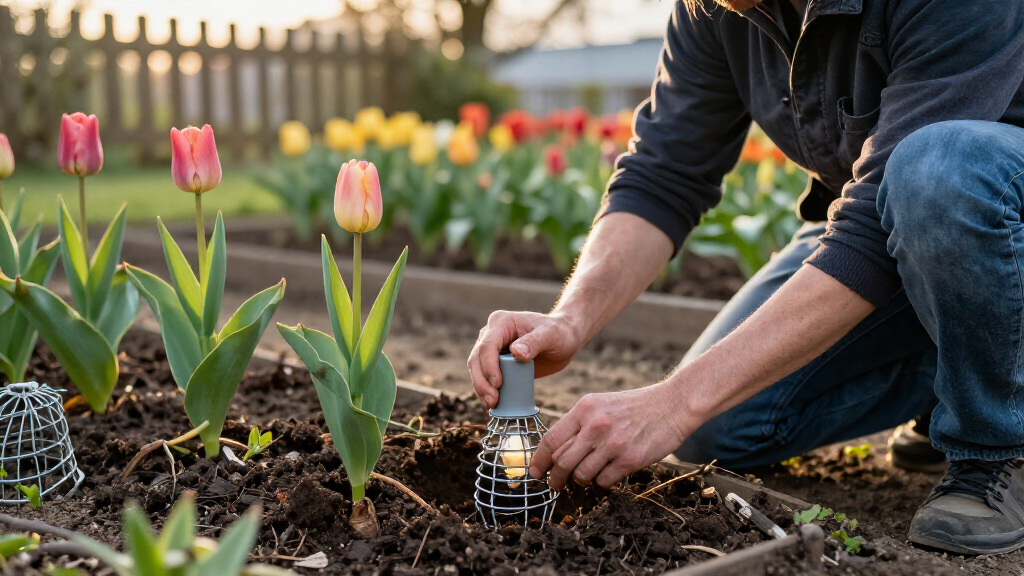
For containers, the report suggests adding a roughly one-inch surface layer over the soil. For bulbs planted in garden beds, it describes placing an inch of grit at the bottom of the planting hole, setting the bulb on top, and adding another layer about one or two inches below the soil surface. Gardeners facing damage from animals that tunnel from below, such as voles, field mice, or pocket gophers, may also place a shallow amount around the bulb, the article says.
The source says oyster shells break down slowly and can release calcium, while the coarse material may help water drain and air circulate in heavy soil. It cautions that shell material can affect soil pH over time, particularly where soil is already alkaline. These are claims from the gardening report; it does not cite measurements of how much grit is needed for different soils or how reliably the method prevents bulb loss.
A Physical Barrier Around Bulbs
Tulip bulbs are vulnerable after planting and before they establish roots, leaving gardeners with a narrow window in which animals can dig them up or eat them. If the recommended grit works in a particular garden, it could help protect bulbs without covering the bed in visible wire. It may also be useful for gardeners dealing with multiple kinds of digging animals, since the report describes barriers both above and beneath the bulbs.
The advice also combines pest deterrence with a potential soil amendment. That may make the approach appealing to gardeners who want to avoid a separate barrier, but the benefit depends on local soil and the grit’s composition. The report does not establish that oyster-shell grit is a proven replacement for wire or baskets, so readers should treat the recommendation as a gardening technique rather than a guaranteed result.
Products Worth Considering

14 Pcs Polycarbonate Greenhouse Panels, 6' x 2' x 0.24'' Twin-Wall Panels, Polycarbonate Sheet for All Weather Outdoor Garden and Greenhouse

Sinimaka 10-Pack Twin-Wall Polycarbonate Greenhouse Panels, 8 × 4 ft

Rachio 3 Smart Sprinkler Controller, 16 Zones
As an affiliate, we earn on qualifying purchases.
Fall Planting and Bulb Damage
The Gardening Know How article describes fall as a period when freshly planted spring-flowering bulbs can attract animals. It identifies squirrels and chipmunks as potential consumers of tulips and crocuses, and also names underground pests such as voles. It says digging animals may find bulbs before they have had time to root, though it provides no survey or data on how common that damage is.
Other methods mentioned include laying steel mesh or chicken wire over the planting area, using bulb baskets, and planting alliums alongside more appealing bulbs. The oyster-shell proposal differs by putting a coarse layer directly in the soil around the bulb. The source does not compare the cost, labor, or success rates of those approaches, and it does not specify a single grit product that is necessary for the method.
“The report describes crushed oyster-shell poultry grit as a way to make digging around bulbs uncomfortable for animals.”
— Gardening Know How
Effectiveness and Soil Conditions
The report does not cite controlled tests, name a success rate, or quantify how many bulbs the method protects. It is therefore unclear how well the grit performs compared with wire or bulb baskets, or whether results vary with soil type, weather, animal behavior, and the depth of planting. The source also does not provide a detailed application rate beyond the suggested layers.
Its soil benefits and pH warning are not accompanied by measurements. Gardeners with alkaline soil, or those growing bulbs that prefer more acidic conditions, may want to check soil pH before adding shell material. The article says tulips and crocuses tolerate mildly alkaline soil, but that does not establish that every garden’s existing pH is suitable.
Check the Grit and Soil
Gardeners considering the technique can check that the product is crushed oyster-shell grit rather than flakes or a mix, then follow the package directions and the report’s suggested placement. Where soil pH is a concern, testing before adding shell material can help guide the decision. After planting, gardeners will need to monitor beds through the season to see whether animals continue digging.
No follow-up trial or independent comparison is cited in the source, and the report gives no timeline for further testing. Until such evidence is available, the method’s results remain garden-specific; wire, baskets, or other barriers remain alternatives for gardeners who need a different approach.
Key Questions
What does the report recommend using around tulip bulbs?
It recommends crushed oyster-shell poultry grit, placed on the soil surface for pots and in layers around bulbs planted in the ground.
How is the grit supposed to deter squirrels?
The report says the coarse, sharp shell pieces create a physical barrier that may make digging uncomfortable. It does not provide trial data or guarantee that squirrels will stop digging.
Can oyster-shell grit affect garden soil?
The source says it may improve drainage and release calcium as it breaks down slowly. It also warns that shell material can affect soil pH over time, particularly in already alkaline soil.
Does the report show that grit works better than chicken wire?
No. Although its headline presents grit as an alternative to chicken wire, the article provides no controlled comparison or measured success rates for either method.
Source: gardeningknowhow.com