
TL;DR
An Amateur Gardening report describes how garden choices may reflect what owners value, such as order, wildlife, homegrown food, recreation or flexibility. These are interpretations, not personality tests: the report offers examples and expert comments, but no evidence that a garden style can reliably determine someone’s personality.
Amateur Gardening has published a report connecting garden styles with the priorities their owners may have, from the upkeep of a formal lawn to wildlife-friendly planting, homegrown food and adaptable containers. The article presents those links as clues rather than firm conclusions: a garden cannot, by itself, establish its owner’s personality.

Get garden gear delivered free with Prime
- Fast, free delivery on millions of items
- Prime Video, Amazon Music and more included
- Member-only deals all year
The report groups gardens by how they are used and maintained. A carefully clipped lawn and defined borders may appeal to people who enjoy order, structure and routine, while a naturalistic border may suit gardeners who want a less formal look and more room for plants and wildlife. These are interpretations of design preferences, not psychological findings.
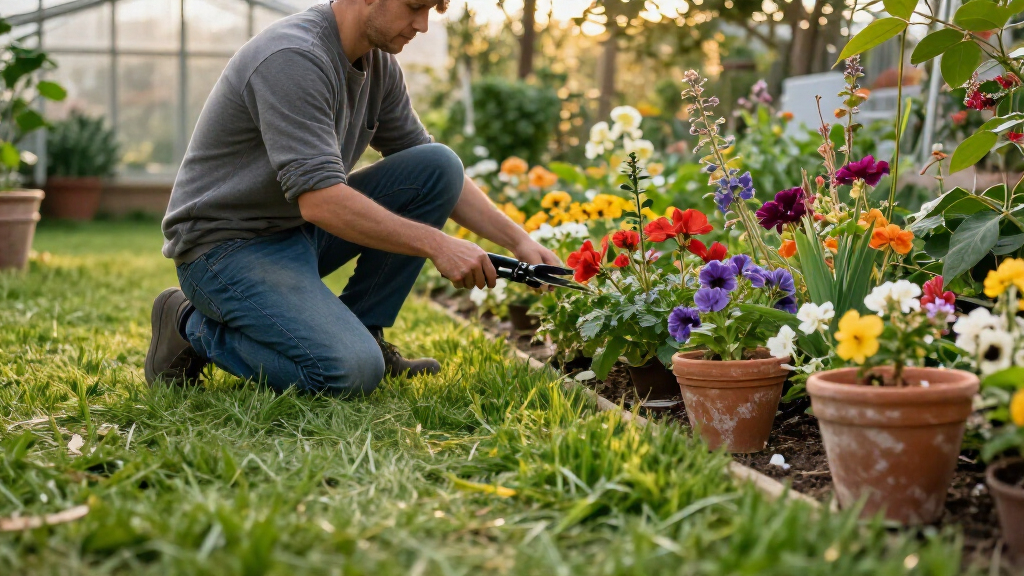
For naturalistic planting, the report points out that an informal appearance does not necessarily mean a lack of planning. Designers consider plants’ height, texture and flowering seasons, and choose varieties that can grow together. A diverse planting mix can provide food and shelter for wildlife; leaving grasses and seed heads standing over winter may also create habitat for insects.
Other styles reflect practical uses. Vegetable beds and fruit trees offer food and a chance to grow varieties that may be hard to find in shops. Open lawns can provide space for children, pets or recreation, while pots and window boxes can make use of balconies, patios and other small spaces. The report’s central point is that design choices can reveal what a gardener wants from the space, but not everything about the person.
How Garden Choices Shape Outdoor Space
The report gives readers a way to think about a garden in terms of its purpose, rather than treating one style as inherently better than another. A lawn can be useful where people need open space; edible planting can serve household needs; and mixed borders can support wildlife while providing seasonal interest. The practical use of a garden may be more revealing than a label attached to its owner.
Those choices can also affect maintenance and resource use. Formal lawns and borders generally call for regular attention, while naturalistic planting still requires planning and care. Conventional turf may need frequent watering and fertilizer, the source notes, prompting some gardeners to replace part of it with clover or native ground covers. The report does not quantify those effects, so the specific benefits depend on the site, plants and care methods.
Products Worth Considering

Husqvarna 110iL FLXi Cordless Grass Trimmer and Edger with 4 Ah Battery and Charger

Orbit B-hyve XR 16-Zone Indoor/Outdoor Smart Sprinkler Controller

Greenworks 48V Brushless Cordless Leaf Blower with Two 4.0 Ah Batteries
As an affiliate, we earn on qualifying purchases.
Five Styles, Different Priorities
The source describes five broad approaches: immaculate gardens, wild or naturalistic planting, edible gardens, lawn-dominated spaces and container gardening. These categories overlap. A household could combine a small play lawn with vegetable beds, pots and a wildlife-friendly border, rather than choosing a single identity or design.
It includes comments from designers and gardeners to illustrate the approaches. Garden designer Timothy Corrigan told ELLE Decor that clients were showing interest in formal elements, saying people were seeking “a sense of order and structure” amid a feeling of being overwhelmed. Dutch garden designer Piet Oudolf told PIN–UP in a 2025 interview that his apparently untamed gardens were composed: “They’re composed, like music.” The comments describe design thinking and perceived preferences, not evidence that particular gardens correspond to specific personality types.
For a lawn, landscape designer Michael Cook advised homeowners to identify a reason for keeping turf, such as play or framing other planting. Gardener and author Barbara Damrosch described the convenience of picking produce nearby: “I can go grab it.” Together, the examples show how a garden can reflect what people want to do outdoors.
“In this period when we’re feeling so overwhelmed by the world around us, we are craving that sense of order and structure.”
— Timothy Corrigan, garden designer, speaking to ELLE Decor
Personality Claims Have Limits
The report does not provide research showing that garden style can predict personality. Its links between planting choices and traits such as perfectionism, practicality or a preference for nature are interpretations, supported by illustrative examples and attributed comments rather than a psychological test or measured study.
It is also not clear from the supplied article excerpt how common each style is, or how strongly gardening choices reflect personality rather than factors such as space, budget, climate, time and household needs. The source material ends during its discussion of container gardening, so further details about that section are not available here.
Choosing a Garden That Works
The report does not announce a follow-up study or a forthcoming policy or product change. For readers considering their own space, its practical takeaway is to start with how they want to use the garden: to play, relax, grow food, support wildlife or make the most of limited room. The resulting design can combine these aims, and can change as needs, seasons and available time change.
Any claim that a particular planting scheme reveals a fixed personality should be treated cautiously. The report’s examples are best read as prompts for thinking about garden priorities and maintenance, not as a way to diagnose an owner.
Key Questions
Can a garden style reliably reveal someone’s personality?
No evidence of a reliable personality test is provided in the report. It presents garden styles as possible clues to priorities, not as proof of personality traits.
Does a naturalistic garden require no maintenance?
No. The report says naturalistic gardens often involve careful planning, including choices about plant height, texture and flowering times. Their informal appearance does not mean they are left entirely untended.
What are some reasons to keep a lawn?
Landscape designer Michael Cook cited uses such as a place for children or pets to play, or a frame for other plantings. The report says conventional turf can require frequent watering and fertilizer, and some gardeners replace part of it with clover or native ground covers.
Can a small space still support a garden?
Yes. The report describes pots and window boxes as ways to grow plants on balconies, patios and other limited spaces, with arrangements that can be changed as seasons and plants develop.
Source: amateurgardening.com