TL;DR
Amateur Gardening’s Andrew Jackson reflects on how planting decisions can shape a garden long after the gardener has left it. His account combines personal experience with seasonal advice, including planting suitable trees and shrubs in November when the ground is not frozen or waterlogged.
Amateur Gardening contributor Andrew Jackson has described how planting trees, hedges and wildlife-friendly spaces can shape a garden for people who may care for it in the future. His reflection, titled “Purposeful planting,” links that long-term idea to practical seasonal advice: November can be a suitable time to plant many deciduous trees and shrubs, as long as the soil is not frozen or waterlogged.

Get garden gear delivered free with Prime
- Fast, free delivery on millions of items
- Prime Video, Amazon Music and more included
- Member-only deals all year
Jackson draws on the changes in his own garden, which had little established planting when he moved into a new-build home. After five years, he says, roses had taken hold on arches, shrubs had grown together and a wildlife pond had become a destination for birds and insects. Some plants succeeded, while others disappeared or proved poorly suited to their original locations. He presents those outcomes as part of the garden’s developing history and as lessons that could inform later decisions.
The column’s central point is that a garden’s inheritance is not limited to mature plants passed down from earlier owners. It can also include habitat, accumulated soil improvements and knowledge gained by trying things and seeing what thrives. Jackson describes a young tree planted in the right place as an investment whose eventual blossom, shade and autumn colour may be enjoyed by someone else.
For November, he recommends considering trees, shrubs and bare-root hedging, while checking conditions first, including these fall planting mistakes to avoid. He names hawthorn, hazel, field maple and dog rose as possible components of a mixed hedge where space permits. The source does not offer a one-size-fits-all planting plan; choices depend on the garden and its conditions, so this fall garden preparation advice may also be useful. Jackson also stresses that even a modest garden may be changed by one carefully selected small tree, with small-space gardening essentials helping make the most of limited room.
Planting Decisions Outlast Their Makers
Jackson’s argument matters to homeowners and gardeners who are deciding whether to prioritize immediate results or allow a space to develop over time. Mature screening and instant borders can meet urgent needs, particularly in overlooked gardens, but the column sets those choices alongside slower planting that may bring future shade, seasonal interest and shelter for wildlife.
The broader consequence is practical as well as sentimental: a garden is shaped by repeated decisions about what to plant, where to plant it and how to improve the soil. A mixed hedge, for example, may serve as a boundary while also offering flowers, berries and shelter. Jackson’s account suggests that planning for future use need not require a large property; it can begin with a suitable tree or other thoughtful addition.
He also makes a distinction between passing on objects and passing on attention. Jackson recalls that his father taught him birdwatching and helped him notice the natural world. That curiosity, he writes, influenced how he later approached gardening. The column therefore treats a garden’s legacy as both a living place and a way of observing it.
Products Worth Considering

Greenworks 48V Brushless Cordless Leaf Blower with Two 4.0 Ah Batteries
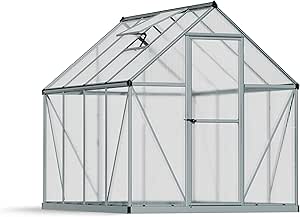
Palram Canopia Mythos 6' x 8' Polycarbonate Greenhouse, Silver

Blackstone 1814 17-Inch Portable Propane Gas Griddle
As an affiliate, we earn on qualifying purchases.
Five Years of Garden Growth
The account begins with Jackson’s crab apple tree, which he planted knowing it would take years to become the tree he imagined. Its fruit and changing autumn leaves provide the immediate scene, but its value in the column is also as an example of planting beyond the present. Jackson says the tree has already added height and a sense of permanence to a garden that began with almost nothing above ground level.
The setting is a new-build garden with little visible history. Jackson recalls that the land had been levelled and enclosed for housing, without mature trees or established borders to guide the new owners. Over five years, the garden acquired its own character through planting and upkeep. His account is personal reflection rather than a survey or a report of measured ecological change; the wildlife observations and growth described are from his own garden.
The seasonal recommendation is tied to November conditions. Jackson says it is a good time to plant many deciduous trees and shrubs while the soil retains some warmth, but qualifies that advice: the ground should be neither frozen nor waterlogged. He presents planting as an act of optimism because the immediate signs of a young tree are small compared with the future growth a gardener imagines.
“I have come to think that inheritance in a garden is not simply about what we receive from those who came before us. It is also about the knowledge, opportunities and living connections we create for those who follow.”
— Andrew Jackson, writing in Amateur Gardening
Limits of the Personal Account
The source is a first-person gardening column, not a controlled study. It does not quantify how much wildlife a particular planting choice will attract, compare the environmental effects of different garden designs or establish that the approaches described will work in every location. Jackson’s species suggestions are examples, not a tailored prescription for a specific reader’s soil, climate or available space.
The supplied material also does not state the article’s publication date, identify a particular gardening region or provide detailed care instructions for the named plants. The November guidance is conditional on ground conditions, and the source does not specify how long any individual tree or hedge will take to mature. Its account of the garden’s development reflects Jackson’s experience rather than a claim about all new-build gardens.
Choosing the Next Planting
For readers considering the same approach, the immediate next step described in the column is to assess the garden and its soil before planting. In November, Jackson says, many deciduous trees and shrubs can be planted if the ground is workable and not waterlogged. Gardeners with room for a boundary hedge could consider a mixture such as hawthorn, hazel, field maple and dog rose, while those with less space might look for a suitable small tree.
The source does not announce a follow-up project or provide a further publication date. Its practical next milestone is the act of planting and then allowing the garden to develop: observing which plants establish, adapting to what does not work and making further decisions over time. The results, Jackson’s account suggests, may be enjoyed by people who were not present when the first plants went into the ground.
Key Questions
What does “purposeful planting” mean in Jackson’s column?
It means choosing plants with their longer-term contribution in mind, including how they may shape a garden, support wildlife and serve people who care for the space later.
Why does Jackson focus on November?
He says November can be a good time to plant many deciduous trees and shrubs because the soil may still hold autumn warmth. He cautions that the ground should not be frozen or waterlogged.
Which plants does the column suggest for a mixed hedge?
Jackson names hawthorn, hazel, field maple and dog rose as possible choices where space allows. The column does not present these as suitable for every garden.
Is the article a scientific study of wildlife gardening?
No. It is a personal reflection by Andrew Jackson, based on the development of his own garden. It does not quantify wildlife outcomes or compare planting approaches through research.
Source: amateurgardening.com