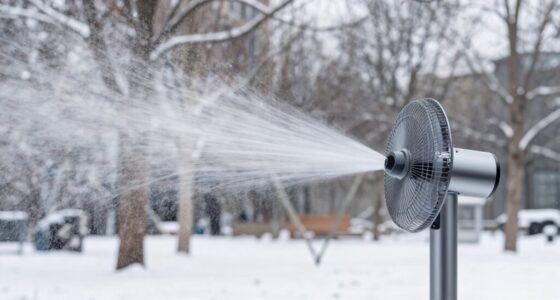
To DIY a hidden water supply for your misting fan, start by selecting a discreet location for the water source and installing a shut-off valve for easy maintenance. Run tubing through walls or ceiling cavities, using conduit or custom enclosures to keep it concealed and protected. Install an inline filter to keep water clean and prevent clogging. Regular checks for leaks and filter maintenance will ensure reliable operation—keep exploring for more tips to perfect your setup.

Get garden gear delivered free with Prime
- Fast, free delivery on millions of items
- Prime Video, Amazon Music and more included
- Member-only deals all year
Key Takeaways
- Plan and route water lines discreetly behind walls, cabinets, or within conduit to keep the supply hidden.
- Install an inline filter directly on the water line to ensure clean water and prevent system blockages.
- Use proper fittings to connect the hidden water source securely, checking for leaks before sealing.
- Incorporate an accessible shut-off valve for easy maintenance and emergency control.
- Regularly inspect tubing and filters to maintain system reliability and prevent leaks or blockages.

If you’re tired of unsightly water tanks cluttering your space, creating a DIY hidden water supply for your misting fan is a smart solution. Not only does it keep your area tidy, but it also guarantees the water flow remains consistent and clean. To do this effectively, you need to consider water filtration and installation safety from the start. Clean water is essential for the longevity of your misting fan and for your health, so integrating proper filtration is a top priority. You can install a small inline filter directly onto your water line, which will remove debris, sediments, and other impurities before they reach the fan. This step helps prevent clogging and guarantees your misting system operates smoothly. When choosing a filter, make sure it’s rated for the water volume and quality in your setup, and regularly maintain or replace it to keep the system ideal.
As for installation safety, it’s vital to plan your setup carefully. First, turn off your main water supply and drain any residual water from the lines before beginning. Use appropriate tools and wear safety gear, such as gloves and eye protection, to avoid accidents. When installing the water line, secure all fittings tightly and check for leaks before fully sealing the system. If you’re routing the line through walls or ceilings, ensure you follow building codes and use suitable conduit or piping to prevent damage and leaks over time. It’s also wise to install a shut-off valve easily accessible in case you need to quickly stop water flow for maintenance or emergencies. Incorporating proper technology such as pressure regulators or automatic shut-off valves can further enhance the safety and efficiency of your hidden water supply.
To hide the water source, consider using a custom-built cabinet, a hollowed-out space behind a panel, or even a decorative enclosure that complements your outdoor or indoor decor. Run the tubing neatly along walls or within conduit to keep everything tidy and protected from accidental damage. When connecting the water supply, double-check all fittings and connections for tightness, and perform a leak test before mounting the misting fan. This ensures your setup is not only hidden but also safe and reliable over the long term. Regular maintenance, including checking for leaks, cleaning filters, and inspecting the tubing, will help you avoid costly repairs and guarantee your misting system works efficiently. With proper planning and attention to safety, creating a discreet, functional hidden water supply for your misting fan becomes straightforward and rewarding.
Products Worth Considering

EGO POWER+ LB7654 Cordless Leaf Blower with 5.0Ah Battery

Greenworks 40V 16-inch Cordless Push Lawn Mower with 4.0 Ah Battery and Charger

Rachio 3 Smart Sprinkler In-Ground WiFi Irrigation Controller, 8-Zone
As an affiliate, we earn on qualifying purchases.
Frequently Asked Questions
What Materials Are Safest for Hidden Water Supply Installation?
When choosing materials for your hidden water supply, prioritize chemical safety to prevent leaks or contamination. Opt for durable, non-corrosive materials like PVC or stainless steel, which resist wear and tear over time. These materials guarantee your setup remains safe and reliable, minimizing maintenance. Avoid cheaper plastics or metals prone to corrosion, as they compromise chemical safety and durability, keeping your misting fan functioning smoothly and safely.
How Often Should I Clean the Hidden Water Reservoir?
You should clean your hidden water reservoir regularly to guarantee optimal misting performance and prevent bacterial growth. Establish a consistent cleaning schedule, ideally once every 1-2 weeks, depending on usage and water quality. Reservoir maintenance is vital, so empty and scrub it thoroughly with a mild disinfectant. Doing this keeps your misting fan working efficiently and extends its lifespan, ensuring you enjoy fresh, clean mist whenever you need it.
Can I Retrofit This System to an Existing Misting Fan?
Think of your misting fan like a trusty steed; with the right upgrades, it can serve better. Yes, you can retrofit a hidden water supply into your existing fan. Focus on maintaining consistent water pressure, which is essential for ideal misting. Follow installation tips carefully—ensure secure connections and proper placement—to seamlessly integrate the new system without sacrificing performance. With patience, you’ll have a discreet, efficient setup in no time.
What Are the Signs of a Water Supply Leak?
You’ll notice a water supply leak when your misting fan’s water pressure drops unexpectedly or if you see water pooling around connections. Leaks often cause inconsistent spray or reduced misting. To detect leaks, check for damp spots, listen for hissing sounds, or perform leak detection by turning off water and observing for drips or drops. Staying vigilant helps prevent damage and guarantees your misting system functions smoothly.
Is There a Risk of Water Damage to Surrounding Areas?
You might wonder if there’s a risk of water damage to surrounding areas. If your hidden water supply isn’t properly installed or maintained, leaks can occur, leading to water damage. To minimize this risk, practice regular inspections and use leak-proof fittings. Implement risk mitigation strategies like installing drainage systems or moisture sensors. Staying proactive helps protect your space from potential water damage and keeps your misting fan functioning smoothly.
Conclusion
Now you’re ready to enjoy a discreet, efficient water supply, a clean setup, and a cooler space. By hiding your water source, you keep your area tidy, your system functional, and your comfort maximized. With a little effort, you’ve created a seamless solution that works quietly, looks neat, and keeps you refreshed. So go ahead, install with confidence, enjoy the coolness, and appreciate the simplicity of your DIY hidden water supply.