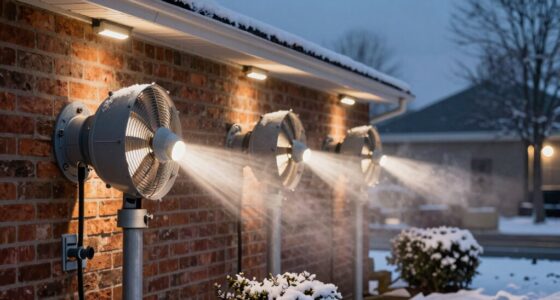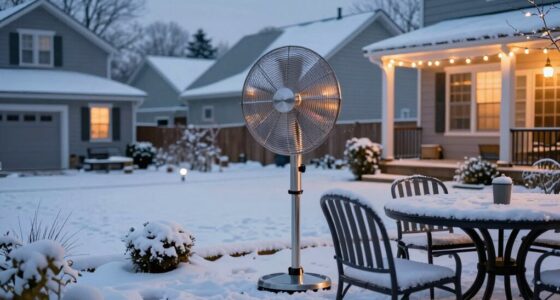
Using an outdoor fan in cold weather isn’t recommended, especially if temperatures fall below 50°F (10°C), as it can damage the motor and waste energy. Fans are designed for warmer conditions, and operating them in very cold weather may cause electrical issues or reduce their lifespan. To keep safe and protect your fan, turn it off during colder days. Want to know how to safely use your fan year-round? Keep exploring for more tips.
Key Takeaways
- Fans may be damaged or less effective when used in temperatures below 50°F (10°C).
- Operating fans in very cold weather can lead to increased energy use and higher utility bills.
- Always check if outdoor fans are rated for cold temperatures before use in winter conditions.
- Turn off fans during freezing temperatures to prevent electrical hazards and motor strain.
- Proper storage and maintenance extend fan lifespan and ensure safe operation during seasonal changes.
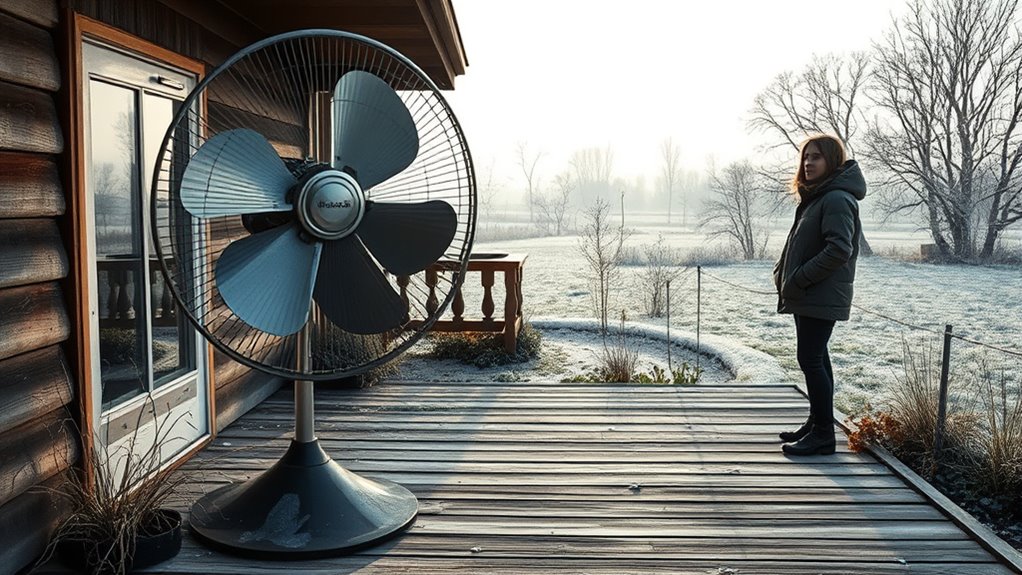
Many people wonder if it’s ever too cold to use a fan outdoors, especially during the cooler months. The answer depends on several factors, including the temperature, the type of fan you’re using, and your safety precautions. While fans are generally designed for warmer weather, many outdoor fans can operate effectively at lower temperatures, provided you understand their limitations.
First, consider energy efficiency. Using a fan in colder weather might seem unnecessary, but if you’re hosting an outdoor gathering during a mild fall evening, a fan can help circulate air and keep bugs away. However, running a fan when it’s too cold isn’t energy-efficient. Fans consume electricity, and operating them in chilly conditions can lead to wasted energy and higher bills. To maximize efficiency, only turn on your fan when needed, and keep an eye on the temperature. If it drops below a certain point—say 50°F (10°C)—you might want to turn it off to avoid unnecessary power use. Remember, many fans are designed for warmer conditions, and operating them in cold weather can strain the motor, reducing their lifespan. Additionally, weather-resistant features are important to ensure safe outdoor use in varying temperatures.
Safety precautions are equally important. If you decide to use an outdoor fan in cooler temperatures, ensure it’s suitable for outdoor use and weather-resistant. Exposure to moisture, cold, and wind can damage unprotected electrical components. Always check the manufacturer’s guidelines before turning on your fan in the colder months. Additionally, keep cords and connections away from water or snow to prevent electrical hazards. If the temperature drops considerably, it’s safer to turn off the fan entirely rather than risk electrical issues or damage. It’s also wise to inspect your fan for any cracks or damage before use, as cold weather can exacerbate existing problems. Proper maintenance and inspection can help prevent malfunctions caused by weather-related stress. Moreover, understanding the specifications of your fan can help determine if it’s rated for outdoor use in colder temperatures. Knowing how to properly store your outdoor fan during off-seasons can further extend its lifespan and efficiency.
Furthermore, understanding the proper maintenance of outdoor fans can help ensure safe operation in varying conditions. Proper maintenance includes regular cleaning, inspecting electrical components, and ensuring the fan is dry and free from debris before use. It’s also helpful to store outdoor fans properly during winter months to prolong their lifespan. Ultimately, while you can use outdoor fans in cooler weather, it’s essential to weigh the benefits against energy costs and safety risks. If you do decide to operate your fan outdoors when it’s chilly, do so thoughtfully. Use fans that are rated for outdoor use, limit their operation to when it’s mildly cool rather than cold, and always follow safety precautions. When in doubt, turning off the fan during very cold conditions is the safest and most energy-efficient choice. Being mindful of these factors ensures you enjoy your outdoor space comfortably and safely, without wasting energy or risking electrical hazards.

Lucky Tom Pet Pad Cooling System for Summer, Consistent Cooling Water Mat for Dogs and Cats, No Refrigeration or Chemical Gel Needed, Machine Washable Bed, Ideal for Home and Crates (Gray, XL)
Cooling a Day: Our advanced cooling technology will cool the pet pad to ideal temperature (between 60-80°F). Effectively...
As an affiliate, we earn on qualifying purchases.
Frequently Asked Questions
Can Outdoor Fans Operate Effectively in Freezing Temperatures?
Outdoor fans generally don’t operate well in freezing temperatures because winter comfort is affected, and their durability can be compromised. Cold weather can cause motor issues or damage the fan’s components, making it less effective or even unusable. If you want to stay comfortable outdoors during winter, consider alternative heating options instead of relying on a fan. Always check your fan’s specifications to see if it’s rated for cold weather conditions.
Do Outdoor Fans Have Temperature Limits Specified by Manufacturers?
Outdoor fans do have temperature limits specified by manufacturers, which you should verify before use. These specifications help ensure fan durability by preventing damage from extreme temperatures. Typically, fans are designed to operate within a certain temperature range; using them outside these limits can shorten their lifespan or cause safety issues. Always read the product details carefully to understand the temperature specifications and avoid using your outdoor fan in conditions that could harm it.
How Does Humidity Affect Outdoor Fan Performance in Cold Weather?
Humidity impact can reduce your outdoor fan’s airflow efficiency in cold weather. When humidity levels are high, the moisture in the air can cause the fan’s blades to become less effective, leading to weaker airflow. This means you might not feel as much cooling or air movement as expected. To get the best performance, use your fan in dry conditions or adjust expectations during humid, cold days.
Are There Safety Concerns Using Fans Outdoors During Winter?
You might think fans are safe outdoors in winter, but safety concerns still exist. Using fans during winter can lead to fan misuse, such as exposure to moisture or cold temperatures that damage the motor or cause electrical hazards. Always consider winter safety, avoid running fans in wet or snowy conditions, and guarantee proper outdoor use to prevent accidents. Stay cautious to enjoy outdoor spaces safely, even in colder weather.
What Are the Best Types of Fans for Cold Outdoor Conditions?
During cold outdoor conditions, look for outdoor fans designed as winter accessories, such as those with built-in heaters or with wind-resistant features. These fans help circulate warm air effectively, making outdoor heating more comfortable. You should prioritize models made from durable, weatherproof materials to withstand winter elements. Using the right outdoor fan ensures you stay cozy while enjoying your outdoor space, even when temperatures drop markedly.

LE SURE Dog Cooling Mat for Extra Large Dogs -Q-Max>0.5 XL Breathable Thin Cool Crate Pad with Chill Cold Fiber and Innovative Mesh Base Design, Portable Washable Pet Kennel Mat for Summer,44x30,Blue
Cools Fast on Contact: The moment your pet lies down, this dog cooling mat provides a refreshing cool...
As an affiliate, we earn on qualifying purchases.
Conclusion
While it might seem a bit chilly for a fan outdoors, there’s always a gentle way to keep things comfortable. If the air feels just a tad brisk, you can still enjoy the breeze without overdoing it. Sometimes, a light fan can be your secret to a cozy outdoor moment, even when the weather isn’t perfectly warm. Just trust your instincts, and you’ll find a way to enjoy the fresh air without pushing the limits.

The Green Pet Shop Cool Pet Pad - Large, Sage Grey - Self-Cooling, Pressure Activated Mat for Dogs & Cats from 46-80 lbs - Non-Toxic Gel, No Water Needed
THE ORIGINAL COOLING MAT - The Cool Pet Pad is a self-cooling mat that produces a chilled sensation...
As an affiliate, we earn on qualifying purchases.

K&H Pet Products Cool Bed III Dog Cooling Mat, Indoor Outdoor Cooling Beds for Medium Dogs, Chilling Pet Pad for in Home, Outdoor Houses, Crates, Yards, Porches - Medium 32 X 22in Chill Blue
POWERFUL COOLING: Cooling dog mat uses no electricity and contains no toxic gels; it wicks heat out of...
As an affiliate, we earn on qualifying purchases.