
TL;DR

Get garden gear delivered free with Prime
- Fast, free delivery on millions of items
- Prime Video, Amazon Music and more included
- Member-only deals all year
A Homes & Gardens report says winter waterlogging, rather than cold alone, is a key risk for alpine plants in many home gardens. It recommends covering vulnerable plants in the ground, moving potted alpines to a dry sheltered place, checking drainage and allowing airflow.
A Homes & Gardens report advises gardeners to protect alpine plants from cold, persistent winter wet, which can deprive roots of oxygen and lead to root or crown rot. Its practical recommendations include sheltering plants in the ground, moving pots to a dry protected place, improving drainage and keeping covered plants ventilated.
The report says alpine plants are adapted to harsh conditions, but the winter environment in many home gardens differs from their natural mountain habitats. In the wild, alpines may sit beneath insulating snow in cold, relatively dry conditions, while rocky soils drain quickly as snow melts. In gardens, rain-soaked soil and repeated freezing and thawing can leave plants wet for long periods. Frost heave can also lift plants from the soil.
Horticulturist Jessica Mercer of Plant Addicts explains that water filling air spaces around roots can deprive them of oxygen; over time, she says, the roots and crown can rot. Mercer also warns that plants with hairy or woolly foliage—including edelweiss, pussytoes and partridge feather—can retain water near the crown and may be more susceptible to crown rot.
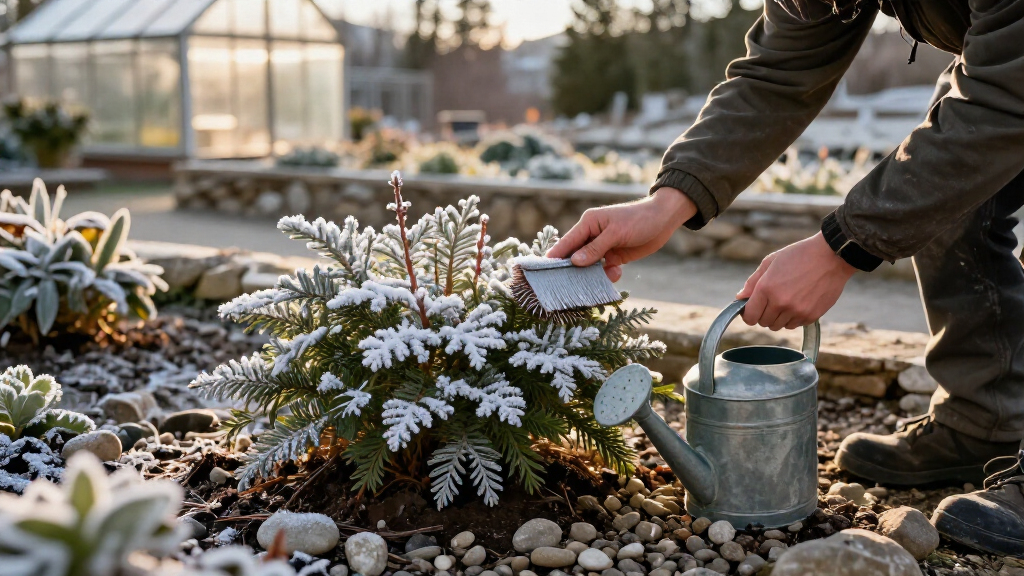
For alpines growing in rock, crevice or gravel gardens, the report recommends a cold frame, cloche or another cover to shield plants from rain. Glass panes or plastic sheeting can also be used, but should be secured; plastic needs staking against wind. Covers should be opened on warmer days to allow air circulation and reduce damp, stagnant conditions that can encourage fungal problems.
Potted plants can be moved into an unheated greenhouse, alpine house, cold frame or porch. Where no indoor structure is available, the report suggests placing pots under house eaves. Raised, slightly tilted containers can shed rain more readily, and gardeners are advised to check that drainage holes are clear before winter. Morgan Brooks, founder and editor of Plant Style Home, recommends pot feet or bricks and a gritty growing mix containing compost, sharp sand and fine gravel.
Keeping Winter Rot at Bay
The advice addresses a mismatch between the conditions alpine plants are adapted to and the damp winters many garden-grown plants face. These plants are often chosen for being hardy and low-maintenance, but that reputation does not mean they can tolerate cold, waterlogged soil for extended periods. Protecting roots and crowns from excess moisture may help plants survive winter and resume growth in spring.
The guidance also distinguishes between plants in the ground and those in containers. A cover can shield a rock-garden planting from rain, while pots can be moved and raised to improve drainage. Ventilation matters alongside shelter: a closed, humid cover may leave plants damp, so airflow and occasional checks remain part of winter care.
Products Worth Considering

EGO POWER+ LB6151 Cordless Leaf Blower with 2.5Ah Battery

Orbit B-hyve Smart Indoor/Outdoor 12-Zone Sprinkler Controller

EAGLE PEAK 8 x 6 ft Pop-Up Walk-In Greenhouse, Clear and Green
As an affiliate, we earn on qualifying purchases.
Why Garden Winters Differ
Alpines originate in environments where cold weather can coincide with good drainage and limited moisture around roots. Snow may insulate plants from wind, and lean, rocky soil allows meltwater to drain. The report contrasts those conditions with milder, wetter home-garden winters, where plants may be exposed to freezing rain and saturated soil instead.
The report’s central point is not that all alpine plants need the same winter setup. Exposure, drainage, whether a plant is in a pot, and the plant’s foliage all affect its risk. The measures described are intended to reduce prolonged wetness while retaining enough airflow; they are not a guarantee against winter damage.
“During wet winters, water fills the air spaces around the roots and deprives the roots of oxygen. Over time, the roots and crown can rot.”
— Jessica Mercer, horticulturist at Plant Addicts
Watering Needs Vary by Plant
The source gives general advice rather than a watering schedule for particular species, climates or growing conditions. It says alpines usually need very little water during winter and advises checking soil moisture every few weeks, but the supplied report text ends before completing its answer to whether winter watering is needed. It does not specify how much to water or how long a plant can safely remain dry.
It is also unclear from the report how much protection is appropriate in different local climates, or which exact cover and growing mix best suit each alpine species. Gardeners should treat the recommendations as general guidance and account for their plants’ needs, local rainfall and drainage.
Check Plants Through Winter
Before prolonged wet or freezing weather, gardeners can check pot drainage holes, raise containers, move vulnerable pots to shelter and install covers over sensitive in-ground plants. During winter, the report recommends checking soil moisture every few weeks and opening cold frames or other covers on warmer days to restore airflow. Continued checks can help identify waterlogging or a persistently damp environment before problems worsen.
As temperatures rise in spring, gardeners can remove or adjust winter covers as conditions allow and watch for signs of new growth. The source does not provide a date for uncovering plants; timing will depend on local weather and the needs of each plant.
Key Questions
What is the main winter risk for alpine plants?
The report identifies prolonged wet soil as a key risk. Water can deprive roots of oxygen and contribute to root or crown rot; repeated freezing and thawing can also lift plants from the soil.
Should alpine plants be watered during winter?
The report says alpines generally need very little water over winter and recommends checking soil moisture every few weeks. It does not give a fixed watering amount or schedule, so conditions and the individual plant matter.
How can I protect alpines growing in a rock garden?
A cold frame, cloche or secured cover can shield vulnerable plants from winter rain. Open the cover on warmer days so air can circulate, rather than allowing a damp, enclosed space to persist.
Where should potted alpine plants spend winter?
The report suggests an unheated greenhouse, alpine house, cold frame or porch. If those are unavailable, pots can be placed under house eaves, raised on pot feet or bricks, and tilted slightly to help rain drain away.
Which alpine plants may be especially vulnerable to crown rot?
According to Jessica Mercer of Plant Addicts, plants with hairy or woolly foliage, including edelweiss, pussytoes and partridge feather, can trap water near the crown and may be more susceptible.
Source: homesandgardens.com