To make a DIY solar charging station for cordless fans, choose high-efficiency panels like monocrystalline and position them toward the sun’s southward while angling correctly. Connect the panels to a reliable charge controller and batteries, preferably lithium-ion, to store excess energy. Guarantee proper wiring to protect your system and use an inverter if your fans need AC power. With careful setup, you’ll create an eco-friendly, cost-effective power source—keep exploring to learn all the steps involved.
Key Takeaways
- Choose high-efficiency monocrystalline solar panels and orient them southward with optimal tilt for maximum sunlight capture.
- Select a suitable battery type, such as lithium-ion, with capacity matching the cordless fan’s energy requirements.
- Incorporate a charge controller to regulate power flow and protect batteries from overcharging or discharging.
- Properly wire the system components, including inverters if necessary, for safe, efficient energy transfer to the fan.
- Integrate the system into a sustainable, eco-friendly setup to ensure reliable, cost-effective cordless fan operation.
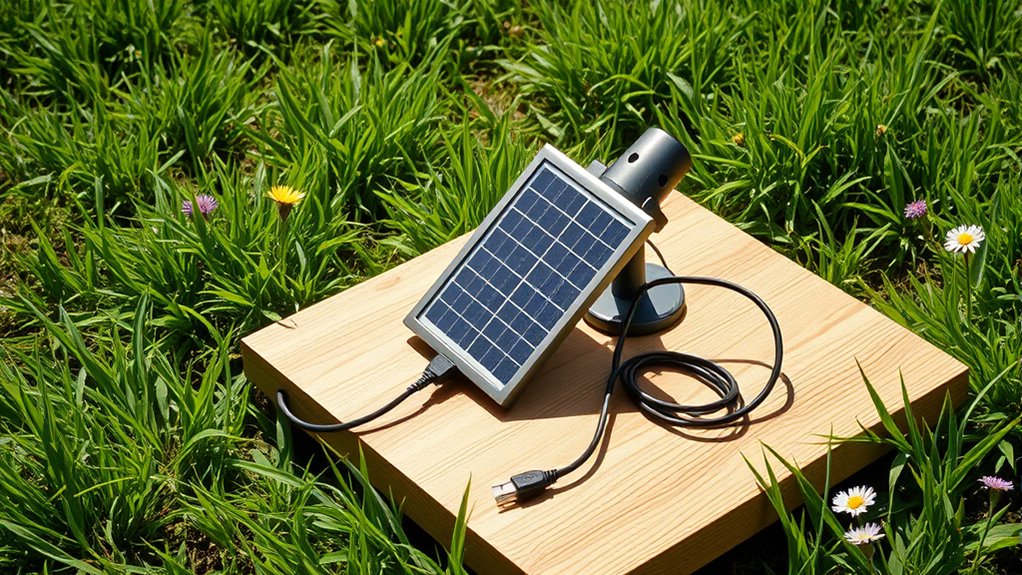
Creating your own solar charging station is a practical way to harness renewable energy and keep your devices powered up sustainably. When building a setup specifically for cordless fans, understanding solar panel efficiency is essential. Higher efficiency panels convert more sunlight into electricity, which means you’ll need fewer panels to generate the same amount of power. Choosing the right solar panel involves considering their wattage and efficiency ratings. Monocrystalline panels typically offer the best efficiency, making them ideal for limited space or when you want maximum power output. As you select your panels, keep in mind that their placement and orientation will considerably influence overall performance. Positioning them to face the sun directly, ideally southward in the northern hemisphere, enhances their efficiency throughout the day. Proper angling ensures you get the most sunlight exposure, especially during peak hours. Additionally, incorporating high-quality panels with good solar panel efficiency helps guarantee your cordless fan stays powered even during cloudy days or in less-than-ideal sunlight conditions. Maximizing solar energy capture is an important aspect to ensure your system works efficiently in various weather conditions.
Equally important are your battery storage options. Since sunlight isn’t always available, especially at night or during overcast days, storing excess energy during peak sunlight hours is critical. Battery storage options come in various forms, such as deep-cycle lead-acid batteries or lithium-ion batteries, each with their pros and cons. Lithium-ion batteries tend to be more efficient, lightweight, and have longer lifespans, making them a popular choice for DIY solar setups. When selecting batteries, consider their capacity, measured in amp-hours or watt-hours, to match your energy needs. For powering a cordless fan, a modest battery bank can suffice, but ensure it’s capable of storing enough energy to run the fan for the desired duration. Proper wiring and a charge controller are essential to protect your batteries from overcharging and discharging. A good charge controller will also optimize the flow of electricity from your solar panels to your batteries, further boosting overall system efficiency.
Finally, integrating your solar panels with reliable battery storage and a suitable inverter ensures your cordless fan operates smoothly. The inverter converts stored DC electricity into AC if your fan requires it, or you can choose a fan that runs directly on DC. With careful planning around solar panel efficiency and well-chosen battery storage options, you’ll create a sustainable, efficient charging station that keeps your cordless fan running no matter where you are. This DIY project not only saves money but also promotes clean energy use, making it a smart, eco-friendly addition to your home or outdoor space.
Frequently Asked Questions
Can I Use Any Solar Panel for My DIY Station?
You can’t just use any solar panel for your DIY station. You need to take into account solar panel compatibility and voltage requirements. Make sure the panel’s voltage matches what your charger or device needs, usually around 5V or 12V. Check the current output too, to ensure it can supply enough power. Using the right panel prevents damage and ensures efficient charging, so pick one that matches your device’s specifications carefully.
How Long Does It Take to Fully Charge the Fans?
Charging times for your fans depend on the solar panel types you use. Generally, it takes several hours of direct sunlight to fully charge a cordless fan, but this varies with panel size and efficiency. High-quality panels with higher wattage reduce charging times, so choosing the right solar panel types can help you power your fans faster. Keep in mind, weather and sunlight conditions also impact how quickly they charge.
Is a Battery Backup Necessary for Cloudy Days?
Did you know that 80% of solar systems experience power fluctuations during cloudy days? A battery backup isn’t always necessary, but it can boost your power stability, especially if your fans need consistent energy. With sufficient battery capacity, you can keep your cordless fans running smoothly when sunlight wanes. So, consider adding a backup to guarantee your fans stay powered, no matter the weather.
What Safety Precautions Should I Follow During Assembly?
When assembling your solar charging station, always prioritize safety. Wear proper safety gear like gloves and goggles to protect against electrical hazards. Follow wiring precautions carefully—double-check connections, avoid exposed wires, and make sure components are rated for your system’s voltage. Work in a dry, well-ventilated area, and disconnect power before making adjustments. These steps help prevent accidents and guarantee your setup is both safe and effective.
Can This System Power Multiple Devices Simultaneously?
You can power multiple devices simultaneously if your solar charging station has a sufficient power load capacity. To guarantee device compatibility, check the wattage and voltage requirements of each device before connecting them. If your system is designed to handle higher power loads, you can safely run several devices at once. Always monitor the total power draw to prevent overloading, which could damage your system or reduce efficiency.
Conclusion
Building your own solar charging station for cordless fans is like crafting a personal slice of sunshine. It’s simple, eco-friendly, and saves you money in the long run. By harnessing the power of the sun, you turn a basic device into a sustainable helper, making your outdoor spaces more comfortable. So, get started today and enjoy the satisfaction of creating something both practical and green—it’s as rewarding as watching a sunrise after a long night.