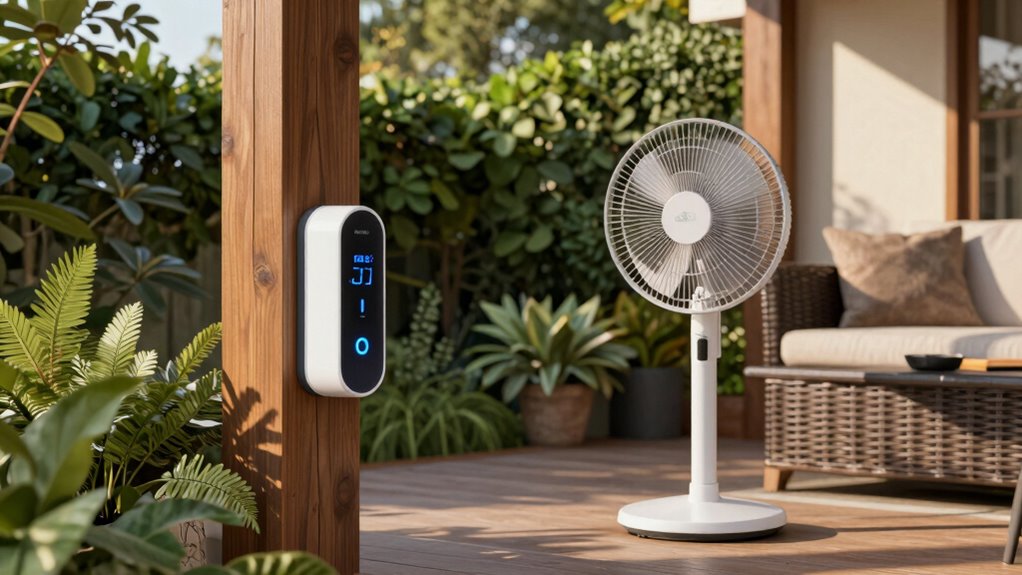
To automate your patio fan based on climate, you should use precise temperature sensors that are properly calibrated and strategically placed in shaded or heat-exposed areas. Wireless sensors make setup easier and allow flexible placement for accurate readings. When connected to a smart system, these sensors monitor temperature changes and turn fans on or off automatically, improving comfort and energy efficiency. Stay tuned to learn more about choosing and maintaining the best sensors for your setup.
Key Takeaways
- Proper calibration ensures accurate temperature readings for reliable fan automation based on patio climate.
- Strategic sensor placement near heat sources or shaded areas improves detection accuracy.
- Wireless sensors enable flexible installation, reducing wiring issues and allowing real-time climate monitoring.
- Setting specific temperature thresholds allows fans to turn on or off automatically, enhancing comfort and energy efficiency.
- Regular maintenance and calibration of sensors maintain system responsiveness and prevent false triggers or missed signals.
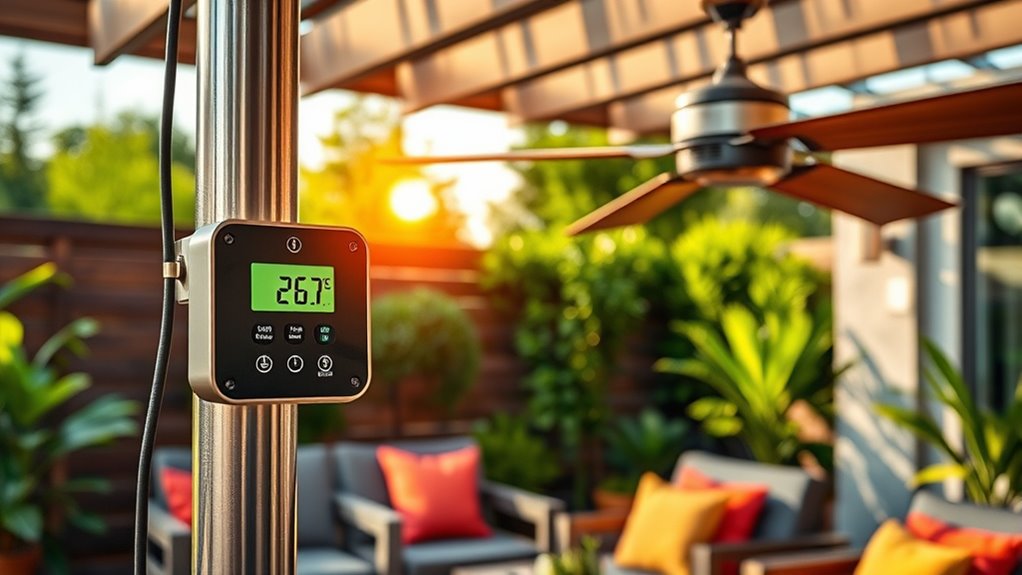
Temperature sensors are devices that detect and measure heat levels in a variety of applications, from industrial processes to everyday appliances. When you’re automating a fan system for your patio, understanding how these sensors work is crucial. Proper sensor calibration is essential to guarantee accurate readings, especially when your goal is to maintain a comfortable environment. Calibration involves adjusting the sensor to match a known temperature standard, which helps prevent false triggers or missed signals. If your sensor isn’t calibrated correctly, your fan might turn on when it’s not needed or fail to activate when it should, leading to discomfort or unnecessary energy use. Regular calibration checks can keep your system operating smoothly and ensure your patio remains at the perfect temperature. Accurate readings are vital for reliable automation performance. Additionally, understanding the sensor placement can significantly impact the accuracy of temperature detection and system responsiveness. Proper placement considers factors like ambient conditions which can influence sensor readings and system behavior. Wireless connectivity plays a critical role in modern temperature sensors, especially in a home automation setting. With wireless-enabled sensors, you can position them conveniently without worrying about cumbersome wiring. This flexibility allows you to place sensors in ideal locations on your patio, such as shaded areas or near heat sources, providing more precise readings. Wireless sensors transmit data seamlessly to your smart home hub or app, giving you real-time temperature updates. This connectivity makes it easier to set specific thresholds for fan activation, ensuring the system responds promptly to temperature changes. Plus, wireless sensors often come with easy-to-install features, meaning you don’t have to be tech-savvy to get your automation running smoothly. Additionally, Wireless connectivity enhances the overall reliability of your system by reducing potential points of failure associated with wired connections. Choosing sensors with reliable wireless technology ensures continuous data flow and minimizes disruptions.
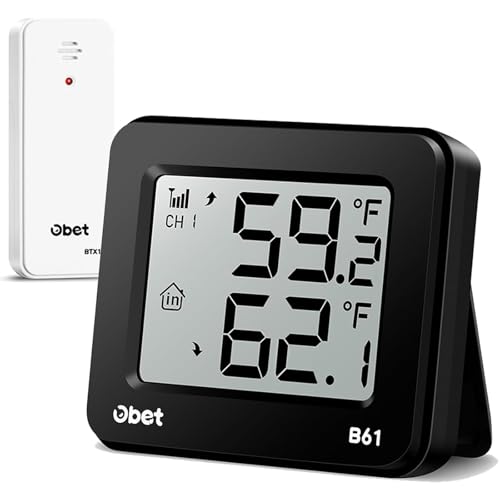
OBET Indoor Outdoor Thermometer Wireless Outdoor Thermometer Digital Thermometer Gauge 500Ft Remote Temperature Monitor for House Home Room Patio B61-Black
Accurate reading: Thermometer indoor outdoor is equipped with a high precision sensor with patented technology, which can respond…
As an affiliate, we earn on qualifying purchases.
As an affiliate, we earn on qualifying purchases.
Frequently Asked Questions
How Accurate Are the Temperature Sensors Used for Patio Climate Control?
You’ll find that the accuracy of your patio temperature sensors depends heavily on proper sensor calibration and placement. When calibrated correctly, they provide reliable readings, usually within a degree or two. Proper placement—away from direct sunlight, wind, or heat sources—ensures consistent data. If you regularly calibrate and position sensors thoughtfully, you’ll get precise climate control, keeping your patio comfortable without unnecessary fan on/off cycles.
What Is the Typical Lifespan of a Patio Temperature Sensor?
You can expect your patio temperature sensor to last around 3 to 5 years, depending on use and environment. Regular sensor calibration helps maintain accuracy, while a durable power supply ensures consistent operation. Keep an eye on any drift in readings or calibration issues, and replace the sensor when it starts to lose precision. Proper maintenance and choosing high-quality components extend your sensor’s lifespan considerably.
Can Sensors Differentiate Between Sun and Shade Temperature Changes?
Yes, sensors can differentiate between sun and shade temperature changes if calibrated properly. You should consider sunshade effectiveness because shades can considerably affect readings. Regular sensor calibration ensures accurate detection of temperature differences caused by sunlight or shade. By adjusting for sunshade effectiveness, your sensor will better recognize true temperature variations, enabling your automation system to respond appropriately, like turning fans on or off based on actual patio conditions.
Are There Wireless Temperature Sensors Suitable for Outdoor Use?
Imagine a breeze whispering through your outdoor space as you monitor your environment. Yes, there are wireless temperature sensors designed for outdoor use, offering reliable wireless connectivity and outdoor durability. These sensors withstand rain, sun, and wind, giving you real-time temperature data without cumbersome wiring. You can effortlessly automate fans or climate controls, ensuring comfort while enjoying your patio, regardless of weather changes.
How Do Sensors Handle Extreme Weather Conditions?
Sensors handle extreme weather conditions through robust weatherproof design that shields them from rain, snow, and dust. Regular sensor calibration ensures accuracy despite temperature fluctuations. High-quality outdoor sensors often feature sealed enclosures and corrosion-resistant materials, making them durable in harsh environments. You should verify these features when choosing sensors, guaranteeing they are rated for your specific climate conditions, so your outdoor automation remains reliable regardless of weather extremes.

BN-LINK Digital Cooling Thermostat Controller, Temperature Controlled Outlet for Attic Fan, Exhaust Fan, Cooling Devices 40-108°F, 8.3A 1000W
EFFORTLESS COOLING SETUP: Simply place the probe, plug in digital temperature controller, and use the large 3-button interface…
As an affiliate, we earn on qualifying purchases.
As an affiliate, we earn on qualifying purchases.
Conclusion
Imagine your patio as a busy bee, constantly adjusting its wings to keep cool. With temperature sensors, you’re the beekeeper, effortlessly guiding the fans to turn on or off as the climate changes. Just like a bee responds instinctively, these sensors react instantly to temperature shifts, ensuring comfort without you lifting a finger. Embrace this technology, and you’ll create a climate as perfectly tuned as a hive in harmony—cool, calm, and always just right.

YoLink X3 Outdoor Temperature and Humidity Sensor with Data Logger, Thermometer, 1/4 Mile Range, 5+ Years Battery Life, Emails, Text, App Alerts, Alexa, IFTTT. Hub Required!
Monitor & Manage Temperature & Humidity Remotely: using the free, no subscription-required and user-friendly YoLink app, you will…
As an affiliate, we earn on qualifying purchases.
As an affiliate, we earn on qualifying purchases.

Irritrol CL-100-WIRELESS Climate Logic Wireless Weather Sensor/Receiver Combo
Built-in radios – For easy, wireless installation with less labor than wired systems
As an affiliate, we earn on qualifying purchases.
As an affiliate, we earn on qualifying purchases.