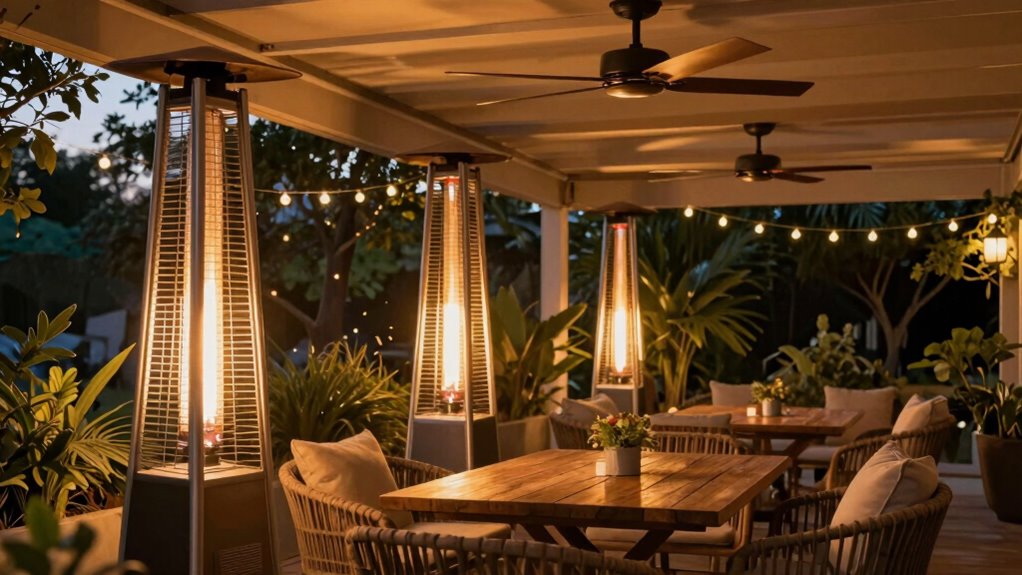

You can make outdoor heating more effective by managing airflow alongside your heaters. Proper placement of heaters near natural barriers or wind shields helps block drafts and concentrate warmth where you need it most. Using wide-angle dispersal models and positioning heaters behind walls or overhangs ensures better heat coverage. Combining wind-resistant features with smart placement creates a cozy outdoor space that stays warm longer. Keep exploring to discover how strategic setups can maximize outdoor comfort even during chilly days.
Key Takeaways
- Proper heater placement near natural barriers or windbreaks reduces heat loss and enhances warmth retention.
- Using wide-angle dispersal heaters ensures even heat coverage across outdoor areas.
- Incorporating wind-resistant features like shields or domes maintains consistent warmth despite breezes.
- Understanding airflow patterns helps position heaters to minimize wind impact and maximize efficiency.
- Combining natural barriers with wind-resistant designs creates a synergistic effect, improving outdoor comfort.
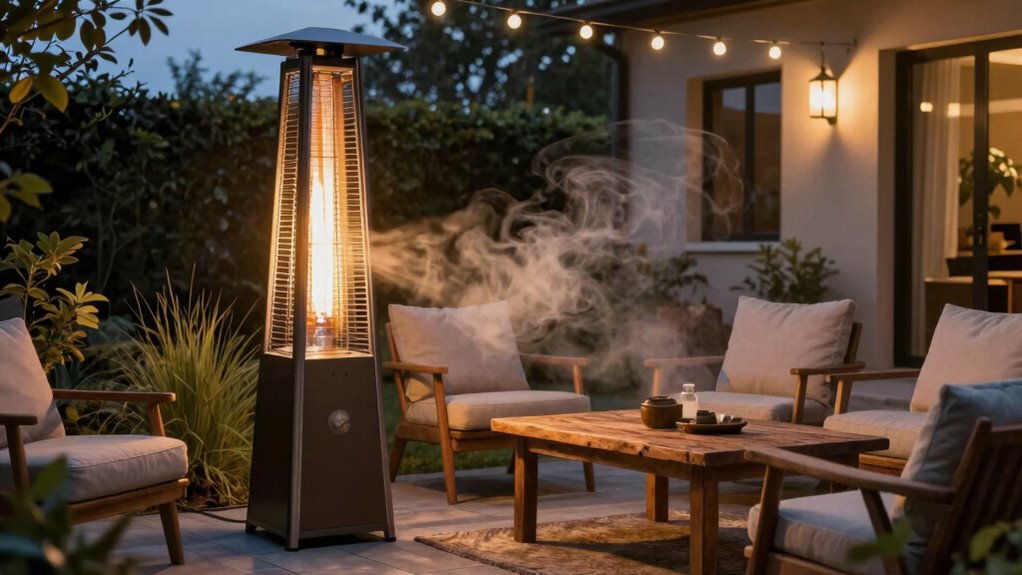
When it comes to enjoying outdoor spaces year-round, understanding how outdoor heating and airflow work together is essential. You want to stay warm without feeling like you’re fighting against the elements, and that’s where effective heat distribution and wind resistance come into play. Proper heat distribution ensures that warmth reaches every corner of your outdoor area evenly, preventing cold spots and making your space more inviting. If the heat isn’t evenly spread, you might find yourself close to the heater but still shivering in the shadows. By strategically positioning heaters or choosing models with wide-angle dispersal, you can maximize heat coverage and create a cozy environment.
Strategically position heaters with wide dispersal for even warmth and a cozy outdoor experience.
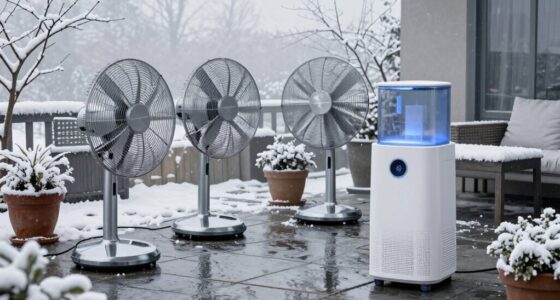
Wind resistance is equally important because wind can quickly undermine your efforts to stay warm. Even the most powerful outdoor heaters lose their effectiveness if gusts blow the heat away faster than it can warm the space. That’s why many outdoor heating solutions are designed with wind resistance features. These include shields, domed enclosures, or strategic placement behind natural barriers like walls or fences. When you understand how airflow interacts with your heating setup, you can minimize heat loss caused by wind and make your outdoor space more comfortable.
The combination of good heat distribution and wind resistance creates a synergy that dramatically improves outdoor comfort. For example, a heater with a wide dispersal pattern placed near a windbreak can project warmth more effectively, reducing the impact of breezes that would otherwise disperse heat. Additionally, when airflow is managed—say, by positioning heaters behind screens or within sheltered areas—you prevent drafts from cooling the space too quickly. This means you can enjoy longer periods of warmth without constantly adjusting your heaters or adding more sources of heat.
It’s also helpful to regard how airflow naturally moves around your outdoor space. You might notice that certain spots are more exposed to wind or that heat tends to concentrate near walls or structures. By understanding these patterns, you can optimize your heater placement and use natural features to enhance wind resistance. For instance, placing heaters under overhangs or behind planters can help trap the heat and block wind, making your outdoor environment more cozy and energy-efficient. Being aware of airflow patterns allows you to make smarter decisions about where to position your heating elements for maximum efficiency. Additionally, considering natural barriers can significantly enhance the effectiveness of your outdoor heating setup by reducing wind exposure. Recognizing the impact of wind dynamics helps you create a more consistent and pleasant outdoor temperature. Moreover, integrating wind-resistant features into your setup can further improve overall warmth retention and comfort. Understanding heat dispersal can also help you tailor your outdoor heating to better meet your specific needs, making your outdoor experience more enjoyable during colder months.

Amazon Basics 46,000 BTU Portable Outdoor Propane Patio Heater with Wheels, Commercial & Residential with Water Tank, Adjustable Heat Output, 9-Foot Radius, Slate Gray, 32.1"L x 32.1"W x 91.3"H
SOOTHING WARMTH: Outdoor gas heater for cozy warmth when sitting outside; ideal for cafes, restaurants, and home patios
As an affiliate, we earn on qualifying purchases.
As an affiliate, we earn on qualifying purchases.
Frequently Asked Questions
How Do Outdoor Heating Systems Affect Airflow Efficiency?
Outdoor heating systems can influence airflow efficiency by promoting better thermal dispersion, which helps warm the area evenly. They also aid in airflow regulation by creating targeted heat zones, preventing heat loss and reducing drafts. When used correctly, these systems optimize airflow, ensuring consistent warmth without disrupting natural ventilation. Properly designed outdoor heaters work in harmony with airflow patterns, enhancing comfort and energy efficiency in outdoor spaces.
Can Outdoor Heaters Be Adjusted for Optimal Airflow?
Yes, outdoor heaters can be adjusted for ideal airflow by focusing on ventilation control to enhance thermal comfort. You should position heaters to avoid obstructing airflow and use adjustable settings to regulate heat distribution. Proper placement and control help maintain a comfortable environment, ensuring heat circulates efficiently without creating hot spots or drafts. Regular adjustments based on outdoor conditions maximize thermal comfort while supporting effective airflow.
What Safety Precautions Are Necessary With Combined Heating and Airflow Systems?
You should follow safety regulations and perform regular maintenance procedures to guarantee safe combined outdoor heating and airflow systems. Always check for proper clearance around heaters to prevent fire hazards, and inspect electrical components regularly for damage. Keep ventilation clear to avoid carbon monoxide buildup, and ensure heaters are turned off when not in use. Staying vigilant with these precautions helps prevent accidents and guarantees ideal system performance.
How Does Wind Impact Outdoor Heating Performance?
Wind effects can considerably reduce outdoor heating performance by causing airflow disruption. When wind blows, it disperses the heat away from your space, making heaters less effective. To counter this, you should position heaters in sheltered spots, use windbreaks, or select models designed to withstand airflow disruption. These measures help maintain consistent warmth, ensuring your outdoor area stays cozy despite windy conditions.
Are There Specific Designs That Enhance Both Heating and Airflow?
You’ll find that clever design integration actually enhances both heating and airflow, despite seeming like a challenge. Some outdoor heaters feature adjustable vents and strategic placement to optimize airflow, ensuring warmth reaches more area efficiently. These designs boost airflow optimization, creating a cozy environment even on breezy nights. Ironically, the best setups often look simple but are carefully engineered to balance airflow and heat, proving good design makes all the difference.

HQQ outdoor Patio Heater Reflector Shield, Aluminum Heat Reflector Shield Top for Propane Outdoor Heaters,Dome Replacement Parts(3-Hole Mount,33" Diameter Round)
【For Your Patio Heater】The patio heater reflector shield top is a perfect replacement part for patio heater.HQQ outdoor…
As an affiliate, we earn on qualifying purchases.
As an affiliate, we earn on qualifying purchases.
Conclusion
Think of outdoor heating and airflow as a dance, perfectly synchronized to keep you warm and comfortable. When you understand how they work together, it’s like orchestrating a symphony where each element plays its part in harmony. By optimizing airflow, your heater can cast a cozy glow over your space, turning a chilly evening into a warm embrace. Together, they create a seamless flow of warmth, making every outdoor moment feel like a comforting, endless summer night.

Golden Flame XL-Series Natural Gas Patio Heater, 45,000 BTU, 89" Tall, Push-Button Ignition, Anti-Tilt Safety, Wheels, Hammered Silver/Pewter
HEAT OUTPUT: 45,000 BTU warms up to a 15 ft diameter; wide aluminum reflector and stainless burner spread…
As an affiliate, we earn on qualifying purchases.
As an affiliate, we earn on qualifying purchases.
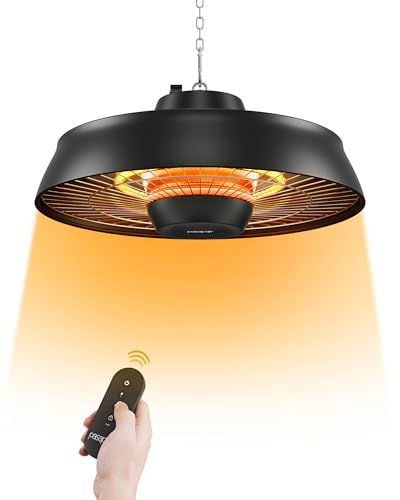
Pasapair Patio Heater – 1500W Outdoor Hanging Heater 3S Fast Heating with Remote – Adjustable Height Waterproof Infrared Mounted for Gazebo – ETL Certified
Effective Heating: You'll feel warm fast as our outdoor heater boasts 2 adjustable heating levels – 650W and…
As an affiliate, we earn on qualifying purchases.
As an affiliate, we earn on qualifying purchases.