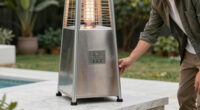
When planning your outdoor kitchen, you need better air management than indoors because elements like wind, rain, and humidity can greatly affect airflow and safety. Proper ventilation is essential to carry away smoke, heat, and fumes, preventing health risks and discomfort. You should position appliances carefully and consider installing outdoor fans or hoods. If you continue exploring, you’ll discover how to optimize your outdoor space for both safety and comfort.
Key Takeaways
- Outdoor kitchens face greater ventilation challenges due to exposure to elements like wind, rain, and humidity.
- Proper air planning prevents smoke and fumes from lingering, ensuring safety and comfort during outdoor cooking.
- Strategic appliance placement and ventilation devices are essential for effective airflow and odor control.
- Weather conditions require adaptive ventilation solutions to maintain equipment durability and environmental safety.
- Well-designed outdoor air systems enhance usability, safety, and longevity beyond indoor kitchen standards.

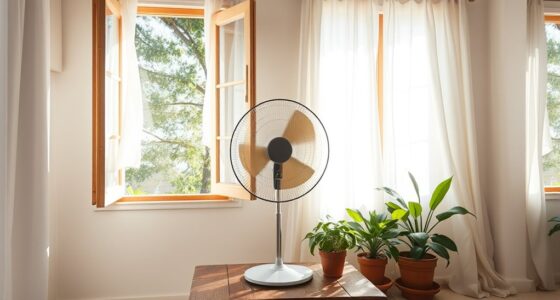
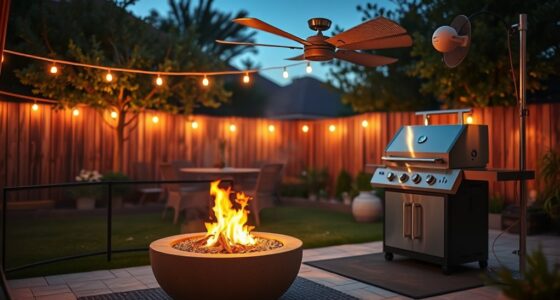
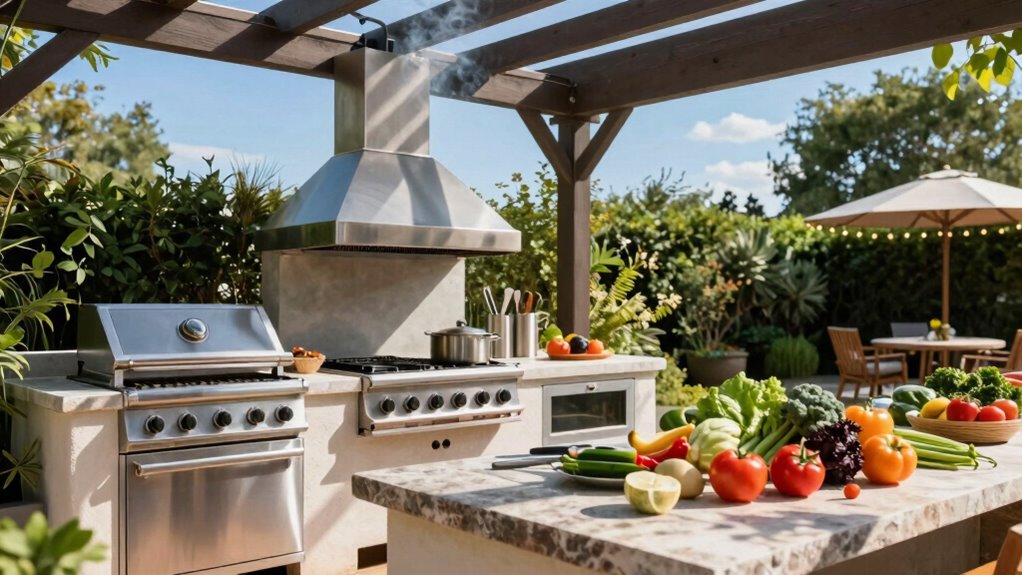
If you’re designing an outdoor kitchen, overlooking proper air planning can lead to safety hazards and discomfort. Unlike indoor kitchens, outdoor spaces are more exposed to the elements, and ventilation challenges can quickly arise if you don’t plan carefully. You might think that open-air environments naturally handle smoke and fumes better, but without proper airflow, smoke from grills and burners can linger, creating a smoky, unpleasant atmosphere. Poor ventilation not only affects comfort but can also pose health risks, especially if fumes contain carbon monoxide or other harmful gases. It’s essential to position your cooking appliances where airflow can carry away smoke and heat efficiently, avoiding enclosed or stagnant areas. Incorporate adequate ventilation solutions, like range hoods or outdoor fans, to prevent smoke accumulation and ensure a safe, comfortable cooking experience. Additionally, understanding weather considerations such as wind, rain, and humidity is crucial for optimal air flow and equipment longevity. Proper airflow management can significantly enhance the usability of your outdoor kitchen and keep the environment healthier. weather considerations play a huge role in how you approach air flow in your outdoor kitchen. Wind, rain, and humidity can all influence how well your ventilation system functions and how comfortable you feel when cooking. For example, wind can either help disperse smoke or blow it back into your seating area if not properly directed. If you’re in a windy climate, design your layout to shield cooking zones from gusts that could blow smoke into lounging spaces, while still allowing enough airflow to clear fumes. Rain and high humidity can also affect ventilation; moisture can cause rust on metal components or reduce the effectiveness of certain equipment. During wet weather, you might need to enclose some parts of your kitchen or install covers that still permit airflow. Humidity can make cooking less comfortable and can lead to condensation problems if not managed properly, so consider incorporating dehumidifiers or proper drainage systems. Proper air circulation is essential to maintain a comfortable environment and prevent moisture buildup. Additionally, selecting weather-resistant materials** for your fixtures and surfaces can help ensure durability and safety over time. Being mindful of local climate conditions** can help you choose the right design features and materials, making your outdoor kitchen more resilient and enjoyable. By thoughtfully addressing these weather factors, you can create a resilient outdoor kitchen that remains functional and inviting no matter the conditions outside.

VIKIO HOME Wall Mount Range Hood 30 inch, 580 CFM, Ducted/Ductless Convertible, Stainless Steel Kitchen Vent Hood with 3-Speed Fan and LED Lights
- Increased Airflow with Dual Intake: 20% more airflow with dual intake
- Powerful 580 CFM Capacity: Effective smoke and odor removal
- Stainless Steel Construction: 430-grade brushed stainless steel design
As an affiliate, we earn on qualifying purchases.
As an affiliate, we earn on qualifying purchases.
Frequently Asked Questions
What Are the Key Differences in Airflow Requirements Between Outdoor and Indoor Kitchens?
You need to understand that outdoor kitchens require more robust airflow and cooking exhaust systems than indoor kitchens. Indoor airflow typically relies on controlled ventilation, while outdoor spaces face unpredictable wind and weather, making proper exhaust placement essential. You should make certain that cooking fumes are effectively vented away, preventing buildup and odors. Proper air planning in outdoor kitchens guarantees safety, comfort, and a pleasant cooking experience, unlike indoor setups that depend on fixed ventilation systems.
How Does Weather Impact Outdoor Kitchen Ventilation Design?
As you plan your outdoor kitchen, seasonal weather and wind patterns considerably influence ventilation design. When gusts blow, they can carry smoke and odors away or push them back toward you, so positioning your grill and vents becomes essential. You might notice how a gentle breeze shifts direction, reminding you to incorporate adjustable vents or fans. Properly accounting for weather guarantees your outdoor space remains comfortable, clean, and enjoyable year-round.
Are There Specific Materials That Improve Outdoor Air Quality?
Choosing materials that enhance outdoor air quality is essential. Opt for surfaces with good air purification qualities, like natural stone or treated metals, which resist mold and reduce pollutants. Material selection should prioritize breathable, non-toxic options that don’t emit volatile organic compounds (VOCs). These choices help improve airflow and air quality, making your outdoor kitchen safer and more comfortable. Proper material selection is a key step toward effective outdoor ventilation and healthier cooking environments.
What Safety Codes Apply to Outdoor Kitchen Ventilation?
You might think outdoor kitchens are carefree, but fire safety and building regulations still apply. You need to follow local codes for ventilation, ensuring proper clearance and exhaust systems to prevent smoke buildup and fire hazards. Building regulations specify safe distances from structures and electrical safety standards. Ignoring these can turn your outdoor paradise into a risky zone, so always check with local authorities to keep your outdoor cooking safe and compliant.
How Can I Optimize Airflow for Multiple Outdoor Cooking Stations?
To optimize airflow for multiple outdoor cooking stations, guarantee proper placement of exhaust hoods and vents to effectively vent outdoor odors and smoke. Use fans or ceiling-mounted exhaust systems to promote continuous airflow, preventing odors from lingering and reducing insect attraction. Incorporate screens and insect control measures around vents. By designing a well-ventilated layout, you’ll improve air quality, keep pests away, and make your outdoor kitchen more comfortable and functional.
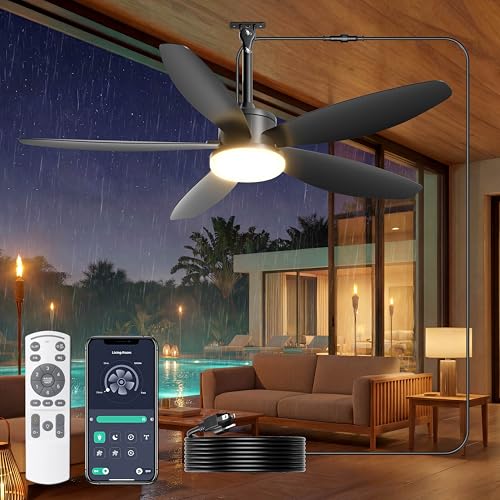
Phylluz 42'' Plug in Outdoor Ceiling Fan with Lights for Gazebo, Black
- Waterproof IP65 Housing: Suitable for indoor and outdoor use
- Long 16.4FT Power Cord: Easy plug-in installation
- Strong 4600 CFM Airflow: Powerful cooling and circulation
As an affiliate, we earn on qualifying purchases.
As an affiliate, we earn on qualifying purchases.
Conclusion
Think about it—your outdoor kitchen isn’t just about good looks and appliances. It needs proper air planning, just like an indoor kitchen, to keep smoke, heat, and odors at bay. Without it, your space might become more frustrating than functional. So, next time you plan your outdoor cooking area, ask yourself: are you giving enough thought to the airflow? After all, a well-ventilated outdoor kitchen can turn every meal into a true outdoor experience.

MR. COVER Outdoor prep table cover 52 inch for Keter Unity XL Outdoor Rolling Table Cart, 600D Heavy Duty Waterproof for Grill Dining Kitchen Island cart Protective, Outdoor Storage Cabinet Cover
- Custom Fit for Keter Unity XL: Designed for 54"D x 23"W x 35"H table
- Heavy Duty Waterproof Material: Made with tear-resistant, waterproof polyester fabric
- All-Weather Protection: Resists sun, rain, snow, hail, dust, and dirt
As an affiliate, we earn on qualifying purchases.
As an affiliate, we earn on qualifying purchases.

iLIVING 12" Wall Mounted Shutter Exhaust Fan, Automatic Shutter, with Thermostat and Variable Speed controller, 0.6A, 960 CFM, 1400 SQF Coverage Area Silver (ILG8SF12V-ST)
- High Airflow Capacity: 960 CFM for large areas
- Automatic Shutter System: Ensures controlled ventilation
- Variable Speed & Thermostat: Adjusts airflow and temperature
As an affiliate, we earn on qualifying purchases.
As an affiliate, we earn on qualifying purchases.