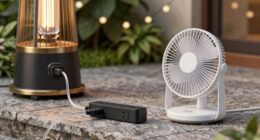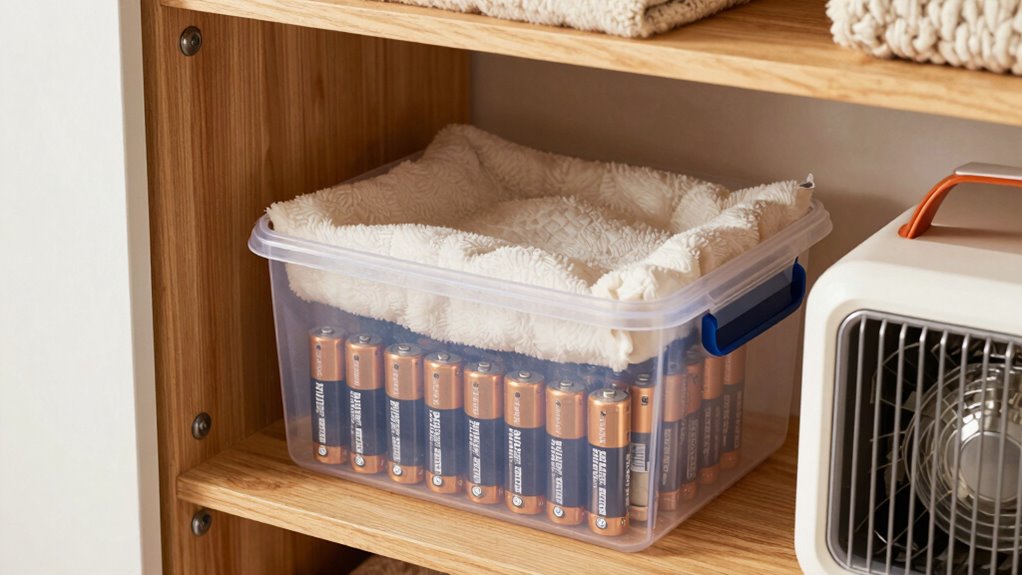

To store your cordless fan’s battery during cold months, remove it if possible and charge to around 50-70% beforehand. Keep the battery in a cool, dry place away from direct sunlight, ideally between 32°F and 68°F. Avoid extreme cold and excessive heat, which can damage the battery. Check the battery periodically for signs of damage and recharge as needed. Staying mindful of these tips will help you maintain best battery health and performance over time.
Key Takeaways
- Remove batteries from cordless fans before winter to prevent damage from cold exposure.
- Store batteries in a cool, dry place at approximately 50-70% charge for optimal longevity.
- Keep batteries away from direct sunlight and extreme temperatures to avoid capacity loss.
- Regularly inspect stored batteries for swelling, corrosion, or leaks, and replace if damaged.
- Recharge batteries to half-full every few months to maintain cell health during long-term storage.

Battery Care 101
Your device’s battery is a vital component that keeps everything running smoothly, but it needs proper care to last longer. During cold months, when you’re not using your cordless fan, how you handle its battery becomes even more important. Proper battery maintenance involves more than just charging it up; it’s about understanding how to store it correctly to prevent damage and extend its lifespan. One key aspect is ideal storage, which means keeping the battery in the right conditions when the device isn’t in use for extended periods.
Proper storage of your device’s battery extends its lifespan, especially during winter months.
When storing your cordless fan during winter, it’s best to remove the battery if possible. Leaving the battery inside the device can sometimes lead to issues if the device is stored in a cold environment. Cold temperatures can cause the battery’s internal chemistry to slow down, which might result in decreased capacity or even damage over time. To avoid this, charge the battery to around 50-70% before storing it away. Storing a fully charged or completely drained battery can reduce its overall lifespan, so finding that sweet spot is essential.
Next, pay attention to the storage environment. Keep the battery in a cool, dry place away from direct sunlight or any heat sources. Extreme cold can temporarily reduce performance, but prolonged exposure can cause permanent damage. The ideal temperature for storage is between 32°F and 68°F (0°C to 20°C). If you live in a particularly cold climate, consider storing the battery indoors where temperatures are more stable. Avoid storing it in unheated garages or outdoor sheds where temperatures can drop below freezing. Additionally, be aware that battery chemistry plays a significant role in how batteries respond to cold temperatures, so understanding this can help you make better storage decisions. Proper insulation or using temperature regulation methods can also help protect the battery from extreme conditions.
Another important point is to check the battery periodically during storage. Every few months, inspect it for any signs of swelling, corrosion, or leakage. If you notice anything unusual, it’s safest to replace the battery. Also, recharge the battery to about half-full if it’s been stored for a long time. This prevents it from becoming completely discharged, which can damage the cells. Remember, maintaining a stable charge level and keeping the battery in suitable storage conditions help preserve its capacity and prolong its usable life.
Frequently Asked Questions
Can Storing Batteries in the Fridge Harm Their Performance?
Storing batteries in the fridge can harm their performance due to refrigeration risks like condensation, which may cause corrosion and battery degradation. Cold temperatures slow down chemical reactions, reducing battery efficiency temporarily, but frequent cycling between hot and cold worsens long-term health. If you choose to refrigerate batteries, keep them in airtight containers and allow them to warm up gradually before use. Otherwise, proper storage in a cool, dry place is best to preserve battery life.
How Often Should I Check the Battery During Storage?
It’s wise to keep an eye on your battery’s well-being, so check it every few weeks during storage. This simple battery maintenance guarantees it stays healthy and avoids potential issues. Maintaining a consistent storage frequency allows you to monitor its charge level and condition without overdoing it. By staying attentive, you help preserve your battery’s performance, ensuring it’s ready to use whenever you need it again.
Is It Safe to Use a Cordless Fan With a Stored Battery?
Yes, it’s generally safe to use a cordless fan with a stored battery, but keep in mind that storage temperature affects battery lifespan. If you store the battery in a cool, dry place, it helps maintain its performance. Before use, check the battery’s charge and inspect for any damage. If it looks swollen or leaks, avoid using it to prevent safety hazards. Proper storage guarantees the battery stays in good condition for future use.
What Signs Indicate a Battery Has Been Damaged by Cold Storage?
If your battery shows signs of damage from cold storage, look for corrosion around the terminals or swelling signs on the casing. Corrosion appears as a white or greenish residue, while swelling makes the battery bulge or deform. These are clear indicators that cold temperatures have compromised the battery’s integrity. Avoid using it, and dispose of it properly to prevent safety hazards.
Should I Fully Charge or Discharge the Battery Before Storing?
You should fully charge your battery before storage to guarantee ideal battery maintenance and follow storage best practices. A fully charged battery helps prevent capacity loss and potential damage caused by low voltage during cold months. While some think discharging first is better, it can actually harm the battery. Keep it charged to around 50% if you’ll store it for an extended period, but always avoid leaving it fully discharged.
Conclusion
Now that you know how to store your cordless fan’s battery during cold months, you’re all set to keep it healthy and ready for use. Think of your battery as a delicate plant that needs proper care—if you nurture it well, it’ll bloom with life when spring arrives. Proper storage isn’t just maintenance; it’s giving your device a gentle hug, ensuring it stays in top shape for when you need it most.