TL;DR
Homes & Gardens has published six porch-decorating ideas designed to carry an entrance from fall into Christmas. The suggestions include birch stems, layered lanterns, mixed evergreen foliage, galvanised tubs, winter berries and restrained seasonal accents; the report offers design guidance, not a measured assessment of how long displays last.
Homes & Gardens has published six ideas for decorating a porch between fall and Christmas, with arrangements built around birch stems, lanterns, evergreen foliage, metal tubs and winter berries. The guide is aimed at homeowners seeking a seasonal entrance that can remain in place across the change in season, rather than a display tied to a single holiday.

Get garden gear delivered free with Prime
- Fast, free delivery on millions of items
- Prime Video, Amazon Music and more included
- Member-only deals all year
The report’s first approach is to use bare birch poles in planters to create a winter-woodland look. Front Porch Flowers owner and designer Amanda Kramer says birch adds a pale natural tone that contrasts with greenery. Floral designer Kiersten Olsen recommends securing stems in packed soil or suitable floral support, varying their height and spacing, and using groups of three or five as a starting point. For square pots, she suggests a central triangular arrangement; for long rectangular planters, stems can be staggered along the middle.
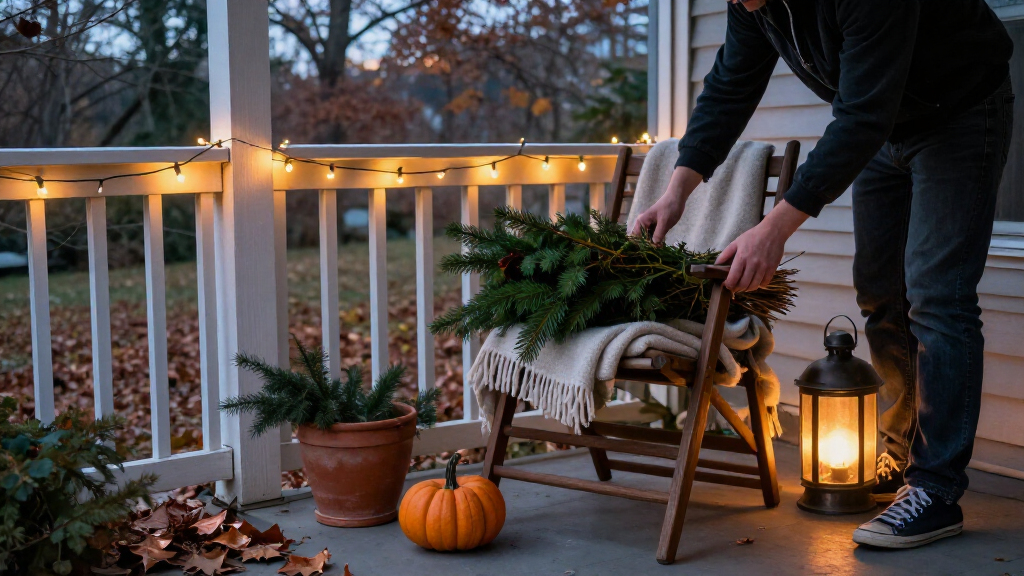
A second idea pairs lanterns with evergreen foliage. The article suggests using LED votives or LED candles for a soft glow and grouping smaller lanterns in threes or fives on steps or walls. Its other greenery advice is to combine several types for contrasting texture and shape: Kramer describes placing spruce toward the back of a planter, draping cedar over the edges, then adding magnolia, pine and eucalyptus. Olsen recommends combining at least three kinds of greenery, naming cedar, Douglas fir and silver fir as options.
The remaining suggestions use galvanised steel tubs filled with logs, greenery or pine cones; add winter berries and seedheads sparingly to planters, wreaths or garlands; and finish with accents such as pine cones, dried seedheads, eucalyptus, or cream and gold details. The source also suggests mixing foraged greenery with realistic faux pieces. These are design recommendations from the article and its quoted floral designers, not claims that any particular materials will withstand every climate or weather condition.
A Porch Designed for Two Seasons
The advice addresses a practical decorating choice: how to make an entrance feel seasonal in late fall without immediately replacing the display for Christmas. Evergreen structure, natural stems and reusable containers can form a base, while smaller accents such as berries or lights can change the mood. That approach may help readers avoid a porch scheme that feels tied to only a brief part of the season.
The recommendations also offer a way to adapt displays to different spaces. Lantern groupings and planter shapes are discussed directly, while containers, greenery and decorative accents can be chosen to fit a porch’s available room and style. The source does not compare costs or establish that these arrangements are more durable or affordable than other options.
Products Worth Considering

EGO Power+ 56V Cordless Leaf Blower, 880 CFM, with Two 4.0Ah Batteries

Blackstone 22-Inch Tabletop Griddle with Stainless Steel Faceplate

Husqvarna 460 Rancher 24-Inch Gas Chainsaw
As an affiliate, we earn on qualifying purchases.
The Guide’s Seasonal Design Approach
The supplied Homes & Gardens report frames the porch as a visible entrance during the period when daylight is shorter and weather can become colder. Its central design principle is to rely on natural textures and cool, winter-leaning tones—including pale birch, dark green foliage and metal—then add a limited number of festive details. This lets the display read as seasonal without requiring overt Christmas decorations from the outset.
The article includes advice from Kramer and Olsen, who discuss how to build planters and choose foliage. It also names examples of products and retailers, but those references are shopping suggestions in the original report, not independent product testing. The supplied material is an interiors and gardening report, rather than an announcement of a new product, rule or industry change.
“Birch poles are one of my favorite elements because they introduce a natural white tone, while creating a beautiful contrast against the greenery.”
— Amanda Kramer, owner of Front Porch Flowers
Limits of the Decorating Advice
The supplied source does not state when the article was published, provide a tested lifespan for the suggested arrangements, or assess how well particular materials hold up in different climates. It also does not compare the cost or environmental impact of real and faux greenery. The advice to use solar lanterns appears in the introductory material, but the report does not provide performance data for them.
Readers should treat the suggestions as design guidance, not a guarantee that a display will remain intact through freezing temperatures, wind or heavy rain. The source does not give detailed installation or safety instructions for every item, including securing outdoor decorations or using lighting near greenery.
Choosing Materials for the Porch
The report outlines ideas rather than a scheduled next development. Homeowners applying them can start with the planter or container they already have, select a few complementary types of greenery, and add birch, lanterns or seasonal accents to suit the entrance. Any outdoor lights or decorations should be used according to their manufacturers’ instructions and suited to the conditions where they will be placed.
The source does not announce follow-up reporting or a later milestone. Its suggestions leave room to adjust the display as the season changes—for example, keeping the foliage and containers while adding or removing berries and other festive details.
Key Questions
What are the six porch ideas in the report?
The guide recommends bare birch stems, layered lanterns, mixed evergreen greenery, galvanised tubs, winter berries and finishing accents such as pine cones, seedheads or cream-and-gold details.
How many types of greenery does the guide suggest combining?
Floral designer Kiersten Olsen recommends using at least three types to add depth and interest. She names cedar, Douglas fir and silver fir as examples.
How should birch poles be arranged in a planter?
Olsen advises securing the poles in packed soil or suitable floral support and varying their height and spacing. She suggests a central triangle for square planters and a staggered line for long rectangular containers.
Does the report say the displays are weatherproof?
No. The source offers styling suggestions but does not test their durability or guarantee they will withstand particular weather conditions.
Can the porch display include artificial materials?
Yes. The report suggests blending foraged greenery with realistic faux pieces and using artificial berries as an optional accent.
Source: homesandgardens.com