
TL;DR

Get garden gear delivered free with Prime
- Fast, free delivery on millions of items
- Prime Video, Amazon Music and more included
- Member-only deals all year
Floating row covers protect plants during radiation frost by holding some of the heat released by the soil and limiting frost’s direct contact with crops. Grow Organic’s report says covers should reach the ground and be secured; lightweight fabric suits light frost, while heavier covers offer more insulation. Covers alone may not protect plants in a severe, windy freeze.
Floating row covers can reduce frost damage by trapping some heat released from the soil and shielding plants from frost settling directly on their leaves, according to a Grow Organic gardening report. The protection is most useful in a radiation frost, while a windy freeze driven by incoming cold air can overwhelm a cover on its own.
Soil absorbs heat during the day and releases it gradually at night. A fabric cover draped over crops helps hold that warmth close to the plants, creating a warmer microclimate than the exposed air around the garden. The report says this approach can help protect crops including kale, carrots and spinach and extend the growing season.
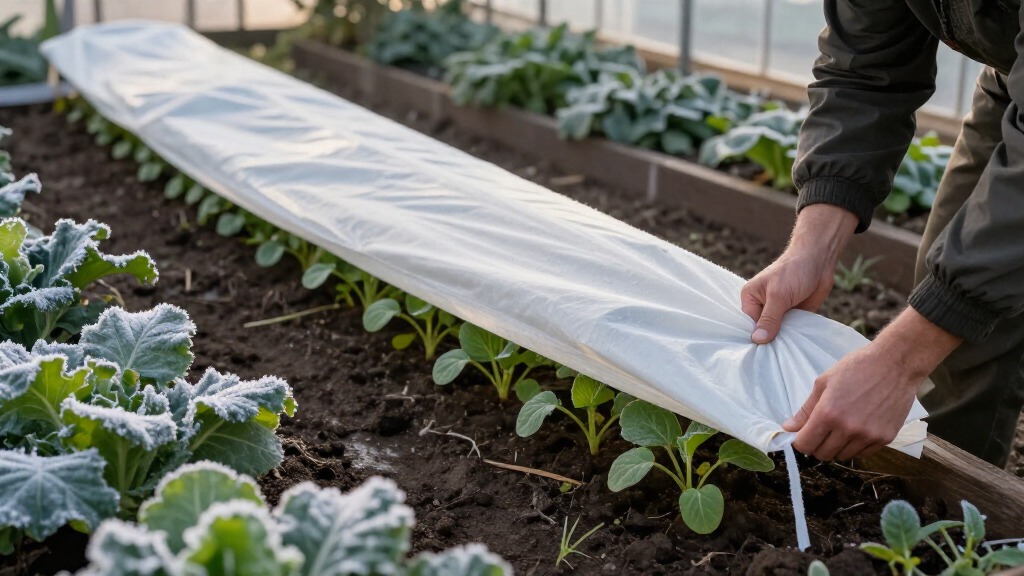
How well a cover works depends on how it is installed and its weight. Grow Organic recommends extending the material all the way to the ground and securing the edges with soil, bricks or other weights, limiting gaps where warmer air can escape. Lightweight fabrics such as Agribon AG-15 or AG-19 are described as suitable for light frost; medium-weight AG-30 is suggested for cold-sensitive crops in milder winters, while AG-50 and AG-70 are presented for more insulation.
The report also recommends removing covers when temperatures rise during the day to reduce the risk of overheating. Mulch beneath the cover can help the soil retain heat. For more severe cold, it suggests combining covers with other methods, including water-filled containers near plants or a second layer of protection. These are practical recommendations in the source, not a guarantee that plants will avoid damage.
A Cover’s Protection Has Limits
For gardeners, the main value of a row cover is that it can make a small, local difference during a cold night without requiring a heated greenhouse. Protecting vulnerable crops can help prevent losses and keep a garden producing later into fall or through winter. The method’s usefulness depends on the weather: radiation frost and advective freeze are different conditions, and the latter is more difficult to manage.
In a radiation frost, clear skies and calm winds allow heat to escape from the ground overnight. A cover can retain some of the soil’s warmth and block frost from settling directly on foliage. An advective freeze, by contrast, occurs when a mass of cold air moves into an area, often with wind. As the report explains, this can displace warmer air rather than simply allow local heat to escape. Wind and sustained cold can make a fabric cover less effective, so gardeners should not treat one as a guarantee against freezing temperatures.
That distinction matters when choosing a response to a forecast. A light cover may be adequate for a mild frost, but colder or windier conditions call for heavier insulation and potentially additional measures. The report does not provide temperatures at which particular fabrics stop protecting plants, so the appropriate level of protection will vary with the crop, site and forecast.
floating row covers for frost protection
As an affiliate, we earn on qualifying purchases.
As an affiliate, we earn on qualifying purchases.
Frost Versus Incoming Cold Air
The report frames row covers as one part of garden temperature management. During daylight, soil stores solar heat; at night, that heat is gradually released. In a calm, clear radiation frost, retaining some of that warmth near plants can reduce exposure. Covers, low tunnels and mulch are listed as measures for this type of event.
An advective freeze has a different cause: moving cold air brings temperatures down, often alongside stronger winds. Grow Organic says this is harder to protect against and recommends heavier or doubled covers, along with soil insulation or other heat-retention measures. The article lists plastic mulch, water containers and traditional incandescent Christmas lights as possible additions. Those suggestions are source recommendations; the report does not quantify their effect or establish a safe setup for every garden.
Row-cover weights reflect a trade-off between the amount of insulation and the needs of the crop. The source identifies Agribon product weights as examples, but gardeners should check the fabric’s own specifications and suitability for their plants. Its guidance is about frost protection, not a claim that a cover can keep crops safe in every winter condition.
“Drape covers all the way to the ground to prevent warm air from escaping.”
— Grow Organic report
As an affiliate, we earn on qualifying purchases.
Protection Depends on Conditions
The report does not give measured temperature differences beneath different cover weights or specify the lowest temperatures at which each type remains effective. It also does not quantify how much protection comes from a cover alone versus mulch, tunnels or other heat sources. Results can differ with wind, crop type, soil conditions and installation.
It is also unclear from the source how long a particular cover should remain in place during a changing forecast or which combinations are appropriate for every garden. Its recommendations should be treated as general guidance rather than a promise that plants will survive a freeze. Gardeners still need to monitor local conditions and follow product instructions for the materials they use.
insulated plant covers for cold weather
As an affiliate, we earn on qualifying purchases.
As an affiliate, we earn on qualifying purchases.
Match Cover to the Forecast
Before a cold night, gardeners can check the forecast, identify which crops are most exposed, and choose a cover suited to the expected conditions. The report advises securing fabric to the ground, adding mulch where appropriate and removing covers when daytime temperatures rise. If strong winds or a hard freeze are forecast, it recommends considering heavier or layered protection rather than relying on lightweight fabric alone.
There is no further study or scheduled update identified in the source material. The immediate next step for readers is to judge protection against their local forecast and the needs of their crops, while recognizing that the report gives no universal temperature threshold for row-cover effectiveness.
heavy-duty row covers for vegetables
As an affiliate, we earn on qualifying purchases.
As an affiliate, we earn on qualifying purchases.
Key Questions
How do floating row covers help during frost?
They help hold some of the heat released by soil around crops and keep frost from settling directly on plant surfaces. They reduce exposure but do not guarantee that plants will avoid damage.
How should a row cover be placed?
Grow Organic recommends draping it to the ground and securing the edges with soil, bricks or weights so warmer air is less likely to escape.
Which cover weight should I use?
The report describes lightweight fabric for light frost, medium-weight covers for cold-sensitive crops in mild winters, and heavier material for more insulation. It does not give specific temperature limits, so check the product guidance and local conditions.
Will a row cover protect plants in a hard freeze?
Not necessarily. The report says an advective freeze, especially one accompanied by wind, is harder to manage. Heavier or layered covers and other heat-retention methods may help, but protection is not assured.
Should row covers stay on during the day?
Grow Organic advises removing them when temperatures rise to reduce the risk of overheating. The appropriate timing depends on the weather and the plants under the cover.
Source: rss
Halloween Picks
halloween
As an affiliate, we earn on qualifying purchases.