
TL;DR

Get garden gear delivered free with Prime
- Fast, free delivery on millions of items
- Prime Video, Amazon Music and more included
- Member-only deals all year
Search interest in whether pine needles dangerously acidify soil is rising, driven by garden myth discussions. Experts confirm pine needles are safe for soil when used correctly, but misconceptions persist.
Recent online searches and garden discussions have intensified around the question: Do pine needles make soil dangerously acidic? Experts confirm that, when used properly, pine needles do not significantly acidify soil or pose a risk to garden plants, countering common misconceptions.
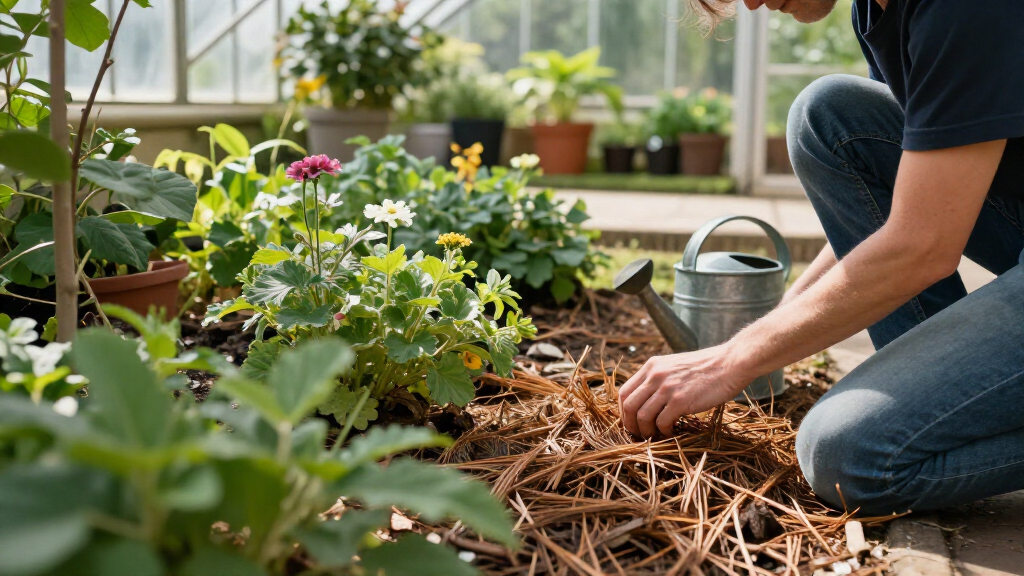
Analysis of current gardening resources and expert opinions indicates that pine needles, often used as mulch, do not cause soil to become dangerously acidic. This clarification comes amid a surge in online interest and social media discussions questioning the safety of pine needle mulch.
According to horticultural specialists, pine needles are naturally acidic but decompose slowly, and their effect on soil pH is generally minimal. When used in typical garden applications, they do not lower soil pH to harmful levels. The misconception that pine needles significantly acidify soil appears to stem from their natural acidity and the fact that they are often associated with conifers.
However, experts warn that excessive use of pine needles in small or poorly drained garden beds could lead to localized acidification over time, but this is unlikely to cause danger to plants or soil health if used in moderation and mixed with other organic matter. The key is understanding the quantity and context of application, not avoiding pine needles altogether.
Environmental scientists and extension services emphasize that pine needles can be safely used as mulch or compost material, provided gardeners are aware of their natural acidity and avoid over-application. Properly composted pine needles are less acidic and more suitable for most garden soils.
Why Clarifying Pine Needles’ Effect Matters for Gardeners
This clarification is important because many gardeners avoid using pine needles, fearing soil damage. Misinformation can lead to unnecessary restrictions on organic mulching options, limiting sustainable gardening practices. Understanding that pine needles are safe when used correctly encourages environmentally friendly gardening and helps dispel unfounded fears.
Accurate knowledge also helps gardeners manage their soil health better, avoiding over-reliance on chemical amendments and promoting organic solutions that include natural mulches like pine needles. Correct usage can improve soil moisture retention, weed suppression, and soil nutrient cycling without risking acidity-related damage.
Products Worth Considering

Greenworks 48V Cordless Lawn Care Combo Kit with 20-Inch Mower, Trimmer, Blower, Batteries, and Charger

EGO POWER+ 21-Inch Cordless Self-Propelled Lawn Mower Kit, LM2135SP

Husqvarna 330LK Gas String Trimmer
As an affiliate, we earn on qualifying purchases.
Historical and Scientific Context of Pine Needles and Soil pH
Pine needles are naturally acidic, with pH levels typically ranging from 3.5 to 4.5, which is more acidic than most garden soils. This has historically led to the assumption that their use as mulch would significantly lower soil pH. However, scientific studies show that the decomposition process of pine needles is slow, and their impact on soil pH is minimal unless applied in excessive amounts.
Gardeners have historically used pine needles for mulch in coniferous forests and natural areas without widespread reports of soil acidification problems. Recent online trends have revived this concern, often fueled by anecdotal claims and misconceptions, prompting experts to clarify the actual effects based on current research.
Recent surveys of gardening forums and extension service FAQs reveal that many gardeners remain unsure about the safety of pine needles, highlighting the need for clear, evidence-based guidance.
Unconfirmed Claims and Areas Needing Further Research
While current scientific consensus indicates minimal risk, some experts note that long-term effects in specific soil types or in small, poorly drained beds are not fully studied. It remains unclear whether excessive, unbalanced use of pine needles could cause localized acidification over many years, especially in soils already near acidity thresholds.
Additionally, the extent to which decomposed pine needles influence soil pH in different climates and soil conditions requires further empirical research to confirm safety universally.
Next Steps for Gardeners and Researchers
Gardeners are advised to continue using pine needles as mulch in moderation, mixing them with other organic materials. Extension services and horticultural researchers plan to conduct long-term studies on soil impacts, especially in various climate zones.
Public education campaigns are expected to clarify misconceptions further, and official guidelines may be updated to reflect the latest scientific findings. Ongoing research will aim to quantify the long-term effects of pine needle mulch in different garden settings.
Key Questions
Can I use pine needles as mulch without risking soil acidity?
Yes, when used in moderation and mixed with other organic matter, pine needles are safe and do not significantly acidify soil.
How much pine needle mulch is safe to apply?
Applying a thin layer and mixing it with compost or other mulches prevents potential localized acidification and promotes healthy soil conditions.
Are there specific plants that dislike pine needle mulch?
Most plants tolerate pine needle mulch well, but acid-loving plants like blueberries may prefer more acidic conditions, which pine needles can provide in small amounts.
Does composting pine needles eliminate their acidity?
Composting pine needles reduces their acidity, making them more suitable for general garden use without affecting soil pH significantly.
What should I do if I suspect soil has become too acidic?
Test your soil’s pH and consider adding lime or other amendments if necessary, but typical pine needle use in moderation is unlikely to cause problems.
Source: rss