TL;DR

Get garden gear delivered free with Prime
- Fast, free delivery on millions of items
- Prime Video, Amazon Music and more included
- Member-only deals all year
Experts suggest that positioning a flowering houseplant next to banana plants may stimulate a second fruiting cycle. This approach is based on observed gardening practices, but scientific confirmation is pending.
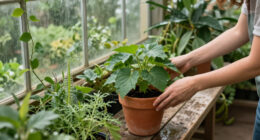
Gardening enthusiasts and horticulturists are exploring a new technique: placing a flowering houseplant beside banana plants to encourage a second fruiting cycle. While anecdotal reports have circulated, there is no definitive scientific evidence yet confirming this method’s effectiveness. The practice, if validated, could offer banana growers a simple way to increase yields without additional cultivation efforts.
According to recent reports from gardening communities, placing a flowering houseplant—such as an orchid or another bloom-producing species—near banana plants appears to stimulate a second round of flowering and fruiting. This observation is based on informal trials and shared experiences among amateur and professional gardeners.
Experts caution that these claims are preliminary. Dr. Laura Simmons, a horticultural researcher at the University of Greenfield, stated, ‘While the correlation is interesting, there is no current scientific data confirming that houseplants influence banana flowering cycles.’ The practice reportedly works by modifying microclimates or providing certain plant signals, but these mechanisms are not yet understood.
Potential Impact on Banana Cultivation Practices
If validated, this technique could offer banana growers a low-cost, sustainable method to extend harvests and improve productivity. It might also influence broader horticultural practices, encouraging more integrated plant arrangements for crop stimulation.
However, without scientific confirmation, growers are advised to treat this as an experimental approach. The potential for increased yields could significantly benefit small-scale farmers and commercial producers alike, especially in regions where banana cultivation is a key economic activity.
Products Worth Considering

Orbit B-hyve Smart Indoor/Outdoor 12-Zone Sprinkler Controller

Orbit B-hyve XR 16-Zone Indoor/Outdoor Smart Sprinkler Controller

Solo Stove 52.6 Fire Pit Surround – Protective Barrier & Outdoor Tabletop
As an affiliate, we earn on qualifying purchases.
Recent Gardening Trends and Anecdotal Evidence
Over the past few months, gardening forums and social media groups have shared anecdotal reports of success with this method. Enthusiasts have observed that placing flowering houseplants near banana plants coincides with a second flowering and fruiting phase in some cases. Historically, banana plants typically produce one main crop per cycle, although under certain conditions, a second flush can occur naturally.
Scientists note that environmental factors like temperature, humidity, and nutrient availability play critical roles in banana flowering. The new practice appears to be an attempt to leverage plant signaling or microclimate effects, but controlled studies are lacking.
“While the correlation is interesting, there is no current scientific data confirming that houseplants influence banana flowering cycles.”
— Dr. Laura Simmons
Scientific Validation and Mechanism Unclear
It remains unconfirmed whether the placement of flowering houseplants directly causes a second banana harvest. The underlying biological mechanisms are not yet understood, and controlled scientific studies are needed to verify the claims.
Researchers are currently investigating potential factors such as microclimate effects, plant signaling, or nutrient interactions that might explain the phenomenon.
Ongoing Research and Practical Trials
Scientists and horticulturists plan to conduct controlled experiments to test the effect of houseplant placement on banana flowering cycles. Meanwhile, gardeners are encouraged to document their observations and share results to build a broader understanding.
Further updates are expected as research progresses, potentially leading to validated guidelines for growers interested in this technique.
Key Questions
Can placing a houseplant beside bananas reliably increase yields?
Currently, there is no scientific evidence to confirm that this method reliably increases banana yields. It is based on anecdotal reports and ongoing research.
What types of houseplants are suggested for this technique?
Reports mention flowering plants like orchids or other bloom-producing species, but no specific plant has been scientifically identified as most effective.
Is this method safe for banana plants and houseplants?
In general, placing houseplants near bananas should not harm either, but gardeners should monitor for any signs of stress or pests and ensure proper care for both plants.
When will scientific studies confirm or disprove this technique?
Researchers are planning experiments over the coming months, but definitive results are not yet available. Expect updates within the next year.
Could environmental factors be influencing the observed effects?
Yes, factors like microclimate, humidity, and nutrient levels are known to affect banana flowering, and these may be interacting with the placement of houseplants.
Source: rss