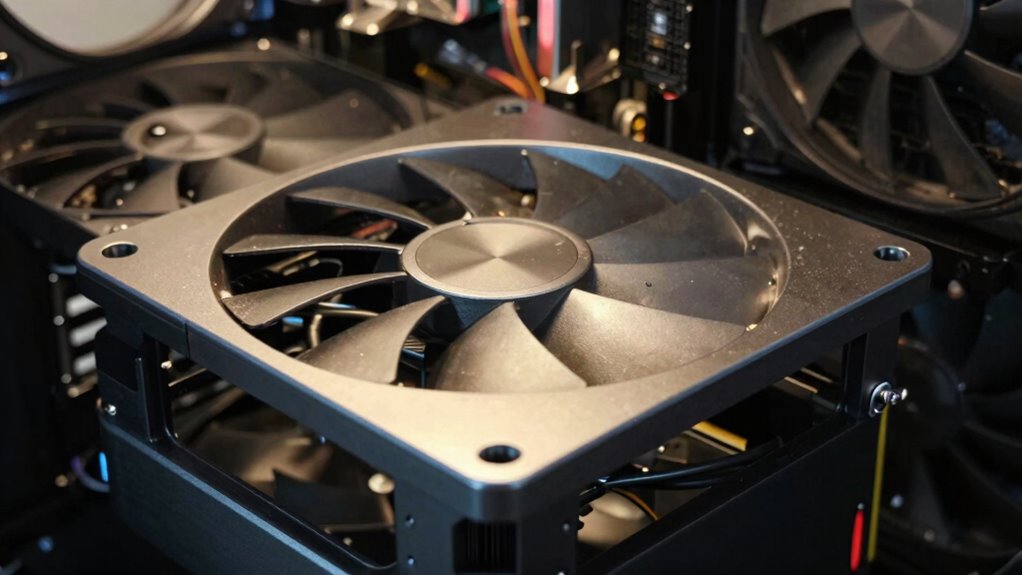
Fan covers can help your setup by reducing noise and hiding bulky blades, making the space look cleaner and quieter. They also improve safety by preventing accidental contact. However, if your goal is maximum cooling, covers might restrict airflow, leading to less efficient cooling and higher energy bills. Your setup’s effectiveness depends on how you balance aesthetics, safety, and airflow. Want to understand more about when covers help or hurt your space? Keep exploring!

Get garden gear delivered free with Prime
- Fast, free delivery on millions of items
- Prime Video, Amazon Music and more included
- Member-only deals all year
Key Takeaways
- Fan covers reduce noise and improve aesthetics but can restrict airflow, decreasing cooling efficiency in some setups.
- Proper installation and high-quality materials are essential to ensure safety and prevent performance issues.
- In well-ventilated environments, covers may cause overheating due to airflow restriction.
- In quiet or minimalist spaces, covers enhance ambiance and safety without impacting cooling.
- The effectiveness of fan covers depends on specific needs like noise reduction versus optimal airflow.

Fan covers have become a popular safety feature, but their effectiveness is often debated. You might consider adding one to your setup to prevent accidental contact or to improve safety, but it’s essential to understand how they can influence your environment. One of the biggest benefits of fan covers is noise reduction. When you install a cover, it acts as a barrier that dampens the sound produced by the fan blades moving through the air. If your fan tends to be loud or disruptive, a cover can make a noticeable difference, creating a quieter space that’s more comfortable and less stressful. You may find yourself able to focus better or sleep more soundly, especially if the noise from the fan was previously a concern.
Fan covers can reduce noise, creating a quieter, more comfortable space for better focus and restful sleep.
In addition to noise reduction, fan covers can serve as an aesthetic enhancement. A well-designed cover can make a fan look more integrated into your decor, giving it a sleek, tidy appearance. This can be particularly helpful if you’re trying to create a modern or minimalist look, as the cover can conceal exposed blades and mechanical parts that might otherwise look bulky or outdated. When chosen carefully, a cover can complement your interior style and make the entire space feel more polished and intentional. You might even find that it elevates the overall ambiance of the room, making it feel more inviting and thoughtfully designed. Additionally, choosing the right home improvement accessories can help enhance safety and style simultaneously. Proper fan maintenance and cleaning are also crucial to ensure the cover remains secure and functional over time.
However, not all fan covers are helpful, and in some setups, they can do more harm than good. If your primary goal is airflow and cooling efficiency, a cover might restrict air movement, reducing the fan’s effectiveness. In such cases, you could end up with a fan that looks neat but doesn’t perform as well, leading to discomfort or higher energy costs as you try to compensate with other cooling methods. Furthermore, if the cover isn’t properly installed or made from inferior materials, it can pose safety risks, such as falling into the blades or trapping debris that could cause damage or noise issues. The presence of airflow restriction can also contribute to overheating in certain environments, especially when ventilation isn’t adequate. Proper fan installation and choosing high-quality covers are important considerations to prevent these issues.
Ultimately, whether a fan cover helps or hurts depends on your specific setup and priorities. If noise reduction and aesthetic enhancement are your main goals, a well-chosen, properly installed cover can be a worthwhile addition. But if maximizing airflow and cooling efficiency is critical, you might want to think twice before adding one. By weighing these factors carefully, you can decide whether a fan cover will improve your environment or hinder your comfort.
As an affiliate, we earn on qualifying purchases.
Frequently Asked Questions
Do Fan Covers Improve Airflow Efficiency?
Fan covers can improve airflow efficiency if they direct airflow properly. They help by controlling airflow direction, focusing it where you need it most, which reduces turbulence and increases cooling performance. The cover material matters too; lightweight, breathable materials allow better airflow, while heavy or restrictive covers can hinder it. So, if used correctly, fan covers can enhance airflow efficiency, but poorly chosen covers might do the opposite.
Are Fan Covers Suitable for All Types of Fans?
Fan covers aren’t suitable for all types of fans because their compatibility depends on fan size, design, and airflow needs. You should consider fan cover materials like plastic or metal, which affect durability and airflow. Aesthetic considerations also matter—some covers enhance your setup’s look, while others may look out of place. Assess your fan’s specifications and your aesthetic goals to determine if a fan cover will improve or hinder performance and appearance.
How Do Fan Covers Affect Noise Levels?
Fan covers can considerably reduce noise levels, acting like a sound dampening shield around your fan. They help muffle the loud whirring, making your space quieter and more peaceful. Plus, they cut down on vibration, preventing rattling sounds. If you want a serene environment, fan covers are your best allies—they turn a noisy beast into a gentle hum, transforming your experience into pure tranquility.
Can Fan Covers Prevent Dust Buildup?
Yes, fan covers can prevent dust buildup by acting as a barrier that blocks airborne particles from entering the fan and system. When you choose a cover with good cover durability, it will last longer and keep dust out effectively. Regularly cleaning the cover further enhances dust prevention, ensuring your setup stays cleaner and runs more efficiently. Just make sure the cover fits well to maximize its dust prevention benefits.
Are There Safety Concerns With Using Fan Covers?
Sure, fan covers might seem like a great idea, but they do raise some safety concerns. You need to take into account child safety—kids can still reach or tamper with the fan, even with a cover. Plus, ventilation restrictions could cause overheating or poor airflow. So, while covers protect dust, they might inadvertently create hazards or reduce cooling efficiency. Think twice before sealing your fan in a safety bubble; your setup needs proper airflow, not a safety cage.
As an affiliate, we earn on qualifying purchases.
Conclusion
In summary, whether fan covers help or hurt your setup depends on your specific needs. If you’re aiming to contain dust or reduce noise, they can be beneficial. However, they might hinder airflow and cooling efficiency in some cases. Notably, studies show that improper fan cover use can decrease cooling performance by up to 20%. So, assess your setup carefully and choose wisely—sometimes, going uncovered is the best way to keep things running smoothly.
As an affiliate, we earn on qualifying purchases.
As an affiliate, we earn on qualifying purchases.
Halloween Picks
halloween
As an affiliate, we earn on qualifying purchases.