TL;DR

Get garden gear delivered free with Prime
- Fast, free delivery on millions of items
- Prime Video, Amazon Music and more included
- Member-only deals all year
Homes and Gardens reports that spider mites can become a problem for houseplants in October as plants move indoors and home heating creates warm, dry conditions. Its advice is to isolate affected plants, remove heavily infested growth, clean leaves, and repeat treatment steps over several weeks.
Spider mites can threaten houseplants in October as outdoor plants are brought inside and heating makes rooms warmer and drier, according to a Homes and Gardens report. The article recommends isolating affected plants and repeatedly cleaning them to limit the pests and reduce damage, while noting that prevention also depends on plant care and indoor humidity.
Homes and Gardens identifies indoor heating, moving plants indoors, and care that leaves plants stressed or dry as conditions associated with autumn spider mite problems. The report says the pests favor warmth and low humidity. It does not provide data on how widespread October infestations are, so the seasonal description is gardening advice rather than a measured incidence finding.
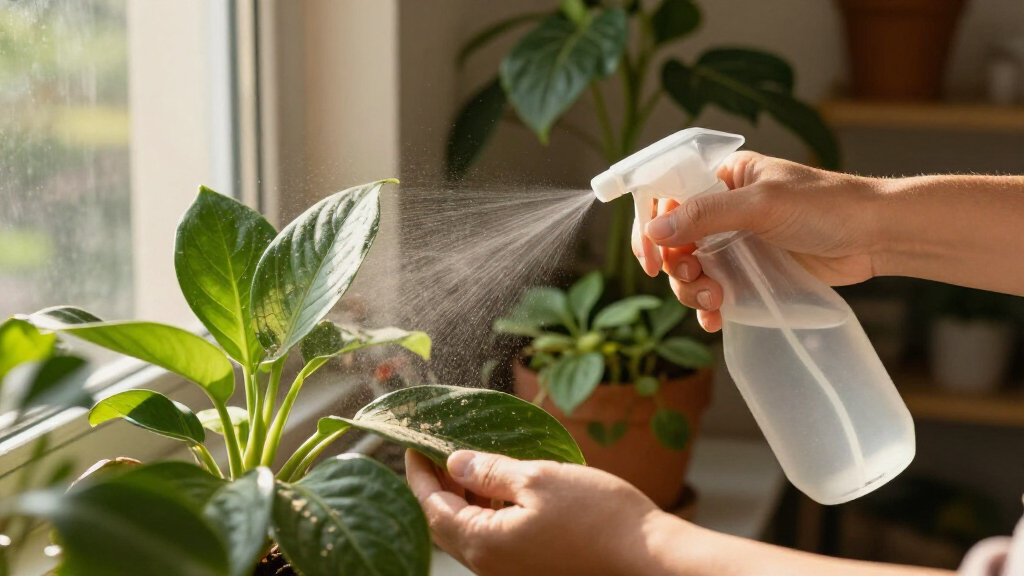
For plants showing signs such as fine webbing, the report advises moving them away from other houseplants, since spider mites can multiply quickly and spread. Heavily affected stems and leaves can be pruned with sharp tools; the tools should be cleaned afterward. The article also recommends wiping foliage with a damp microfiber cloth or washing the plant with water to remove pests.
The report suggests neem oil as another option and says to repeat cleaning or treatment every few days for three to four weeks. It recommends raising humidity and keeping plants appropriately watered as ongoing measures. These are the source’s recommendations; the article does not compare treatment effectiveness or specify product-label directions for neem oil.
How Indoor Conditions Affect Plants
Houseplants moved indoors face a change in their growing environment just as homes begin using heating. In the report’s account, warm, dry air can favor spider mites, while weakened plants may be more vulnerable to damage. Catching an infestation early matters because nearby plants may also be at risk.
The recommended response combines containment and repeated care, rather than a single wipe-down. Isolating an affected plant can reduce contact with others, while checking leaves over the following weeks gives growers a chance to spot whether the problem persists. The source offers no guarantee that these steps will eliminate every infestation.
neem oil for spider mites houseplants
As an affiliate, we earn on qualifying purchases.
As an affiliate, we earn on qualifying purchases.
Seasonal Changes Bring Plants Inside
The report frames October as a period when people bring outdoor plants indoors and start using home heating. That combination can alter temperature and humidity around houseplants. It also says watering errors, including overwatering or underwatering, may leave plants in poorer condition.
Homes and Gardens recommends monitoring soil moisture and adjusting care as conditions change. It also suggests moving plants away from heat sources and increasing humidity, for example by placing plants in a bathroom or using a humidifier. These suggestions are presented as general houseplant-care measures, not as findings from a controlled study.
As an affiliate, we earn on qualifying purchases.
What the Report Does Not Establish
The source does not state how common infestations are in October, provide research data, or identify a specific region or climate. It also does not give a diagnostic test to distinguish spider mites from other plant problems, or compare the success rates of wiping, showering, and neem oil.
The article’s treatment advice does not specify neem oil concentrations or product instructions. Anyone using a pest-control product should follow its label and check that it is suitable for the plant and intended use. The report does not say how long plants should remain isolated after treatment.
As an affiliate, we earn on qualifying purchases.
Monitor Plants Through Autumn
Houseplant owners who find webbing can follow the report’s proposed sequence: separate the affected plant, remove heavily infested growth with clean tools, and wash or wipe the foliage. The source advises repeating the cleaning routine every few days for three to four weeks and continuing to monitor the plant and nearby foliage.
For prevention, the report recommends reviewing watering, humidity, and plant placement as indoor conditions change. Whether those steps resolve an individual infestation will depend on the plant and the extent of the problem; the source offers no follow-up results or additional official guidance.
plant pruning tools for houseplants
As an affiliate, we earn on qualifying purchases.
As an affiliate, we earn on qualifying purchases.
Key Questions
Why can spider mites become a problem for houseplants in October?
Homes and Gardens links autumn problems to plants moving indoors and heating that creates warm, dry conditions. It also says care mistakes that weaken plants may increase their vulnerability.
What should I do first if I see fine webbing?
The report recommends isolating the affected plant from other houseplants to limit the chance of spread, then removing heavily infested stems or leaves with clean pruning tools.
How often does the report recommend cleaning an affected plant?
It suggests repeating cleaning or treatment every few days for three to four weeks. The report does not provide comparative evidence showing which method works best.
Does the report prove that neem oil will eliminate spider mites?
No. The article recommends neem oil as one possible control but gives no effectiveness data or product-specific instructions. Follow the product label and confirm it is appropriate for the plant.
Source: rss
Fall yard work Picks
leaf blowers
As an affiliate, we earn on qualifying purchases.