
TL;DR

Get garden gear delivered free with Prime
- Fast, free delivery on millions of items
- Prime Video, Amazon Music and more included
- Member-only deals all year
A Gardening Know How report recommends inserting a clean, dry, untreated wooden chopstick into potting mix to help check moisture below the surface. A darkened stick or soil clinging to it can indicate damp mix, but the result is only one clue and watering needs vary by plant and soil type.
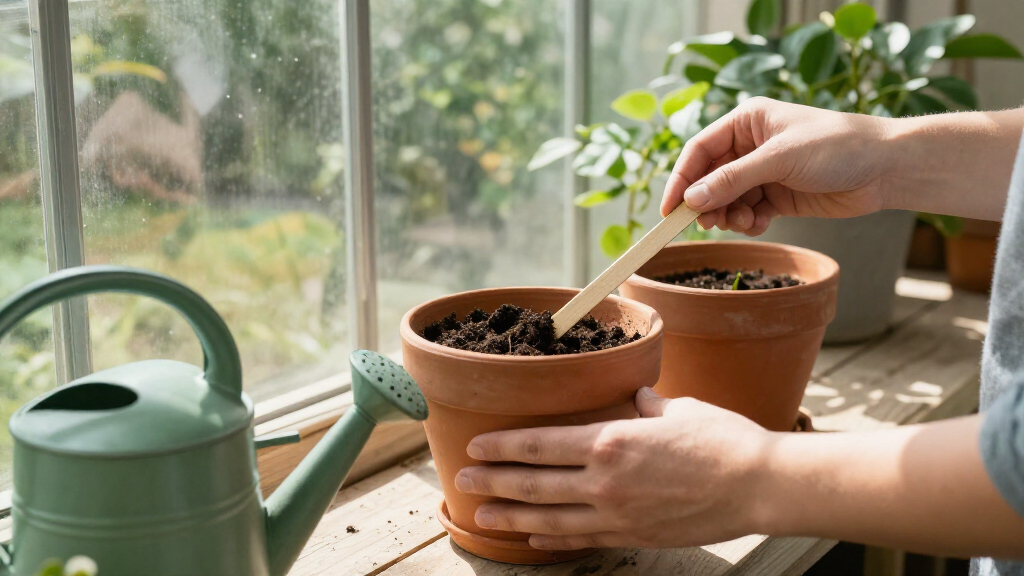
Gardening Know How has described a simple way to check moisture below the surface of a houseplant pot: insert a clean, dry, untreated wooden chopstick into the mix and inspect it after about 30 seconds to a minute. The test can help growers avoid watering based only on a dry-looking surface, but it is not a precise measurement or a universal signal to water.
The method works because bare wood absorbs moisture. According to the report, damp potting mix can darken the parts of the chopstick that touch it, and soil crumbs may cling when the stick is removed. Dry mix is more likely to fall away, leaving the wood pale and mostly clean. The analogy in the report is a cake test with a toothpick, except that for potting mix, a clean stick suggests dryness at the depth checked.
To try it, use a dry stick and push it into the soil between the plant’s main stem and the pot’s rim. Do not force it through resistance: the report advises moving to another spot to avoid damaging roots. Standard chopsticks may reach the root zone in smaller pots; longer bamboo skewers can be used for deeper containers. Remove the stick slowly and check along its length, not just at the tip.
A damp mark or clinging mix suggests the pot is still wet at that depth, even if the surface looks dry. A clean, dry result means the mix has dried at the point tested, but does not automatically mean it is time to water. Gardening Know How says the next step depends on the plant: peace lilies generally need more consistent moisture than pothos, while snake plants and succulents can be allowed to dry further. The report does not provide a single watering schedule that applies to all houseplants.
A Check Below the Dry Surface
The test addresses a common mismatch: the top layer can dry before the lower soil. A finger check reaches only a short way into a pot, so it may not reveal moisture around deeper roots. Watering again while that lower mix remains wet can leave roots in soggy conditions, where they may not receive enough air and can be vulnerable to rot, according to the report.
Seasonal changes can make that mismatch more relevant. Gardening Know How says shorter days and weaker light in fall slow plant growth, and pots may remain wet longer than they did during summer. A fixed weekly watering routine may therefore deliver too much water as conditions change. Checking the pot itself can give growers another piece of information before they decide what to do.
The chopstick is inexpensive and easy to keep near a watering can, but its value is as a low-cost check, not a guarantee. It can help a reader pause before watering; it cannot determine an exact moisture percentage, diagnose root problems, or set the right threshold for every species.
Products Worth Considering

Orbit B-hyve Smart Indoor/Outdoor 12-Zone Sprinkler Controller

Orbit B-hyve XR 16-Zone Indoor/Outdoor Smart Sprinkler Controller

Sinimaka 8-Pack Twin-Wall Polycarbonate Greenhouse Panels, 8 x 4 ft
As an affiliate, we earn on qualifying purchases.
Why Pot Depth and Season Matter
The report contrasts the chopstick test with checking only the soil surface. In a deep container, the upper layer may dry several days before the root zone, so a surface check can give an incomplete picture. It also mentions moisture meters as another way to check soil and a leave-in indicator as an alternative, while noting that a reading describes the pot’s moisture rather than what a particular plant needs.
Plant preferences differ. The report says peace lilies should be kept moist but not soggy and may droop if allowed to dry too far. Pothos tolerate a drier mix, while snake plants and succulents generally should dry further before watering. These are examples rather than a full care guide; conditions such as pot size, mix, drainage and season also affect how quickly soil dries.
The method has limits in chunky orchid bark and very coarse mixes, where pieces may not cling to wood even when they contain moisture. A rootbound plant can also make insertion difficult, and water may run down the pot’s sides. The report suggests using other observations too, including pot weight, leaf condition and whether drainage holes are clear.
“A clean chopstick means the mix has dried out at that depth.”
— Gardening Know How report
Where the Test Can Mislead
The source does not give controlled test results comparing chopsticks with moisture meters, nor does it quantify how accurately the method identifies moisture. It is presented as a practical observation, not a calibrated measurement. A clean-looking stick may not prove the whole pot is dry, particularly in orchid bark or coarse mixes, which can retain water in ways the test does not show.
The report also does not establish one depth or waiting time that works for every pot. It recommends leaving the stick in place for about 30 seconds to a minute, but container size, root density and potting mix can affect what the stick encounters. Readers may need to combine the result with pot weight, drainage and the plant’s condition.
Use the Result Alongside Other Checks
The report offers no scheduled follow-up or new study. Its practical recommendation is to check moisture when uncertain, then make a watering decision based on the plant’s needs and the conditions in its pot. For a clearer baseline, it suggests lifting a pot after a thorough watering and again as it dries, so changes in weight become familiar.
Growers using the test should start with an untreated, dry stick, avoid forcing it past roots and confirm that water can drain freely. If the result conflicts with the plant’s appearance or the mix is unusually coarse or crowded with roots, the report advises treating the chopstick as one clue and checking the pot and plant in other ways.
Key Questions
How does the chopstick test work?
Untreated wood absorbs moisture from damp potting mix and may darken; soil can also cling to it. Dry mix is more likely to fall away, leaving the stick pale and mostly clean.
Does a clean chopstick mean I should water?
Not necessarily. It suggests the mix has dried at the depth tested. Watering depends on the plant’s needs, the pot and the growing conditions.
What kind of stick should I use?
Use a clean, dry, untreated wooden chopstick or bamboo skewer. The report says lacquered or painted wood may not darken reliably, while plastic does not absorb moisture.
When might the test be unreliable?
It may be less useful in chunky orchid bark or very coarse mixes, where moisture may not show on the stick. A badly rootbound plant can also prevent easy insertion.
Why can watering needs change in fall?
The report says shorter days and weaker light can slow growth, leaving soil wet longer than it was in summer. That can make a fixed weekly schedule a poor guide.
Source: gardeningknowhow.com