TL;DR
A Homes and Gardens report advises homeowners to schedule a lawn’s final mow as growth slows in cooler weather, ideally before the first hard frost. The timing varies by grass type and local conditions; experts recommend mowing dry grass, raising the cut height and clearing heavy leaf cover.
Homeowners should time their lawn’s final mow for when grass growth slows in cooler weather and, ideally, before the first hard frost, according to lawn experts cited by Homes and Gardens. The report says there is no reliable fixed calendar date: local temperatures, grass type and the weather forecast determine when to put the mower away.

Get garden gear delivered free with Prime
- Fast, free delivery on millions of items
- Prime Video, Amazon Music and more included
- Member-only deals all year
Many grass species begin preparing for dormancy as temperatures fall, but the temperature range differs. The report says warm-season grasses slow in the 60s°F, while cool-season grasses slow in the 50s°F. It cites Lawn Love’s former CEO Jeremy Yamaguchi, who recommends watching local forecasts as temperatures approach or fall below 50°F. These figures are guidance, not a universal signal that every lawn has stopped growing.
Yamaguchi says the timing also varies by region and year. In the Midwest, he said, the seasonal slowdown often arrives around early to mid-October; in parts of the Southwest, the last mow may fall in late November or early December. Sarah Jameson, founder of Lawn Chick, says slowing growth and the forecast for the first hard frost are signs to plan the final cut. The report distinguishes that event from the light frost that can occur on chilly mornings.
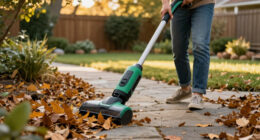
For the last few cuts, Jameson recommends keeping most lawns at about 2.5 to 3 inches, rather than cutting grass very short. The report also advises mowing only when grass is dry, removing sticks and other debris first, and keeping leaves from forming a thick layer over the lawn, while lawn repair products may help grass recover. Finely chopped clippings and leaves may be used as mulch, but a dense, unbroken leaf mat can cover the grass.
A Better Setup for Spring Growth
The timing and height of a late-season cut affect the condition in which grass enters winter. Jameson says fall lawn care can affect how healthily a lawn starts growing again in spring. Leaving grass at the suggested height may provide some insulation, while an overly short cut is discouraged in the report.
Clearing debris before mowing also helps reduce the risk of hitting hidden objects with mower blades. Avoiding wet grass can prevent an uneven cut, clumps of clippings and mower clogs. These steps are practical precautions rather than a guarantee of a thicker or greener lawn: the report does not promise a particular spring result, which can depend on local weather and lawn conditions.
Products Worth Considering

Husqvarna Automower 550 Commercial Robotic Lawn Mower

Solo Stove Bonfire 19.5-Inch Smokeless Wood-Burning Fire Pit with Stand

Orbit B-hyve XR 16-Zone Indoor/Outdoor Smart Sprinkler Controller
As an affiliate, we earn on qualifying purchases.
Why the Date Changes by Region
The report frames the final mow as a response to local growing conditions, not a chore tied to one date on the calendar. Hardiness zones offer broad information about climate, but weather patterns vary from year to year, and a sudden cold front can change the outlook. A forecast and the lawn’s growth rate are more useful signals for scheduling the cut than a fixed annual date.
Grass type matters, too. The temperature ranges cited by Homes and Gardens describe different slowdowns for warm-season and cool-season grasses, so homeowners should not assume all lawns become dormant at the same temperature. The cited experts’ advice is general guidance; the report does not give separate instructions for every species or local climate.
“Once temperatures are below this mark, most species of grass naturally go dormant and thus no longer need to be mowed.”
— Jeremy Yamaguchi, former CEO of Lawn Love, as quoted by Homes and Gardens
No Single Date Fits Every Lawn
The report does not identify a specific final-mowing date for individual readers. It also does not provide a precise definition of the temperature measurement—such as daytime air temperature, overnight lows or soil temperature—for deciding when a particular lawn has entered dormancy. Its temperature ranges should be treated as general indicators alongside observed growth and local forecasts.
The advice does not cover every grass variety, regional microclimate or lawn condition. It also cannot establish that following the recommendations will produce a particular spring appearance. Homeowners with unusual conditions or uncertainty about their grass type may need local, region-specific guidance.
Watch Growth and Frost Forecasts
As fall temperatures drop, homeowners can check whether the lawn is still growing and follow forecasts for a hard frost in their area. If a final cut is still needed, the report recommends waiting for dry grass, clearing debris, raising the mower deck to leave about 2.5 to 3 inches on most lawns, and preventing leaves from accumulating in a thick layer. Once growth has stopped, the seasonal mowing routine can end; when the lawn resumes growing depends on local conditions in spring.
Key Questions
When should I mow my lawn for the last time before winter?
Use slowing grass growth and the local hard-frost forecast as cues rather than relying on a fixed date. The timing varies by region, year and grass type.
Should I cut the grass very short for winter?
No. The report advises against cutting most lawns too short and cites a recommended final height of about 2.5 to 3 inches. The appropriate height may vary by lawn.
Can I mow when the lawn is wet?
The report recommends mowing dry grass. Wet grass can produce an uneven cut and clumps, and may clog the mower.
Should I leave fallen leaves on the lawn?
Finely chopped leaves may be used as mulch, but avoid leaving a thick layer of whole leaves over the grass. The report says a dense mat can smother the lawn.
Does every kind of grass stop growing at the same temperature?
No. The report says warm-season grasses tend to slow as temperatures reach the 60s°F, while cool-season grasses slow in the 50s°F. These are general ranges, and local conditions also matter.
Source: homesandgardens.com