
TL;DR

Get garden gear delivered free with Prime
- Fast, free delivery on millions of items
- Prime Video, Amazon Music and more included
- Member-only deals all year
Country Living tested cayenne solution, vinegar, dog hair and Irish Spring soap shavings on pumpkins over 12 days. Cayenne was the editorial test’s winner: the treated pumpkin remained untouched through day 11 while the solution was reapplied, but squirrels began eating it on day 12. The small test does not establish how well these methods work in other yards.
Country Living’s 12-day pumpkin test found that a cayenne pepper solution performed best among four inexpensive squirrel deterrents, keeping its treated pumpkin untouched through day 11 with repeated applications. Squirrels began eating that pumpkin on day 12, so the result suggests a temporary deterrent in this test—not a lasting guarantee for fall displays.
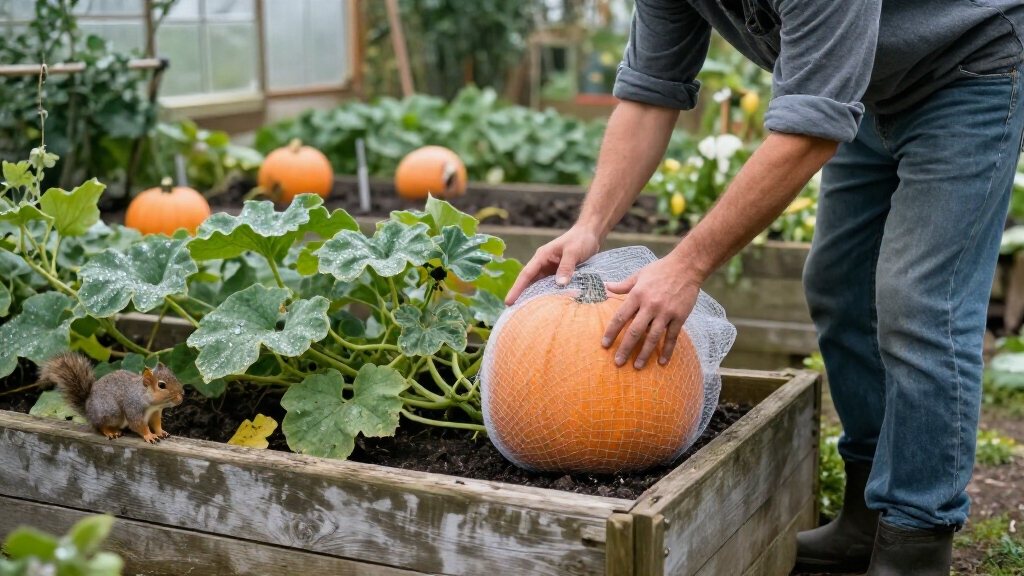
The test compared pumpkins treated with cayenne pepper solution, white vinegar, fresh dog hair and Irish Spring soap shavings with an untreated control. The editors placed the pumpkins in a neighbor’s yard with permission, where squirrels had repeatedly damaged holiday displays. They monitored the setup for 12 days, though the soap test began later than the others.
For the cayenne treatment, the team mixed 2 tablespoons of powdered cayenne with 16 ounces of water. The powder clogged the spray bottle, so the editors poured the mixture over the pumpkin instead. They reapplied it every other day or after rain through day seven. The pumpkin remained untouched through day 11, then showed signs of squirrel feeding on day 12.
Vinegar ranked second: one small nibble appeared around day four or five, and the pumpkin remained largely untouched through day 12 after repeated applications. The dog-hair pumpkin was substantially eaten by day five and was decaying by day 12. The soap-shavings pumpkin went uneaten for more than 10 days, but was eaten on day 11; the editors rejected it as a practical option because of its appearance and the effort of cleaning up the shavings.
What the Test Means for Porch Displays
For people trying to protect seasonal decorations, the comparison offers a small, direct test of four commonly suggested remedies, rather than a general guarantee that any one method works. Cayenne came out ahead on the editors’ measures: how long the pumpkin stayed untouched and whether the treatment altered its appearance.
The result also points to a practical limitation. The cayenne solution needed reapplication every other day or after rain, and the pumpkin was eventually eaten. Vinegar also required repeated applications. These results may help readers decide what to try, but they do not show that the same ranking will hold across different yards, weather, squirrel populations or pumpkin displays.
The untreated pumpkin was damaged quickly, with gnaw marks within hours, and was scooped out by day three and gone by day five. That contrast makes the treated pumpkins’ longer survival notable within this particular setup, though it cannot isolate how much of the difference came from the treatments themselves.
Products Worth Considering

Orbit B-hyve XR Smart Indoor/Outdoor Sprinkler Controller, 16 Zones
Orbit B-hyve XR 8-Zone Indoor/Outdoor Smart Sprinkler Controller

Orbit B-hyve Smart Indoor/Outdoor 12-Zone Sprinkler Controller
As an affiliate, we earn on qualifying purchases.
How the Four Methods Compared
The editors chose a yard where a neighbor had been dealing with squirrels eating holiday pumpkins for years. With permission, they set out four treated pumpkins and one untreated control. The methods were home remedies rather than a formal laboratory trial, and the report describes one pumpkin for each approach.
The untreated control may have affected the other results. Country Living said it was possible that squirrels ate the control first and delayed eating the dog-hair pumpkin, but the test could not establish that. The editors said a future experiment might place a decoy pumpkin at a distance from display pumpkins to test whether offering another food source changes squirrel behavior.
The soap test did not start at the same time as the others. Its pumpkin sat by itself for five days after the other pumpkins were gone, so the timelines are not directly equivalent. The editors also cautioned readers to take care with soap outdoors, particularly if runoff could reach water.
Limits of This Yard Test
The report describes one pumpkin per method in one yard, not a replicated study. It does not establish how reliably the remedies work elsewhere, whether cayenne or vinegar would deter squirrels for longer with different application schedules, or how weather and local animal behavior affected the outcome.
The report also does not confirm that the control pumpkin caused squirrels to leave the treated pumpkins alone for longer. The soap pumpkin started later and spent several days without the other test pumpkins nearby, making a direct comparison harder. The editors identified the possible effect of a distant decoy pumpkin as a question for a future test.
A Decoy Pumpkin Test Is Planned
Country Living said its next experiment would place a decoy pumpkin in a far corner of the yard and examine whether it helps protect display pumpkins in busier locations, such as a porch or sidewalk. The report did not give a schedule for that test.
For now, the editors said they would keep cayenne on hand. Their test suggests that regular reapplication may help delay squirrel damage, but its day-12 result means readers should not treat it as a permanent fix.
Key Questions
Which squirrel deterrent performed best in the test?
Cayenne pepper solution ranked first. Its pumpkin stayed untouched through day 11 with repeated applications, but squirrels began eating it on day 12.
How was the cayenne solution prepared?
The editors mixed 2 tablespoons of powdered cayenne with 16 ounces of water. Because the powder clogged the spray bottle, they poured the mixture over the pumpkin and reapplied it every other day or after rain through day seven.
Did vinegar keep squirrels away from the pumpkin?
The vinegar-treated pumpkin had one small nibble around day four or five and remained largely untouched through day 12 after repeated applications. It ranked second in this test.
Did dog hair or soap shavings work?
The pumpkin surrounded by dog hair was heavily eaten by day five. The soap-shavings pumpkin lasted more than 10 days before being eaten on day 11, but the editors cited the mess and appearance as drawbacks and advised care outdoors if soap runoff could reach water.
Can this test prove that a decoy pumpkin will protect porch decorations?
No. The editors said the untreated control may have affected squirrel behavior, but the test could not determine that. A decoy placed away from display pumpkins is a proposed future experiment, not a result already established.
Source: countryliving.com