
TL;DR
Country Living’s guidance is to shut off the spigot, disconnect and fully drain the hose, and store it in a dry, sheltered place before freezing temperatures arrive. Drain other outdoor watering equipment, bring electronic accessories indoors according to their instructions and protect the exposed faucet; the report does not specify a single date that applies everywhere.
A Country Living report advises homeowners to disconnect, drain and store garden hoses and watering attachments before freezing weather, when residual water can expand and crack equipment. See these garden tasks to do before the first hard freeze for more seasonal preparation tips. The guidance also calls for protecting the outdoor faucet after removing the hose, but the right time to do the work depends on local forecasts.

Get garden gear delivered free with Prime
- Fast, free delivery on millions of items
- Prime Video, Amazon Music and more included
- Member-only deals all year
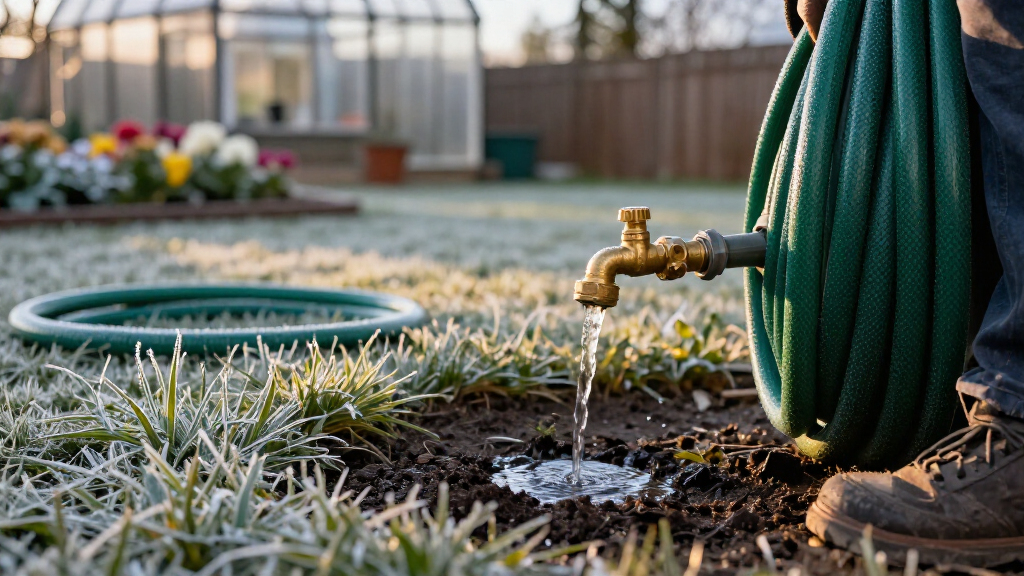
Start by shutting off the water at the spigot, then disconnect the hose and any attached accessories. If a fitting is stuck, the report recommends using a penetrating lubricant intended for corroded fittings and following its directions. If using pliers, hold the faucet steady with one tool and turn the hose fitting gently counterclockwise with another. Forcing a stuck connection can damage the faucet or plumbing behind it.
Stretch the hose out and let it drain fully before storing it loosely coiled in a dry, sheltered place away from direct sunlight. Draining matters because water left inside can freeze and expand, potentially splitting or cracking the hose. The report also suggests inspecting the hose while it is out, so damage that may need repair is visible before spring.
The same process applies to nozzles, sprinklers, splitters, timers and quick-connect fittings: remove and drain them. For irrigation systems, follow a guide on how to winterize sprinklers before the first freeze. Bring battery-powered or electronic accessories indoors and follow their manufacturers’ storage instructions. Portable watering cans should be emptied, while rain barrels and irrigation components should be prepared according to their own instructions. After removing the hose and attachments, protect the spigot; the source says to do so but does not give a specific method in the supplied material.
Preventing Hose and Faucet Damage
Water expands as it freezes, so water trapped in hoses or attachments can cause them to split or crack. A hose left connected may also prevent some outdoor faucets from draining properly, increasing the risk of freeze damage. The report says the preparation can take five to 10 minutes, though that estimate does not include repairs or more involved irrigation work.
Doing the work before freezing weather may reduce the chance of replacing damaged watering equipment next spring. It can also help homeowners catch wear or leaks while inspecting the hose. The source presents these steps as practical prevention, not as a guarantee that every hose, faucet or plumbing system will avoid damage.
Products Worth Considering

EGO POWER+ LB7654 Cordless Electric Leaf Blower with 5.0Ah Battery

Husqvarna Automower 410iQ Wire-Free Robotic Lawn Mower

Husqvarna Automower 550 Commercial Robotic Lawn Mower
As an affiliate, we earn on qualifying purchases.
Timing Depends on Local Forecasts
The report does not set a nationwide calendar date for winterizing. It says the timing depends on local weather forecasts and recommends finishing before freezing temperatures arrive, particularly before a hard freeze. Conditions can vary by area, so readers should use forecasts for their own location rather than rely on a general seasonal date.
The instructions cover removable hoses and common outdoor watering accessories. Other equipment, including rain barrels and irrigation systems, may require separate steps. For those items, the source directs readers to manufacturer instructions; it does not provide a universal procedure for every system.
Local Freeze Timing and Faucet Protection
The supplied report does not identify a particular region, forecast or freeze date, so it cannot establish when an individual household should act. It also does not describe a specific way to protect the spigot, despite advising readers to do so after disconnecting the hose. Faucet protection methods may depend on the fixture and local conditions; the source material does not provide further instructions.
It is also unclear whether a hose or watering system has damage that needs repair without inspecting it. The report recommends checking hoses but does not provide repair criteria. For electronic accessories, irrigation components and rain barrels, the appropriate storage or winterizing steps depend on their individual instructions.
Complete the Work Before Freezing
Homeowners can check their local forecast, then shut off the spigot, disconnect the hose and attachments, and allow the hose to drain completely before storing it. They should also drain removable watering accessories, bring electronic items indoors as directed by their manufacturers and empty portable watering cans.
Before a freeze, follow the relevant instructions for the outdoor faucet, rain barrel and irrigation components. A final check that equipment is disconnected, drained and stored can help identify anything left outside with water in it. The report gives no further schedule or follow-up milestone beyond completing these preparations before freezing temperatures arrive.
Key Questions
When should I disconnect my garden hose?
Use your local forecast and finish before freezing temperatures arrive. The report does not name a date that applies to every area.
What steps should I follow to drain the hose?
Shut off the water at the spigot, disconnect the hose and attachments, then stretch the hose out so it can drain completely. Store it loosely coiled in a dry, sheltered place away from direct sunlight.
What if the hose fitting is stuck?
The report recommends a penetrating lubricant made for corroded fittings, used according to its directions. If using pliers, hold the faucet steady and turn the fitting gently counterclockwise. Avoid forcing it, which could damage the faucet or plumbing.
Which other outdoor items should I drain?
Drain nozzles, sprinklers, hose splitters, timers and quick-connect fittings, as well as portable watering cans. Follow manufacturer instructions for electronic accessories, rain barrels and irrigation components.
Source: countryliving.com