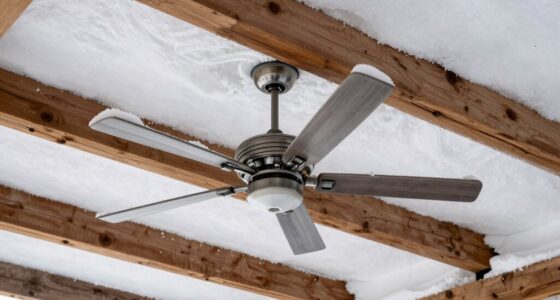
Understanding your fan’s blades and motor is key to optimizing efficiency. The blade design and angle control airflow and reduce noise, while the motor converts electricity into smooth mechanical motion. A high-quality motor with good aerodynamics minimizes vibration and energy waste. When these parts work together well, your fan operates quietly and efficiently with less power use. If you want to learn how these components interact for better performance, keep exploring this topic.
Key Takeaways
- Blade design and angle directly impact airflow efficiency and noise reduction.
- High-quality motors ensure smooth operation, lower vibrations, and energy savings.
- Proper integration of blades and motors optimizes airflow while minimizing turbulence.
- Regular maintenance of blades and motors sustains peak performance and noise control.
- Advances in fan technology enhance overall efficiency and quieter operation.

Have you ever wondered what makes a fan work effectively? It all comes down to its core components—blades, motors, and how well they work together. When you understand these parts, you get a clearer picture of how fans deliver ideal airflow and keep noise levels in check. Proper airflow enhancement is essential because it ensures that air moves smoothly through the blades, providing effective cooling or ventilation without wasting energy. The design and angle of the blades play a critical role here; they need to be shaped to maximize airflow while minimizing turbulence, which can cause unwanted noise. If your fan’s blades are poorly designed or damaged, airflow becomes uneven, and the fan has to work harder, leading to increased noise and decreased efficiency.
Next, the motor acts as the heart of the fan, converting electrical energy into mechanical motion. A high-quality motor provides consistent power, ensuring the blades rotate smoothly at the desired speed. This stability not only improves airflow but also helps in noise reduction. When a motor operates efficiently, it produces less vibration and sound, making the fan quieter. Conversely, a struggling or underperforming motor can cause rattling, humming, or buzzing sounds, disrupting the peaceful environment you want. Energy-efficient motors use less power, which means you save on electricity bills while maintaining strong airflow. They also tend to generate less heat, prolonging the lifespan of the fan. Additionally, advances in fan technology have led to quieter operation and improved energy efficiency.
The efficiency of a fan relies heavily on how well these components work together. When blades are aerodynamically optimized and the motor functions smoothly, the fan uses less energy to produce the same airflow. This harmony not only enhances performance but also minimizes noise because fewer vibrations and turbulence occur during operation. Proper maintenance, such as cleaning blades and ensuring the motor runs smoothly, further boosts efficiency and noise reduction. When you pay attention to these components, you create a system that delivers powerful airflow without the loud, distracting sounds often associated with inferior fans. Ultimately, understanding how blades and motors contribute to airflow enhancement and noise reduction helps you select and maintain fans that serve your needs quietly and effectively.
Frequently Asked Questions
How Do Blade Shapes Affect Airflow and Noise Levels?
You’ll notice that blade shape directly impacts airflow and noise levels. Well-designed blades optimize airflow, making your fan more efficient, while specific blade designs can reduce noise through smoother airflow and vibration minimization. If you choose blades with aerodynamic shapes and noise reduction features, you’ll enjoy quieter operation without sacrificing performance. So, pay attention to blade design, as it plays a vital role in balancing airflow and minimizing noise for better comfort.
What Materials Are Best for Durable Fan Blades?
Imagine choosing armor for a warrior—your blade material selection determines how well it withstands battles. For durable fan blades, you want materials like reinforced plastics or metals such as aluminum and steel, which excel in durability considerations. These materials withstand wear, resist corrosion, and maintain strength over time. Selecting the right blade material ensures your fan remains reliable, quiet, and efficient, much like armor that keeps a warrior protected through countless fights.
How Does Motor Type Influence Fan Efficiency?
You’ll notice that motor type remarkably impacts fan efficiency. For example, energy-efficient motors like ECMs have optimized motor windings that reduce power consumption while maintaining performance. This means you get better airflow with less energy use. Conversely, older or less efficient motors consume more power due to less effective windings, leading to higher energy costs. Choosing the right motor type directly improves your fan’s overall efficiency and saves you money.
Can Fan Components Be Recycled or Environmentally Disposed Of?
You can recycle or dispose of fan components through various recycling options aimed at environmentally friendly disposal. Many parts, like blades and motors, are made from recyclable materials such as metal and plastic. Check local recycling programs or specialized e-waste facilities. Proper disposal helps reduce waste and environmental impact, ensuring that hazardous materials are handled safely. Always verify with your local authorities for the best recycling options for your fan components.
What Maintenance Tips Extend Fan Lifespan?
To extend your fan’s lifespan, stick to regular cleaning routines to prevent dust buildup that can hinder performance. Additionally, follow proper lubrication practices for moving parts, which reduces wear and tear. Check your fan periodically for loose screws or wobbling and address issues promptly. By maintaining your fan this way, you guarantee it runs smoothly and lasts longer, saving you money and avoiding unnecessary replacements.
Conclusion
Understanding each fan component helps you see the whole picture and appreciate how they work together. By knowing how blades, motors, and other parts contribute to efficiency, you can make smarter choices and keep things running smoothly. Remember, when you’re familiar with the ins and outs, you’re not flying blind—you’re steering the ship. So, take this knowledge to heart, and you’ll be well-equipped to keep things cool and efficient, no matter what comes your way.