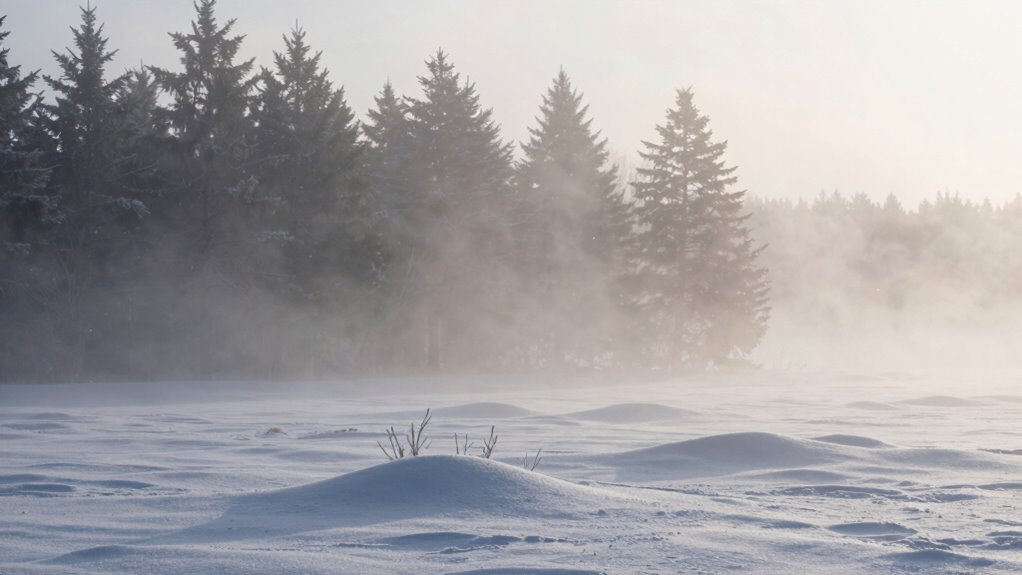

Winter air doesn’t necessarily ‘hold’ mist differently everywhere; it depends on temperature and humidity interactions. Cold air lowers moisture capacity, making mist more likely when humidity is high enough to reach saturation. Even in freezing temperatures, high humidity can prolong mist presence, while dry conditions limit it. Microclimates and atmospheric factors also play roles. If you want to understand more about how regional differences influence mist frequency, there’s more to uncover below.
Key Takeaways
- Cold winter air has lower moisture capacity, making mist formation more dependent on high humidity levels.
- High winter humidity from nearby water sources promotes more persistent mist, even in cold temperatures.
- Drier winter air reduces mist frequency, as it limits the necessary condensation processes.
- Temperature fluctuations in winter influence local mist appearance and duration, with colder, stable conditions favoring mist persistence.
- Microclimates with consistent moisture supply can cause localized, longer-lasting mist during winter months.

Have you ever wondered how often different types of mists occur in various environments? When examining mist frequency, it’s essential to understand how humidity effects and temperature variations play a pivotal role. These factors greatly influence whether mist forms and how long it stays suspended in the air. In winter, the air tends to be colder and often holds less moisture, but that doesn’t mean mist is absent. Instead, the interactions between temperature and humidity create unique conditions that either promote or inhibit mist formation. As temperatures drop, the air’s capacity to hold water vapor diminishes, making it easier for water droplets to condense out of the air and create mist. However, if the air becomes too dry due to low humidity effects, mist formation can be less frequent or less persistent, especially in environments where the temperature drops sharply overnight. Additionally, dew point plays a critical role in determining when mist will appear, as it indicates the temperature at which air becomes saturated. Humidity effects also influence the formation of fog, impacting how often and how long mist remains visible in various conditions. The variation in humidity effects can also be linked to the presence of specific atmospheric conditions, which further influence mist formation.
In winter, the variations in temperature greatly impact mist frequency. During the day, sunlight can slightly warm the surface and nearby air, temporarily increasing humidity effects and causing localized fog or mist to form. As the sun sets and temperatures plummet, the air’s capacity to retain moisture decreases further, often leading to the formation of frost or freezing fog, which behaves differently from the mist seen in more humid seasons. Conversely, in milder winter days, if there’s enough moisture from nearby bodies of water or recent snowfall, mist can form more readily despite the cold. The key is that temperature variations directly influence how much water vapor the air can hold at any given time, thereby affecting the likelihood and duration of mist events. This balance between temperature and humidity effects is vital for understanding seasonal atmospheric phenomena.
In environments with consistently high humidity effects tend to produce mist more frequently, regardless of seasonal temperature swings. Coastal regions or areas near large lakes often experience regular mist, thanks to the constant moisture supply and relatively stable temperature ranges. These conditions promote a persistent presence of tiny water droplets suspended in the air, creating a foggy atmosphere. In winter, if the humidity remains high and temperatures drop gradually, mist can linger longer before evaporating. But if cold air is very dry, mist formation becomes rare or limited to specific conditions, such as during freezing rain or when warm, moist air moves over cold surfaces. The interaction between humidity effects and temperature variations thus determines the persistence and visibility of mist across different environments.
Ultimately, whether winter air “holds” mist differently depends on how humidity effects and temperature variations interact. Cold temperatures tend to reduce the air’s moisture capacity, but if humidity levels are high enough, mist can still form and persist. In drier winter environments, mist becomes a rarer spectacle. Your understanding of these dynamics helps predict when and where mist might appear, revealing the delicate balance of atmospheric conditions that give rise to this ethereal phenomenon. Recognizing these interactions allows for more accurate weather predictions and a deeper appreciation for the complexity of atmospheric processes. For example, microclimates can significantly alter local mist formation patterns, even within the same general region.

Trykid 5x3ft Glacier Wall Backdrop Blue Ice Formation Jagged Ice Ridge Overcast Mist Sky Photography Background Banquet Gathering Party Decoration Tapestry Photo Booth Prop Fabric
- High-Density Polyester Fabric: Opaque, tear-resistant, stretch-proof, durable
- Lightweight and Portable: Foldable, easy to carry, seamless edges
- Versatile Use: Suitable for parties, weddings, portraits, and events
As an affiliate, we earn on qualifying purchases.
As an affiliate, we earn on qualifying purchases.
Frequently Asked Questions
How Does Humidity Affect Mist Formation in Winter Versus Other Seasons?
Humidity directly impacts mist formation by influencing dew point and air saturation levels. In winter, lower temperatures mean the air reaches dew point more quickly, creating mist even with moderate humidity. Higher humidity in other seasons means the air reaches saturation faster, producing mist more easily. So, winter air’s lower temperatures and dew point cause mist to form differently, often lingering longer, while warmer seasons require higher humidity for similar effects.
Are There Specific Environmental Factors That Influence Mist Frequency Differently in Winter?
Think of winter air like a sponge, soaking up environmental influences. Altitude variations and vegetation density play key roles in mist frequency during winter. Higher altitudes often see more mist because cooler temperatures cause more condensation. Dense vegetation releases moisture, increasing mist formation, while sparse areas produce less. These factors combine uniquely in winter, making mist more common in certain environments, unlike other seasons where different factors dominate.
Can Mist Frequency Be Used to Predict Weather Changes During Winter Months?
Yes, mist frequency can help predict winter weather changes. When you notice increased mist, it often signals high humidity and cloud cover, indicating potential shifts in weather patterns. Temperature fluctuations also play a role; rising or falling temperatures can cause mist to form or dissipate. By observing these changes in mist frequency, you can get a better sense of upcoming weather, like storms or clear skies, during winter months.
How Do Different Geographic Locations Impact Winter Mist Occurrence?
You’ll notice that in high-altitude areas, mist occurs up to 30% more often due to cooler temperatures and increased humidity. Urban locations tend to have less mist than rural areas because of pollution and heat islands that dry the air. So, geographic factors like altitude effects and whether you’re in a city or countryside markedly influence winter mist frequency, shaping the unique weather patterns you experience.
Is There a Scientific Method to Precisely Measure Mist Hold Time in Winter?
Yes, you can precisely measure mist hold time in winter using specialized sensors like hygrometers or optical particle counters. To guarantee data accuracy, you should calibrate these sensors regularly and record environmental conditions such as temperature and humidity. By doing so, you’ll obtain reliable measurements of mist persistence, helping you analyze how winter air influences mist duration effectively. Proper calibration is key to accurate, consistent data collection.

TempPro TP50 Digital Hygrometer Indoor Thermometer Room Thermometer and Humidity Gauge with Temperature Humidity Monitor(Previously ThermoPro)
- Wellness Indicator: Air condition status with icons
- High Accuracy & Fast Updates: ±2-3%RH and ±1°F, updates every 10 seconds
- Record High & Low Levels: Displays temperature and humidity extremes
As an affiliate, we earn on qualifying purchases.
As an affiliate, we earn on qualifying purchases.
Conclusion
As you observe winter air’s unique relationship with mist, remember that every season has its secrets. While winter might hold mist differently, it reminds us that patience often reveals the best moments—after all, “Rome wasn’t built in a day.” So, stay curious and open, because nature’s subtle changes can teach us just as much as grand events. Embrace the quiet beauty of winter’s mist, knowing each breath brings something new to discover.

Coolfiqu 6L Humidifiers for Bedroom Large Room Home,Cool and Warm Humidifier for Baby and Plants Hot Mist Top Fill Desk Humidifiers Oil Diffuser,Quiet,Adjustable Mist,360°Nozzle-Black(2026 Upgraded)
- Dual Mist Modes: Warm and cool mist options
- Easy Top-Fill Design: Refill water directly from top
- Large Capacity: 6L tank for 60 hours use
As an affiliate, we earn on qualifying purchases.
As an affiliate, we earn on qualifying purchases.

6-Pack Mini Hygrometer Indoor Humidity Meter, Mini Digital Thermometer Humidity Gauge Meter, Indoor Thermometer Hygrometer Monitor Fahrenheit (℉) for Reptile Thermostat, Jars Reptile, Fridge
- 2-in-1 Temperature and Humidity Meter: Built-in probe for precise readings
- Easy-to-Read Digital Display: Clear display for quick condition checks
- Fast and Accurate Monitoring: Updates every 10 seconds with high precision
As an affiliate, we earn on qualifying purchases.
As an affiliate, we earn on qualifying purchases.