
To guarantee your pergola fan isn’t obstructed by vines and leaves, plan your installation in late winter or early spring, before rapid plant growth begins. Choose a strategic spot that considers vine patterns and allows for pruning or training plants to grow away from the fan. Selecting the right plant varieties and maintaining regular pruning will keep airflow clear and prolong fan lifespan. Continue exploring ways to optimize your pergola setup for lasting outdoor comfort.
Key Takeaways
- Install the fan in late winter or early spring to avoid obstruction from emerging foliage.
- Assess pergola layout and plant growth patterns to determine optimal fan placement.
- Choose vine varieties that grow vertically and are easier to prune for long-term airflow.
- Plan for pruning or training existing plants to prevent future interference with the fan.
- Select energy-efficient fan models with adjustable features for effective operation before dense growth begins.
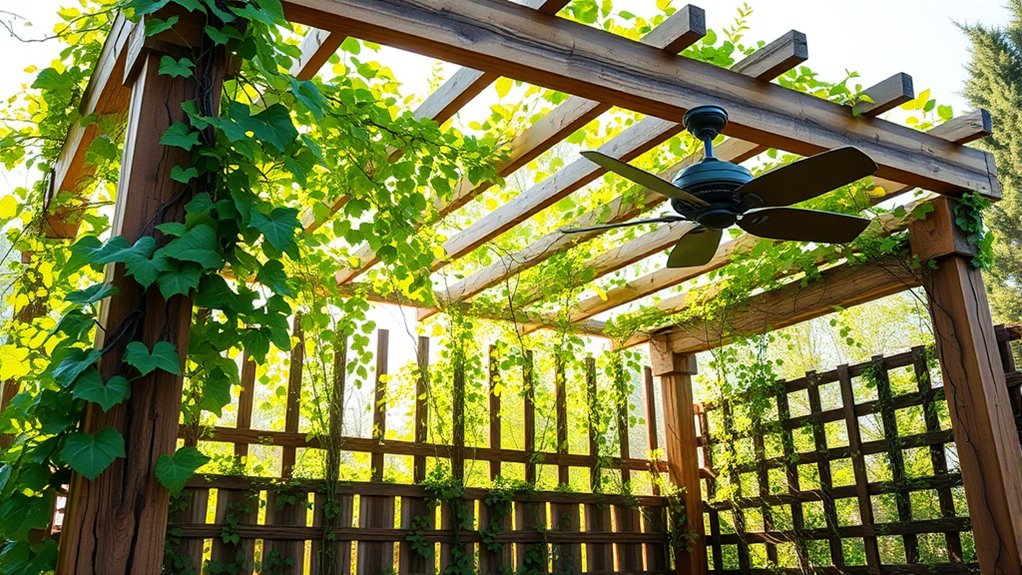
Installing a fan on your pergola can transform your outdoor space into a comfortable retreat, especially during hot summer days. But before you install that perfect fan, planning ahead by considering the upcoming spring growth is essential. Vines and leaves tend to flourish quickly once the season starts, and their rapid growth can obstruct airflow and diminish the effectiveness of your fan. By planning your pergola fan installation before the vines and leaves grow, you guarantee maximum outdoor comfort and maintain energy efficiency.
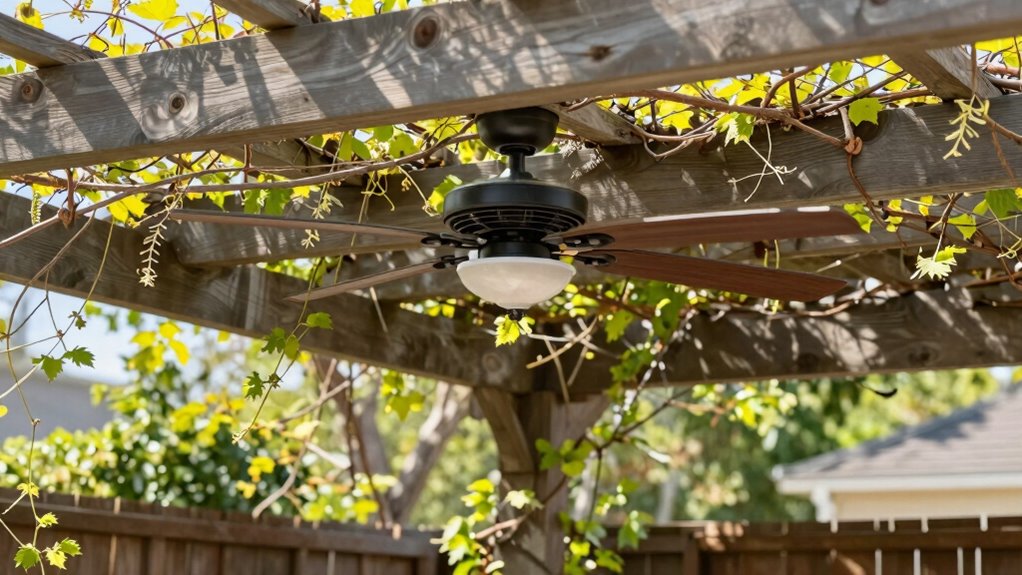
Timing is key. You want to install your fan early enough so that it’s up and running before the foliage becomes too dense. This proactive approach helps you avoid the hassle of rerouting or adjusting the fan later when plants are fully grown. As leaves and vines develop, they can block the breeze and even cause damage to the fan blades or motor. It’s best to install the fan during late winter or early spring, giving you a window to set everything up before the plants start to take over.
Another vital aspect of planning is understanding the layout of your pergola and the growth patterns of your selected plants. If you’re planting new vines, choose varieties that grow vertically and won’t spread too quickly or densely. This way, you can position the fan in a way that maximizes airflow and outdoor comfort while minimizing obstruction. If you already have existing plants, consider pruning or training them to grow away from the fan area. This short-term effort can greatly improve your outdoor experience once the season kicks into full swing. Additionally, selecting appropriate plant varieties can help control growth and reduce obstruction over time.
Energy efficiency also plays a role in your planning process. Installing the fan early allows you to select models with energy-saving features, such as adjustable speeds or timers, which can reduce electricity use and lower your utility bills. Positioning the fan correctly, considering the direction of prevailing winds and the placement of plants, can also help optimize airflow and cooling, reducing the need for additional cooling devices. Proper planning means your fan will work more effectively, providing consistent outdoor comfort without wasting energy. Additionally, understanding plant growth patterns can help you make more informed decisions about placement and pruning strategies to ensure your fan remains unobstructed throughout the season.
Frequently Asked Questions
How Do I Choose the Right Size Fan for My Pergola?
To choose the right size fan for your pergola, consider the space’s ventilation efficiency and fan placement. Measure your pergola’s dimensions to find a fan that can circulate air effectively without overpowering the area. A larger fan covers more area and improves airflow, while a smaller one suits compact spaces. Position the fan where it can maximize airflow, ensuring comfort and proper ventilation during warmer months.
What Safety Precautions Should I Consider During Installation?
Did you know faulty installations cause over 20,000 electrical safety issues annually? To stay safe, verify your pergola’s structural stability before installing the fan, and always turn off the power supply. Use proper grounding and check for damaged wires. Wear gloves and safety goggles, and if unsure, hire a professional. Prioritizing electrical safety and structural stability protects you from potential hazards and ensures your fan functions smoothly all season.
Can I Install a Fan on a DIY Pergola?
Yes, you can install a fan on a DIY pergola, but you should follow some DIY tips for safe and effective fan placement. Make sure to choose a sturdy spot that can support the fan’s weight and provides ideal airflow. Use proper tools, secure all fixtures tightly, and consider electrical safety. Always double-check local codes and, if unsure, consult a professional to ensure your installation is both safe and functional.
How Do I Maintain a Pergola Fan Over Time?
Maintaining your pergola fan isn’t rocket science—you just need to give it some TLC. Regularly clean the blades and check the electrical wiring for wear or corrosion, so your fan keeps spinning smoothly. When considering lighting options, guarantee wiring stays protected from the elements. A little upkeep prevents costly repairs and keeps your outdoor space cool and inviting. Remember, a well-maintained fan is the secret to summer comfort!
Are There Specific Fan Models Recommended for Vine Growth?
Vine-friendly fans with adjustable airflow are your best bet for supporting vine growth. Look for models designed to gently circulate air without damaging delicate leaves or vines. Fans with adjustable airflow let you customize the breeze, preventing wind damage while promoting healthy growth. Choose a fan that’s durable and easy to maintain, ensuring it works well as your vines grow and your pergola becomes more lush.
Conclusion
Planning your pergola fan installation now is like planting the seeds for a summer oasis. By preparing before spring’s growth spurt, you set the stage for a lush, comfortable retreat. Imagine your pergola as a sturdy tree, ready to flourish with cooling breezes whenever you need them. So, take action today—your outdoor sanctuary will thank you when those vines and leaves start to weave their magic and your fans are ready to breeze through the season.