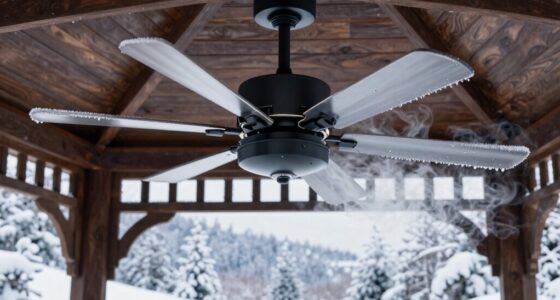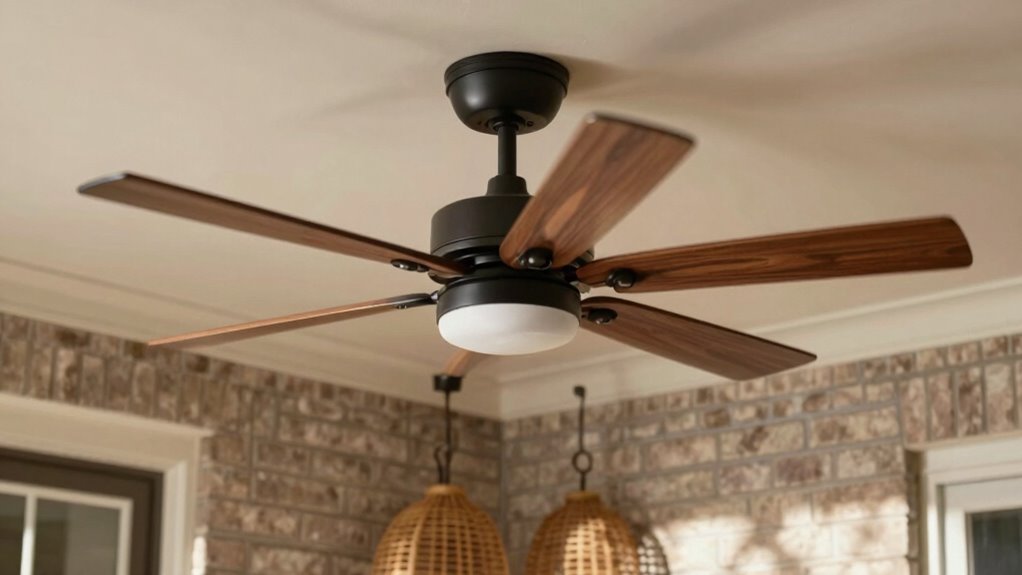

Using the reverse mode on your covered porch fan is important for adjusting airflow to suit the weather. During warm months, keep it in forward mode for a cooling breeze; in cooler months, switch to reverse to circulate warm air and maintain comfort. Properly managing fan direction helps save energy and prolongs the fan’s lifespan. If you want to learn more about when and how to switch modes effectively, there’s useful tips and tricks waiting for you.
Key Takeaways
- Reversing porch fan direction helps circulate warm air during cooler months, improving comfort and heating efficiency.
- During hot weather, keeping the fan in forward mode creates a cooling breeze by pushing air downward.
- Many fans feature a simple switch or motor reverse function for quick and easy direction adjustments.
- Proper fan orientation reduces energy costs by optimizing airflow and decreasing reliance on indoor AC.
- Regularly switching between forward and reverse modes based on weather conditions maximizes outdoor comfort and fan longevity.

Adjusting the fan’s direction isn’t just about comfort—it also impacts energy efficiency. When you use your porch fan correctly, it can reduce the need for other cooling devices, saving you money on energy bills. During hot weather, keeping the fan blowing downward creates a breeze that cools your skin directly, which means you won’t have to rely on a heavily air-conditioned indoor space. Conversely, in cooler weather or during evenings, reversing the fan helps distribute warm air that’s risen to the ceiling, maintaining a cozy environment without overheating the space. This strategic use of airflow patterns ensures you’re not wasting energy by overcooling or overventilating the porch area. Properly managing airflow direction can also extend the lifespan of your fan by reducing strain on the motor.
Many porch fans have a switch or a reverse feature built into their motor, making it easy to change directions. It’s a quick adjustment that can make a noticeable difference in comfort and energy use. Just remember, during warm months, keep the fan in forward mode to create a cooling breeze. When the temperature drops or if you want to improve heat circulation, switch it to reverse. This simple step not only maximizes your fan’s efficiency but also contributes to a more comfortable and energy-conscious outdoor living space. Additionally, understanding fan motor mechanics can help you troubleshoot and maintain your fan more effectively. So next time you’re setting up your porch, take a moment to check your fan’s direction. Proper airflow patterns are essential for comfort, and mastering this small detail can lead to big improvements in how you enjoy your porch year-round.

Depuley 52-Inch Ceiling Fan with Light: Black 3 Blade Outdoor Fans for Patios – Dimmable Indoor Fan with Remote Control Fandelier for Living Room Bedroom Porch Quiet Motor Reversible 6 Speed Timer
Expansive 52-Inch Airflow Coverage: Unlike smaller 42-inch units, this 52-inch ceiling fan is engineered for medium to large…
As an affiliate, we earn on qualifying purchases.
As an affiliate, we earn on qualifying purchases.
Frequently Asked Questions
Can Reverse Fan Direction Help Reduce Energy Costs?
Yes, reversing your fan direction can help reduce energy costs. In winter, set your fan to run clockwise to create an updraft, which pushes warm air down and improves heating efficiency. This increases energy savings by making your heating system work less. Using the fan in reverse mode also enhances fan efficiency during colder months, helping you stay comfortable without cranking up your thermostat and spending more on energy.
How Often Should I Switch Fan Direction Seasonally?
You should perform a seasonal fan adjustment at least twice a year, switching the fan direction to match the season—clockwise in winter and counterclockwise in summer. Adjust the fan operation timing to guarantee ideal airflow, running fans only when needed. Regularly changing the fan direction helps improve energy efficiency and comfort. Make it a routine to check and adjust your fan settings to maximize benefits year-round.
Does Reversing Fan Direction Make Outdoor Fans More Durable?
Reversing your outdoor fan’s direction can help improve outdoor fan longevity by reducing strain on the motor and blades. When you switch to reverse mode seasonally, it promotes better airflow and prevents dust buildup, which can impact fan blade maintenance. This simple step helps your fan last longer, ensuring consistent performance and protecting your investment over time. Properly maintained fans are less likely to need repairs and will serve you well longer.
Are There Safety Concerns When Changing Fan Direction?
Oh, switching your ceiling fan direction is perfectly safe—just like walking on a tightrope, right? In reality, ceiling fan safety is straightforward as long as you turn off the power before changing directions. Regular outdoor fan maintenance helps prevent accidents or damage. So, yes, always make certain the fan is off, and handle it carefully. That way, you avoid any safety hazards while keeping your outdoor fan in top shape.
Can Reversing Fan Direction Affect Outdoor Plant Health?
Reversing fan direction can impact outdoor plant health by influencing air circulation and moisture levels. When the fan blows downward, it helps keep plants dry, aiding in pest control and reducing disease risk. Conversely, reversing the fan may cause increased humidity, which can lead to fungal issues and affect plant watering needs. Adjusting fan direction thoughtfully supports healthy growth and pest management, ensuring your outdoor plants thrive.
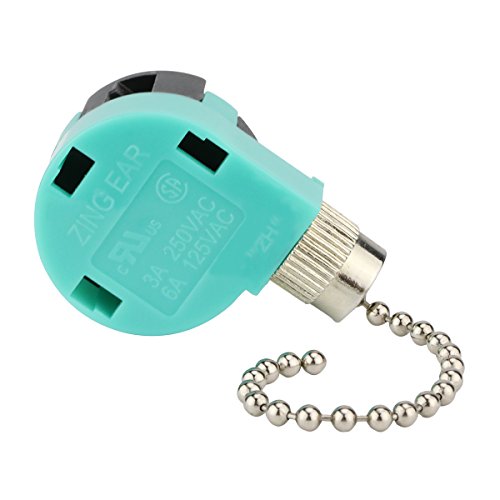
Ceiling Fan Switch 3 Speed 4 Wire Zing Ear ZE 268S6 Pull Chain Switch Control Replacement 3 Speed Control S Witch Ceiling Fans, Wall Lamps, Cabinet Light
Zing Ear Ceiling Fan Switch 3 speed 4 wire pull chain replacment: Model ZE-268S6.
As an affiliate, we earn on qualifying purchases.
As an affiliate, we earn on qualifying purchases.
Conclusion
So, don’t overlook your porch fan’s direction. Switching it to reverse mode might seem unnecessary, but it really helps keep your porch cozy in winter. Sure, it’s extra effort, but the warmth and comfort are worth it. Just give it a quick change, and enjoy a more inviting space year-round. After all, small adjustments like this can make a big difference in how much you enjoy your porch—so go ahead and try it out today.

addlon Ceiling Fans with Lights, 42 Inch Low Profile Ceiling Fan with Light and Remote Control, Flush Mount, Reversible, 3CCT, Dimmable, Quiet, Black Small Ceiling Fan for Bedroom Indoor/Outdoor Use
Ceiling Fan with Light: Bring more than just wind and light, but comfort! addlon modern ceiling fan, with…
As an affiliate, we earn on qualifying purchases.
As an affiliate, we earn on qualifying purchases.

Ceiling Fan Reverse Switch 6-Pin Toggle – Ceiling Fan Direction Switch, Prewired 6-Wire Leads, 3A 250V / 6A 125V, Compact Easy Install Replacement for Indoor Outdoor Fans, Forward Reverse Control
Reverse Direction Control: 6-pin ceiling fan reverse switch, a forward reverse switch rated 3A 250V / 6A 125V…
As an affiliate, we earn on qualifying purchases.
As an affiliate, we earn on qualifying purchases.