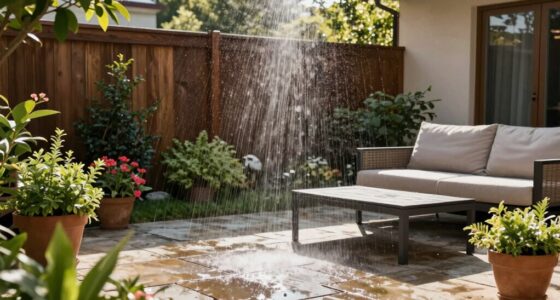
To decide if your patio is ready for misting, start by evaluating the humidity levels—if it feels dry and uncomfortable, misting could help, but if it’s already damp or sticky, it might cause issues. Check your furniture for damage risk, especially wood or fabric pieces, and test a small area first. Consider your patio’s layout, airflow, and climate; these influence how effective and safe misting will be. For a smoother experience, understanding these factors can guide your decision.

Get garden gear delivered free with Prime
- Fast, free delivery on millions of items
- Prime Video, Amazon Music and more included
- Member-only deals all year
Key Takeaways
- Assess current humidity levels and air dryness to determine if misting will improve comfort or cause excess moisture.
- Test a small area of outdoor furniture to see if misting leads to mold, warping, or damage.
- Evaluate patio openness and airflow; well-ventilated spaces are better suited for misting.
- Consider local climate and typical humidity patterns to decide if misting is necessary or beneficial.
- Observe existing moisture retention, shade, and enclosure to prevent over-humidifying the space.
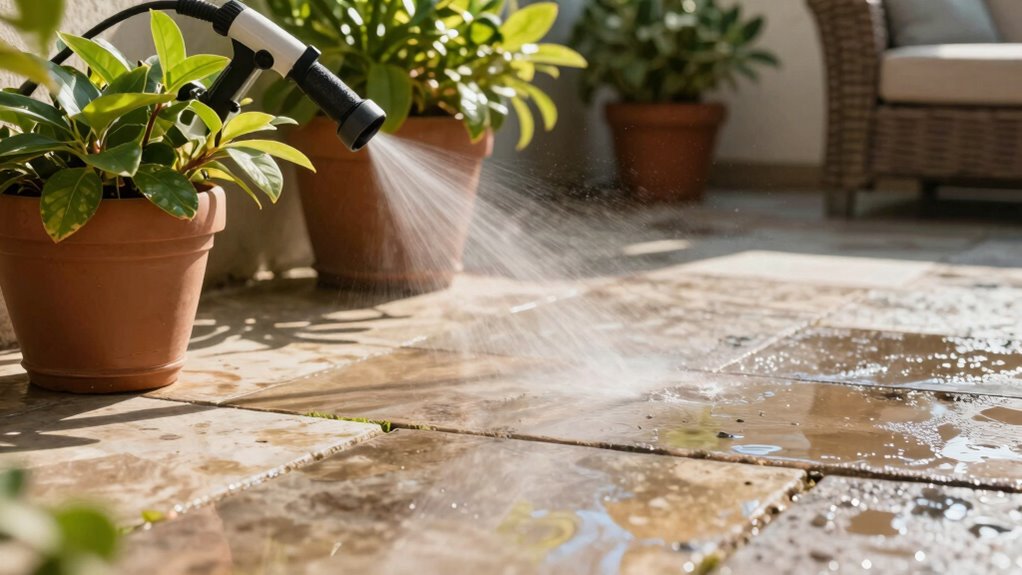
Deciding if your patio is ready for misting can greatly enhance your outdoor comfort, especially during hot days. Before investing in a misting system, you need to assess the current garden humidity levels and how your outdoor furniture might react to the added moisture. If the air feels dry and uncomfortable, misting can create a cooler, more pleasant environment. However, if your garden already has high humidity, adding mist could make the space feel damp and sticky. The key is to find a balance where misting improves comfort without leading to excess moisture that promotes mold or mildew.
Check your outdoor space’s existing conditions first. If your garden humidity tends to stay low, misting can substantially boost the comfort level. It adds a fine layer of water vapor that cools the air and makes the environment more hospitable during peak heat. But, if you notice your outdoor furniture is already damp or shows signs of mold, misting might do more harm than good. Wood and fabric furniture are especially susceptible to moisture damage, so you want to ensure your furniture can handle the extra humidity without deteriorating over time. Being aware of garden humidity levels can help you make better decisions about misting. Additionally, understanding the climate conditions of your area can also inform your decision on misting frequency and intensity.
Ensure your furniture can handle extra humidity before misting to prevent damage and mold growth.
Consider the materials of your outdoor furniture. Metal or plastic pieces are less vulnerable to moisture, making misting a safer option for those setups. Conversely, if your furniture is made of wood or has fabric cushions, you’ll need to be more cautious. Excess moisture can lead to warping, rotting, or mold growth, which diminishes the longevity and appearance of your furniture. If you’re unsure, it’s best to do a quick test by lightly misting a small, inconspicuous area and monitoring how your furniture responds over the next few days. Understanding the humidity patterns in your region can help you determine the most suitable misting schedule. Incorporating proper maintenance routines can also extend the life of your outdoor furnishings in humid conditions. Being mindful of ventilation and airflow can further help prevent moisture from becoming trapped in enclosed or shaded areas of your patio.
Another factor to evaluate is the layout of your patio. An open space with good air circulation will help prevent excessive moisture buildup, making misting more effective and less likely to cause problems. If your patio is enclosed or shaded, moisture might linger longer, so you should be more careful with the frequency and intensity of misting. Proper placement of misting nozzles and timing your misting sessions during the hottest parts of the day can help you achieve a comfortable environment without creating overly damp conditions.
outdoor misting system for patio
As an affiliate, we earn on qualifying purchases.
As an affiliate, we earn on qualifying purchases.
Frequently Asked Questions
Can Misting Damage Outdoor Furniture or Plants?
Misting generally won’t damage outdoor furniture or plants if used properly. To guarantee plant protection, avoid excessive or direct misting on delicate plants, and consider using protective covers if needed. For furniture safety, use a gentle mist and keep it at a distance to prevent water damage or mold. Regularly check your setup to prevent over-saturation, and you’ll keep your patio plants and furniture in good shape.
What Is the Ideal Temperature for Patio Misting?
The ideal temperature for patio misting is around 85°F (29°C). If it’s colder, misting becomes pointless or even counterproductive — you’d just be adding unnecessary humidity. Thanks to advanced temperature regulation and misting technology, your outdoor space stays invigoratingly cool without turning into a swamp. So, when the mercury hits the high 80s, that’s your cue to activate misting and keep your patio comfortably chill.
How Often Should I Mist My Patio?
You should mist your patio every 15 to 30 minutes during hot weather, but always monitor water quality and system maintenance. If water appears dirty or clogged, increase cleaning frequency or adjust your system. Regularly check for leaks or blockages, and use clean, filtered water to prevent buildup. Consistent misting keeps your patio cool, but proper maintenance guarantees the system runs efficiently and extends its lifespan.
Is Misting Effective During High Humidity?
During high humidity, misting becomes almost pointless, like trying to cool down in a sauna with a tiny fan. Humidity impact drastically reduces misting efficiency because the air is already saturated with moisture, preventing additional cooling. So, if the humidity is sky-high, your misting system won’t do much good — it’s like pouring water on a wet sponge. Instead, consider other cooling methods for relief.
What Safety Precautions Are Necessary for Misting Systems?
When installing your misting system, prioritize safety by following maintenance tips like checking for leaks and ensuring proper wiring. Always install the system correctly, following manufacturer instructions, to prevent accidents. Keep children and pets away during operation, and regularly inspect nozzles and connections. Proper system installation and ongoing maintenance are essential for safe, effective misting, helping you enjoy cooling benefits without risks.
As an affiliate, we earn on qualifying purchases.
Conclusion
Once you’ve checked the temperature, humidity, and your patio’s setup, you’ll know if it’s ready for misting. Remember, misting can reduce surface temperatures by up to 20°F, making your outdoor space much more comfortable. Did you know that over 60% of homeowners with patios report increased outdoor enjoyment after installing misting systems? So, when your patio is prepared, you’re all set to enjoy cooler, more invigorating outdoor moments—just hit the switch and relax!
outdoor furniture mold protector
As an affiliate, we earn on qualifying purchases.
As an affiliate, we earn on qualifying purchases.
As an affiliate, we earn on qualifying purchases.
Fall yard work Picks
leaf blowers
As an affiliate, we earn on qualifying purchases.