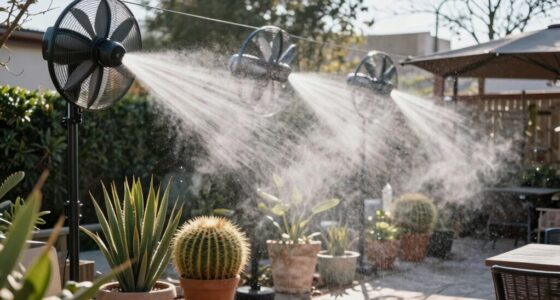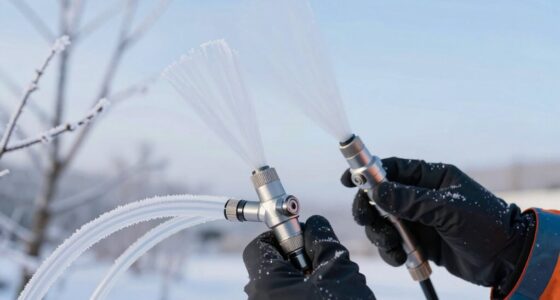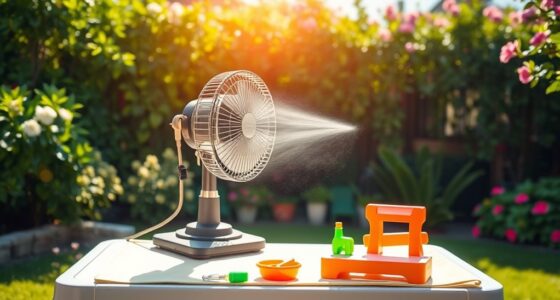
In winter, instead of misting your indoor plants, you can use foggers or humidifiers to maintain ideal humidity levels effectively. Foggers produce a gentle, even mist that disperses quickly and covers larger areas, helping simulate natural moisture. Humidifiers, on the other hand, add steady vapor directly into the air with adjustable settings for precise control. Both options reduce issues caused by dry air, creating a healthier environment for your plants. Keep exploring to learn how to choose the best device for your space.

Get garden gear delivered free with Prime
- Fast, free delivery on millions of items
- Prime Video, Amazon Music and more included
- Member-only deals all year
Key Takeaways
- Foggers and humidifiers evenly increase indoor humidity, reducing the need for frequent misting.
- They produce consistent moisture, helping prevent leaf damage and wilting caused by dry winter air.
- Electric humidifiers allow precise control of humidity levels for optimal plant health.
- Proper placement ensures effective moisture distribution without water damage or oversaturation.
- Using foggers or humidifiers creates a healthier environment, lowering static and stabilizing indoor microclimates.
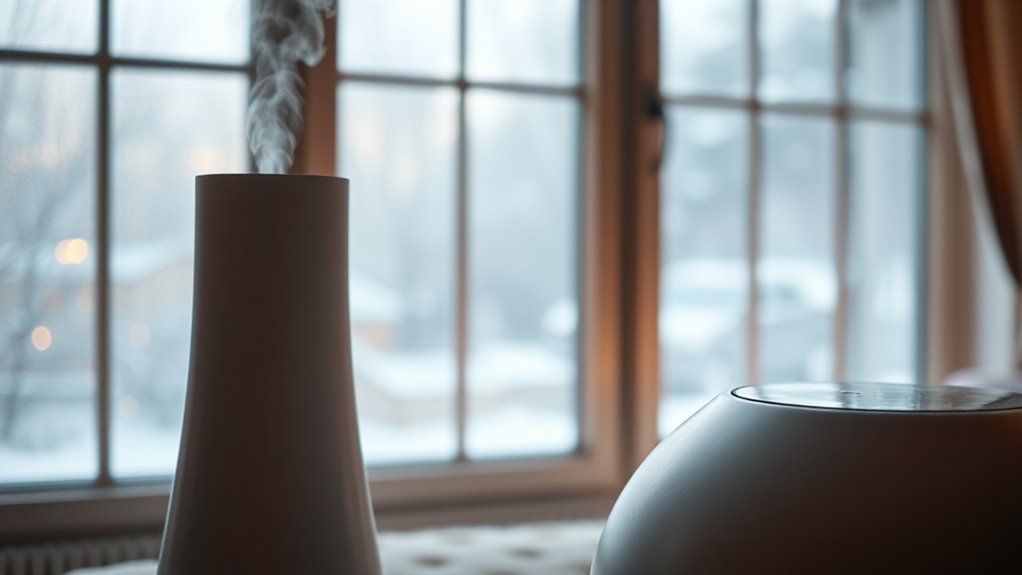
Are you looking for effective ways to keep your indoor plants hydrated during winter without relying on traditional misting? If so, exploring alternatives like foggers or humidifiers can make a real difference. These devices help maintain ideal humidity levels by mimicking natural processes such as evaporative cooling and air humidification, which are essential for healthy plant growth during colder months when indoor air tends to dry out.
Using a fogger can be an excellent option because it produces a fine mist that quickly disperses into the air, increasing humidity evenly around your plants. Unlike traditional misting, which can be inconsistent and often requires frequent repetition, foggers generate a consistent, gentle fog that elevates moisture levels over a larger area. This process leverages evaporative cooling, where the water droplets absorb heat as they evaporate, cooling the surrounding air slightly. This not only benefits your plants but also improves the overall indoor environment, making it more comfortable for both plants and people. Additionally, the evaporative process helps to naturally regulate humidity levels, reducing the need for frequent adjustments. Implementing humidity control devices can further optimize the environment for your indoor garden.
Air humidification through electric humidifiers is another effective alternative. These devices add moisture directly into the air by releasing a steady stream of water vapor, maintaining a stable humidity level that’s vital for plant health. Modern humidifiers often come with adjustable settings, allowing you to tailor the humidity to your specific plant needs. By doing so, you prevent issues like leaf browning or wilting caused by dry indoor air, which is especially common in winter when heating systems tend to deplete moisture from the environment. Incorporating humidification technology into your routine can also help improve overall air quality, making your indoor space more comfortable. Furthermore, some models are designed with automatic shut-off features, ensuring safe operation and energy efficiency.
Both foggers and humidifiers also offer the benefit of reducing static electricity, which can be problematic in dry indoor air. Plus, they help create a more stable microclimate that shields your plants from rapid humidity fluctuations, decreasing stress and promoting healthier growth. Proper placement — near your plant collection — is key to ensure even moisture distribution without oversaturating any one area. Additionally, choosing the right device with appropriate capacity and features can optimize your plant care routine.
Incorporating these tools into your winter plant care routine not only simplifies maintaining proper hydration but also fosters a healthier indoor environment. By harnessing evaporative cooling and air humidification, you can provide your plants with consistent, adequate moisture, ensuring they stay vibrant and thriving despite the dry winter air. This approach offers a smart, efficient alternative to misting that saves you time and helps keep your indoor garden lush and lively all season long.
Products Worth Considering

EGO Power+ 12-Inch Cordless Electric Snow Shovel with 56V 2.5Ah Battery and Charger

Orbit B-hyve Smart Indoor/Outdoor 12-Zone Sprinkler Controller

Orbit B-hyve XR 16-Zone Indoor/Outdoor Smart Sprinkler Controller
As an affiliate, we earn on qualifying purchases.
Frequently Asked Questions
Can Foggers or Humidifiers Damage Indoor Plants?
Foggers and humidifiers won’t damage your indoor plants if you use them correctly. They help maintain plant health by increasing humidity, but you need to regularly clean and maintain the equipment to prevent mold or bacteria buildup. Overuse or excessive moisture can harm plants, so monitor the environment and adjust settings accordingly. Proper equipment maintenance guarantees your plants stay healthy without risk of damage.
How Often Should I Clean Foggers or Humidifiers?
You should clean your foggers or humidifiers at least once a week to prevent mold and bacteria buildup. Follow a regular cleaning schedule, using mild soap and water or vinegar to disinfect. Maintenance tips include emptying the unit daily, drying it thoroughly, and replacing filters as recommended. Consistent cleaning keeps your device functioning well and guarantees your indoor plants stay healthy and free from harmful germs.
Are Electric Foggers More Effective Than Traditional Humidifiers?
Electric foggers are generally more effective than traditional humidifiers because they produce a finer mist that spreads more evenly, increasing humidity levels quickly. They also cover larger areas, making them ideal for bigger spaces. Traditional humidifiers work well for small rooms, but they may require more frequent refilling and maintenance. If you’re aiming for efficient, widespread humidification, electric foggers are the better choice.
What Safety Precautions Are Needed When Using Foggers Indoors?
Think of foggers as gentle rainstorms inside your home—so, you must take precautions. Always guarantee electrical safety by plugging devices into grounded outlets and avoiding extension cords. Place foggers on stable surfaces away from furniture, curtains, and vents to prevent accidents or electrical hazards. Regularly check for leaks or malfunctions, and keep children and pets at a safe distance. These steps help you enjoy humidified air safely and effectively.
Do Foggers or Humidifiers Affect Indoor Air Quality?
Foggers and humidifiers can impact indoor air quality by introducing moisture and potential pollutant emissions. You might notice increased humidity, which can promote mold growth if not managed properly, affecting air quality. Some foggers emit chemicals or aerosols that could worsen air quality or cause respiratory issues. To minimize impact, guarantee proper ventilation, use devices as directed, and choose models with low pollutant emissions for healthier indoor air.
Conclusion
Just like the phoenix rises from its ashes, you can revive your indoor air quality with foggers or humidifiers instead of misting. These alternatives help maintain moisture and prevent dryness, ensuring your plants and environment stay healthy through winter’s chill. By choosing these options, you’re embracing a smarter, more sustainable approach—transforming your space into a sanctuary that even the gods of Olympus would envy. So, take control and breathe easy all season long.