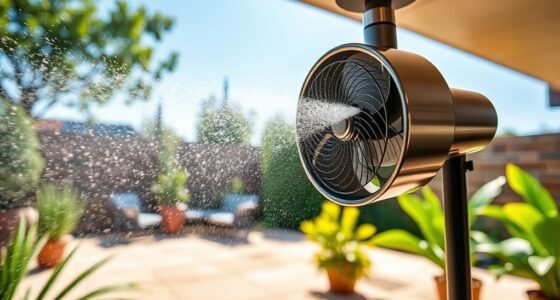
To overcome hard water issues in misting fan systems, you should start by testing your water for mineral content and install water softeners or filtration units to reduce minerals. Regularly clean nozzles, filters, and pipes with descaling solutions or vinegar to prevent clogs. Routine maintenance and pre-treating water can considerably extend your system’s lifespan and keep performance ideal. Keep exploring for more tips on maintaining and protecting your misting system from mineral buildup.

Get garden gear delivered free with Prime
- Fast, free delivery on millions of items
- Prime Video, Amazon Music and more included
- Member-only deals all year
Key Takeaways
- Install water softeners or pre-treatment systems to reduce mineral content before water reaches the misting system.
- Regularly clean and descale nozzles, filters, and pipes using vinegar or descaling solutions to prevent mineral buildup.
- Use filtered or low-mineral water sources to minimize clogging and extend system lifespan.
- Conduct routine maintenance checks and flush systems periodically to remove accumulated minerals.
- Educate staff on best practices for water management and adhere to manufacturer maintenance guidelines.

Hard water can pose significant challenges for misting fan systems, causing mineral buildup that reduces efficiency and shortens equipment lifespan. When your system relies on water that’s rich in minerals like calcium and magnesium, over time, these deposits accumulate inside nozzles, filters, and pipes. This buildup can clog spray outlets, diminish mist output, and force you to replace parts more frequently. To prevent this, implementing proper water treatment is essential. You want to verify that your water source is as free of minerals as possible before it reaches your misting system. Using water softeners or filtration units can considerably reduce mineral content, helping your system operate smoothly for longer periods.
Hard water causes mineral buildup, clogging nozzles and reducing misting system efficiency. Proper water treatment is essential.
Alongside water treatment, establishing consistent maintenance routines plays a critical role in managing hard water issues. Regularly inspecting nozzles and filters allows you to identify early signs of mineral deposits and clean them before they cause major blockages. You should plan routine flushes of the entire system with descaling solutions or vinegar to dissolve accumulated minerals. This proactive approach prevents stubborn buildup that can impair performance. Remember, neglecting maintenance can lead to costly repairs or replacements down the line, so keep a schedule and stick to it.
Another aspect to contemplate is the quality of water you use. If you’re sourcing water from a well or municipal supply known for high mineral content, it’s worth investing in pre-treatment options. Portable filtration devices or dedicated water conditioning systems can make a notable difference. Some systems even incorporate UV sterilization and additional filtration layers to ensure the water remains clean and free from particulates that could clog your misting system. These investments pay off, as they reduce the frequency of maintenance and extend the lifespan of your equipment.
Additionally, training your team or yourself on proper water management techniques can streamline your maintenance routines. Educate yourself on how to recognize early signs of mineral buildup, such as reduced mist output or uneven spray patterns. Using the correct cleaning agents and following manufacturer guidelines will help prevent damage and keep your system running efficiently. Remember, the key to overcoming hard water issues is consistency—regular water treatment, scheduled maintenance routines, and quality control measures. By doing so, you’ll minimize downtime, lower repair costs, and ensure your misting fan system continues providing cooling comfort effectively, even with challenging water supplies.
water softener for misting systems
As an affiliate, we earn on qualifying purchases.
As an affiliate, we earn on qualifying purchases.
Frequently Asked Questions
Can Hard Water Damage Misting Fan Motors?
Hard water can definitely damage misting fan motors by causing mineral deposits to build up inside. These deposits can clog the system and strain the motor, leading to potential failure. To prevent this, you should consider water softening treatments, which reduce mineral content. Regular maintenance and cleaning also help guarantee your misting fan operates smoothly, keeping mineral deposits at bay and prolonging the motor’s lifespan.
Are There Specific Filters to Prevent Mineral Buildup?
Think of your misting system as a delicate garden that needs protection. To prevent mineral buildup, you should explore filter options designed for mineral prevention. These filters act like guardians, catching minerals before they reach your system’s sensitive parts. By choosing the right filter, you keep your misting fan running smoothly and extend its lifespan, ensuring you enjoy invigorating air without the worry of hard water damage.
How Often Should I Flush the System?
You should flush your misting fan system every 1 to 3 months, depending on water quality. Regular flushing helps prevent mineral deposits buildup caused by hard water, which can clog nozzles. Using water softening methods reduces mineral deposits, extending the time between flushes. Keep an eye on spray consistency; if it diminishes, it’s time to flush and maintain peak performance.
What Are the Long-Term Effects of Hard Water?
Hard water can cause long-term issues like mineral deposits that clog your system and reduce efficiency. Over time, these deposits can damage components and lead to costly repairs. To prevent this, you should consider water softening solutions, which reduce mineral buildup. Regular maintenance helps extend your system’s lifespan, ensuring it runs smoothly and efficiently. Addressing hard water issues early protects your investment and keeps your misting fans operating at their best.
Are There Eco-Friendly Solutions for Hard Water?
Think of eco-friendly alternatives as your garden’s best friends in fighting hard water. You can opt for water softening methods like ion exchange or natural solutions such as vinegar or baking soda, which are gentle on the environment. These options help reduce mineral buildup without harsh chemicals, making your misting fan system more efficient and sustainable. Embracing water softening keeps your system running smoothly while caring for the planet.
As an affiliate, we earn on qualifying purchases.
Conclusion
Now that you know how to tackle hard water problems in your misting fan system, aren’t you ready to enjoy cool, misted air without constant maintenance worries? By using water softeners, filters, and regular cleaning, you can keep your system running smoothly and extend its lifespan. Isn’t it worth the effort to stay cool and comfortable all summer long? Take these steps today and say goodbye to hard water headaches forever!
water filtration system for hard water
As an affiliate, we earn on qualifying purchases.
As an affiliate, we earn on qualifying purchases.
As an affiliate, we earn on qualifying purchases.
Halloween Picks
halloween
As an affiliate, we earn on qualifying purchases.