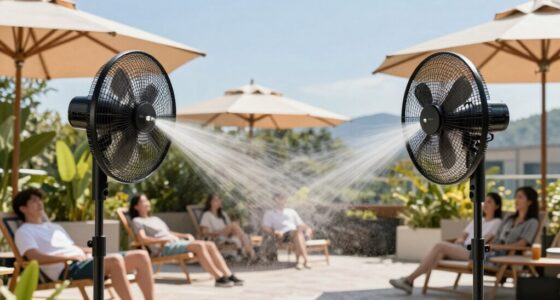
Water quality matters more than most misting guides admit because it directly affects system performance, longevity, and maintenance. Poor water can cause clogs, mineral buildup, and corrosion, leading to frequent repairs and reduced spray efficiency. Ignoring factors like pH balance and mineral content risks damaging your system over time. By managing water quality, you guarantee better results and fewer issues. Want to discover essential tips to keep your misting system in top shape? Keep exploring.

Get garden gear delivered free with Prime
- Fast, free delivery on millions of items
- Prime Video, Amazon Music and more included
- Member-only deals all year
Key Takeaways
- Water quality directly affects misting system durability and efficiency, preventing costly clogs and damage.
- Poor water can cause mineral buildup, leading to inconsistent spray patterns and reduced performance.
- Maintaining proper pH balance prevents corrosion and deposits inside nozzles and metal components.
- Regular water testing and treatment extend equipment lifespan and reduce maintenance frequency.
- Overlooking water quality increases downtime, repair costs, and decreases overall misting system reliability.

Many misting guides overlook an essential factor: water quality. While they often focus on nozzle types, spray patterns, and timing, neglecting the water itself can lead to poor misting performance and even damage to your system. The quality of water you use directly impacts how well your misting system functions and how long it lasts. Two critical aspects to consider are pH balance and mineral content. These factors may seem minor, but they play a meaningful role in maintaining an effective and durable misting setup.
The pH balance of your water influences how the system operates and its longevity. Water that leans too acidic or alkaline can cause buildup inside the nozzles, leading to clogging or irregular spray patterns. Ideally, your water should have a neutral pH around 7. However, if your water is too acidic, it can corrode metal components, while alkaline water might leave deposits that hinder proper spray. Regularly testing your water’s pH level helps you catch imbalances early and adjust accordingly, whether through filtration or treatment. Maintaining proper pH ensures your nozzles stay clear, and your mist remains fine and consistent. Water chemistry plays a crucial role in preventing these issues and maintaining system health.
Mineral content is another essential factor that many misting guides overlook. Hard water, rich in minerals like calcium and magnesium, tends to cause mineral buildup inside the nozzles and tubing. Over time, this buildup reduces water flow and disrupts spray quality, forcing you to clean or replace parts more frequently. Softening your water or installing filtration systems specifically designed to remove excess minerals can greatly extend the life of your equipment. Using low-mineral water or treating your water before use ensures a steady, uniform mist and minimizes maintenance. Additionally, understanding the water quality factors can help you choose the right filtration or treatment solutions for your system. Proper water treatment can further optimize your misting setup and prevent common issues associated with poor water quality.
Ignoring water quality can also lead to more costly repairs and system failures down the line. It’s tempting to assume that all water is suitable for misting, but even small variations in pH and mineral content can cause issues. By paying attention to these factors, you’re actively protecting your investment and ensuring your misting system performs efficiently. Regular testing, proper filtration, and adjusting your water source are simple steps that lead to more consistent misting, healthier plants, and less downtime.
Ultimately, understanding and managing your water quality isn’t just a minor detail—it’s a fundamental part of successful misting. Most guides may not emphasize this enough, but if you want your system to operate smoothly and last longer, you need to prioritize pH balance and mineral content. It’s a small effort that yields big results, keeping your misting system reliable, effective, and trouble-free in the long run.
water pH test kit for misting systems
As an affiliate, we earn on qualifying purchases.
As an affiliate, we earn on qualifying purchases.
Frequently Asked Questions
How Often Should I Test My Water Quality for Misting Systems?
You should test your water quality at least once a month for your misting system. Regular water testing helps you catch issues early, and chemical analysis guarantees no harmful substances are present. If you notice changes in water clarity or system performance, test more frequently. Consistent testing keeps your misting system running smoothly, prevents clogs, and ensures the water remains safe for plants or spaces you’re misting.
Can Poor Water Quality Damage My Misting Equipment Over Time?
Sure, poor water quality can turn your misting system into a miniature swamp, damaging it over time. Sediment accumulation clogs nozzles, and high water mineralization leaves mineral deposits that corrode delicate parts. Over months or years, this buildup can cause leaks, reduce spray efficiency, and even break your equipment. So, don’t ignore water quality—your misting system deserves clean, mineral-free water to stay functional and avoid costly repairs.
What Are the Signs of Water-Related Issues in Misting Systems?
You might notice reduced misting efficiency, uneven spray, or clogging in your system, which are signs of water-related issues. Water contamination and mineral buildup can cause nozzle blockages and damage components over time. If you see white deposits or experience inconsistent mist flow, it’s a clear indication your water quality isn’t ideal. Regularly checking for these signs helps prevent costly repairs and keeps your misting system functioning smoothly.
How Does Water pH Affect Misting System Performance?
Your misting system’s performance hinges on water pH and alkalinity. If the pH balance is too low (acidic), it can corrode parts and clog nozzles, reducing spray quality. Conversely, high alkalinity makes water more alkaline, leading to mineral buildup that hampers function. Guaranteeing a neutral pH (around 7) and balanced alkalinity ensures your system runs smoothly, lasts longer, and produces consistent mist without blockages or damage.
Are There Specific Water Treatment Methods for Optimal Misting?
You need to treat your water properly to prevent disaster. Use water filtration systems to remove impurities and minerals, stopping harmful mineral buildup that can clog your misting system. Consider deionization or reverse osmosis for the cleanest water, ensuring peak misting performance. Regular maintenance and water testing help maintain the right quality, saving your system from costly damage and keeping your misting environment flawless and efficient.
water softener for irrigation and misting
As an affiliate, we earn on qualifying purchases.
As an affiliate, we earn on qualifying purchases.
Conclusion
Remember, water is the lifeblood of your garden’s delicate balance. When you choose pure, healthy water, you’re nurturing a thriving oasis—an Eden that reflects your care and dedication. But neglecting water quality is like pouring poison into a well; it slowly poisons your plants’ roots and dreams. So, treat your water as the sacred gift it is, and watch your garden flourish into a vibrant, resilient sanctuary that stands as a demonstration of your passion.
As an affiliate, we earn on qualifying purchases.
mineral removal water treatment for misting
As an affiliate, we earn on qualifying purchases.
As an affiliate, we earn on qualifying purchases.
Halloween Picks
halloween
As an affiliate, we earn on qualifying purchases.