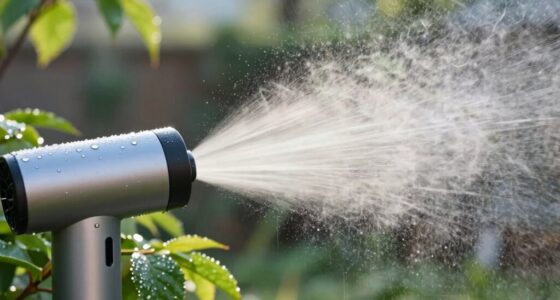
To guarantee a worry-free summer, create a winter maintenance schedule for your misting fan. Start by inspecting and cleaning nozzles, hoses, and the motor, then flush the system to prevent mineral buildup. Disconnect and drain water to avoid freezing damage, and store batteries in a warm, dry place. Cover the system properly and check all hardware. Staying organized with a detailed plan now sets you up for smooth operation when the season returns—more tips are just ahead.
Key Takeaways
- Schedule system inspection, cleaning, and flushing before winter to prevent mineral buildup and ensure readiness.
- Disconnect hoses, drain residual water, and store batteries in a warm, dry place to protect against freezing damage.
- Lubricate pump parts and verify motor operation during fall maintenance to ensure smooth functioning next season.
- Cover the misting fan with a breathable cover and inspect hardware to prevent environmental damage during off-season.
- Develop a detailed winter maintenance checklist and set reminders for timely inspections and cleaning before reactivation.

Regular maintenance is essential to keep your misting fan running efficiently and prevent unexpected breakdowns. As the seasons change, especially approaching winter, it’s vital to incorporate winter preparation into your maintenance checklist. Properly preparing your misting fan for the colder months ensures it remains in top condition and is ready to perform when summer arrives. Start by inspecting all components, including nozzles, hoses, and the motor. Look for signs of wear, corrosion, or buildup that could hinder performance. Cleaning the nozzles thoroughly is a key step—clogged or dirty nozzles reduce misting efficiency and strain the system. Use a gentle brush or compressed air to remove debris, and consider flushing the system to clear any mineral deposits or blockages. Additionally, ensuring your system’s water chemistry is balanced can help prevent mineral buildup that causes nozzle clogging, which is especially important before storage. Proper water chemistry also reduces the risk of corrosion and extends the lifespan of system components. Next, check the water supply connections. During winter, water left sitting in the system can freeze and cause damage to pipes or fittings. To avoid this, disconnect hoses and drain any residual water. This step forms an indispensable part of your winter preparation, preventing costly repairs come spring. If your misting fan has a pump, verify its condition. Lubricate moving parts if recommended by the manufacturer, and test the motor to ensure it runs smoothly without unusual noises or overheating. Batteries, if applicable, should be removed and stored in a dry, warm place to prevent freezing and extend their lifespan. Additionally, modern kitchen technology emphasizes the importance of routine upkeep to maximize efficiency and lifespan of equipment. Incorporating reliable maintenance schedules can help you stay organized and ensure all necessary steps are completed on time. Establishing a comprehensive winter maintenance plan ensures all aspects of the system are addressed, reducing the risk of damage during the off-season. Creating a detailed winter maintenance checklist helps you stay organized and guarantees no vital step gets overlooked. Include tasks like cleaning filters, inspecting wiring, and verifying the integrity of the mounting hardware. If your misting system is connected to a timer or control system, check its settings and functionality before storing it away. Cover the fan with a breathable cover to protect it from dust, dirt, and moisture during the off-season. This prevents corrosion and keeps the equipment in prime condition for the next year. Regularly referencing your maintenance schedule can also help ensure you don’t forget seasonal tasks and keep your system in optimal condition year-round.
Frequently Asked Questions
Can Misting Fans Be Used Indoors During Winter?
You can use misting fans indoors during winter for effective indoor cooling, but with caution. Guarantee proper ventilation to avoid excess humidity, which can cause mold or damage. Adjust the misting settings to reduce water output and prevent dampness. While they’re great for summer, using misting fans in winter requires careful control to maintain a comfortable, moisture-balanced environment indoors. Always monitor humidity levels during winter usage.
What Are Signs My Misting Fan Needs Repair?
If your misting fan needs repair, look for signs like unusual fan blade issues, such as wobbling or uneven spinning, and increased motor noise that wasn’t there before. These problems indicate the fan isn’t operating smoothly and might need lubrication or part replacement. Don’t ignore these signs, as addressing them early guarantees your fan runs efficiently and prevents costly repairs later. Regular maintenance helps keep your fan in top shape.
How Long Does a Typical Misting Fan Maintenance Session Take?
A typical misting fan maintenance session usually takes about an hour. During this time, you’ll experience a gentle fan cleaning, guaranteeing dust and debris are removed, and a thorough part inspection to spot potential issues. This efficiency helps keep your fan in ideal condition, preventing future problems. Scheduling regular maintenance ensures you enjoy a worry-free summer, with your misting fan operating smoothly and efficiently.
Are There Safety Precautions for Winter Maintenance?
Yes, there are winter safety and maintenance precautions you should follow. Always disconnect the misting fan from power before starting any work to prevent electrical shocks. Wear insulated gloves and eye protection, especially if handling water or cleaning components. Guarantee the area is dry and well-ventilated. Regularly check for rust or damage, and store parts properly. Following these winter safety tips helps prevent accidents and keeps your fan in top condition for summer.
How Often Should I Replace Misting Fan Parts Annually?
Think of your misting fan like a trusted car—regular check-ups keep it running smoothly. You should replace parts like nozzles and filters annually, especially after seasonal cleaning. Follow a consistent part replacement schedule to prevent breakdowns during summer. Neglecting this can lead to clogs or leaks, reducing efficiency. Staying proactive guarantees your fan’s performance remains high-quality, so you enjoy cool, worry-free days all season long.
Conclusion
By staying proactive with your misting fan maintenance, you’ll guarantee cool, trouble-free summers. Imagine a homeowner who overlooked winter checks but faced unexpected breakdowns in July—don’t let that be you. Schedule your maintenance now, like setting reminders for spring cleanings and parts inspections, so your fan runs smoothly when you need it most. A little preparation today guarantees a worry-free summer, keeping you comfortable and hassle-free all season long.