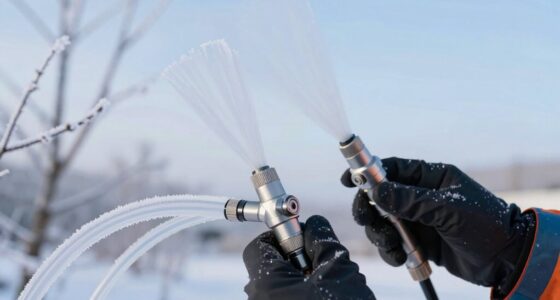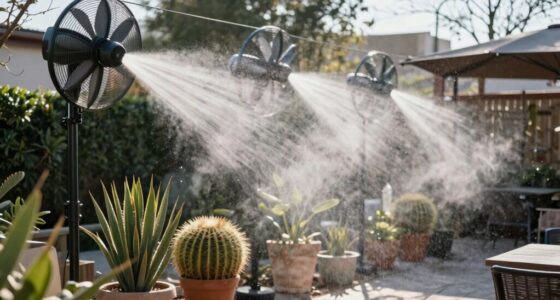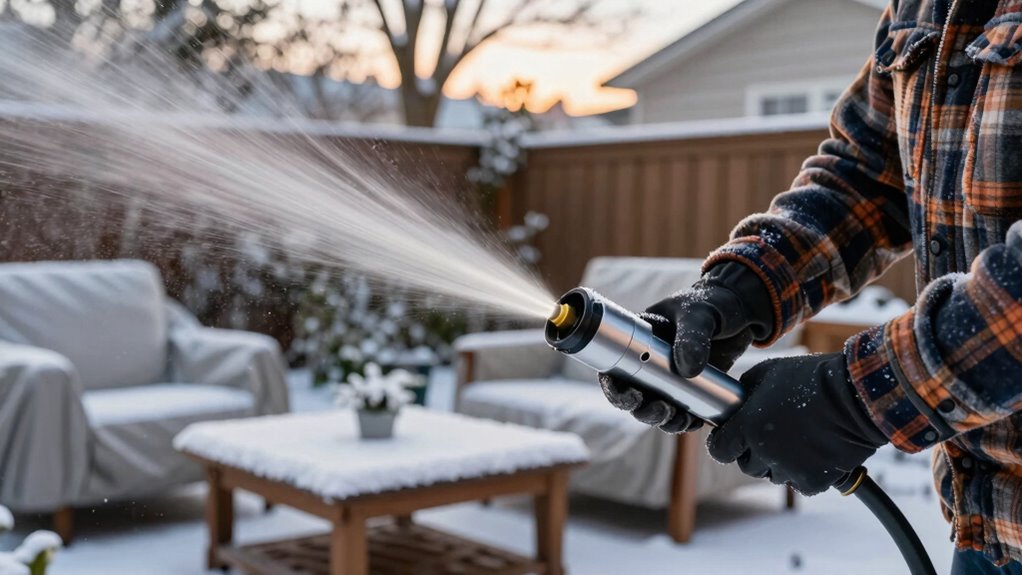

To winterize your patio misting system, start by turning off the water supply and draining all water from the lines to prevent freezing damage. Use compressed air to blow out remaining water, then disconnect and store detachable parts indoors. Check for any damage or leaks, clean all components thoroughly, and dry everything well. Applying corrosion inhibitors can help protect metal parts. Continue with these steps to guarantee your system stays safe and ready for use when warmer weather returns.
Key Takeaways
- Drain all water from the system and disconnect nozzles or filters for indoor storage.
- Inspect and replace damaged components, then clean and dry the entire system thoroughly.
- Cover exposed parts with protective sheeting and store detachable components in a dry place.
- Check fittings, tighten connections, and apply corrosion inhibitors if recommended before storage.
- Schedule regular winter inspections to monitor for leaks, corrosion, or debris buildup.
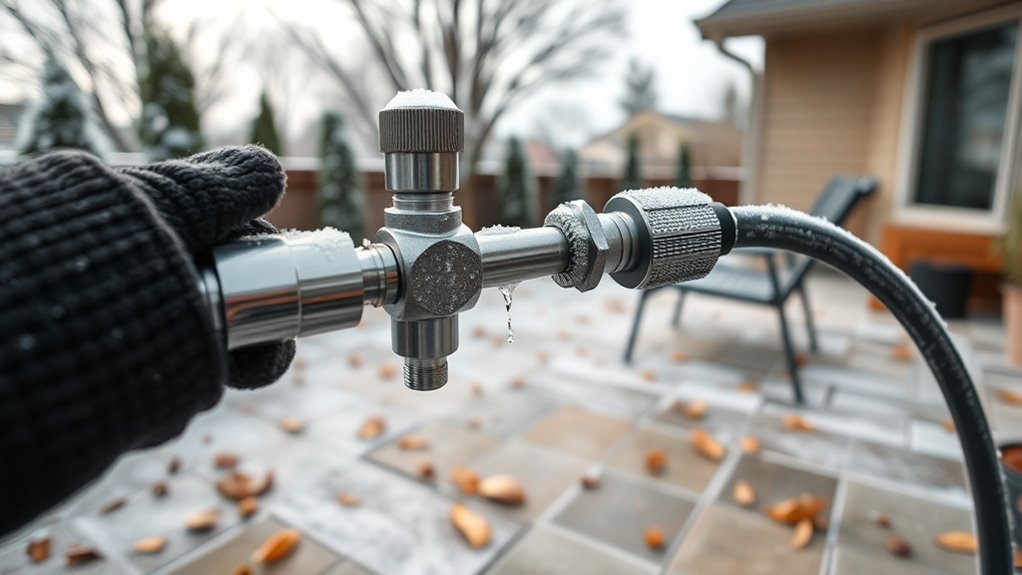
As winter approaches, make certain to safeguard your patio misting system from the cold to prevent damage and guarantee it functions smoothly next season. The key to achieving this lies in a thorough winterization process, which starts with a detailed maintenance checklist. First, you want to drain all water from your system completely. Any remaining water can freeze, expand, and crack the tubing or nozzles, leading to costly repairs. Turn off the water supply and activate the system’s manual drain or blow out the lines with compressed air to remove residual water. Once the lines are empty, disconnect any detachable parts, such as nozzles or filters, and store them indoors in a dry, protected place. Proper system maintenance ensures your misting system remains in good condition during the off-season. Additionally, inspecting system components for early signs of wear can help prevent unexpected failures later. Regular preventative maintenance is essential for prolonging the lifespan of your misting system and maintaining optimal performance. Furthermore, understanding air quality considerations can help you optimize your system’s efficiency and longevity during seasonal adjustments. Proper water chemistry management can also reduce mineral buildup inside the system, enhancing its durability. Next, consider performing seasonal adjustments to optimize your system’s longevity. Check the entire misting system for leaks, cracks, or signs of wear. Replace any damaged components before storing everything away. Lubricate moving parts if recommended by the manufacturer, ensuring smooth operation when you restart the system next season. Furthermore, inspect the mounting hardware and brackets to confirm they’re secure and not corroded. This maintenance checklist helps prevent issues caused by debris, corrosion, or wear, giving you peace of mind during colder months.
As part of your seasonal adjustments, it’s also wise to clean the system thoroughly. Use a mild soap solution and a soft brush to remove dirt, algae, or mineral deposits that may have accumulated. A clean system is less likely to clog or malfunction when you restart it in warmer weather. If your misting system has a filter, clean or replace it to enhance performance. Before storing, dry all parts completely to prevent mold or mildew growth, especially if you plan to store components indoors. Consider covering exposed parts with protective wraps or plastic sheeting if you’re leaving some elements outdoors for a short period.
When the cold weather is imminent, double-check your stored components and system settings. This is the time to make any last-minute seasonal adjustments, like tightening fittings or applying corrosion inhibitor if recommended. With proper winter preparation, your patio misting system remains protected from freezing temperatures and other winter hazards. By following this routine and sticking to your maintenance checklist, you’ll ensure your system is ready for immediate use when spring arrives. Taking these steps now can save you money on repairs later and keep your outdoor space comfortable and functional year-round.
Frequently Asked Questions
Can I Winterize My Misting System Myself or Hire a Professional?
You can definitely winterize your misting system yourself with DIY maintenance if you’re comfortable with basic plumbing tasks. However, hiring professional services guarantees the job’s done correctly, especially if you’re unsure about draining or protecting components. DIY maintenance saves money and time, but a professional can provide peace of mind, reducing the risk of damage during winter. Choose based on your experience level and confidence in handling your misting system.
What Are the Signs That My Misting System Needs Repairs Before Winterizing?
You should check for leaks detection and component corrosion before winterizing your misting system. If you notice water dripping from fittings or hoses, that’s a clear sign of leaks needing repair. Additionally, inspect all components for rust or corrosion, which can impair performance. Addressing these issues early ensures your system functions properly next season and prevents costly damage during winter storage. Don’t ignore these signs; fix them promptly for ideal system health.
How Often Should I Inspect My Misting System During Winter?
You should inspect your misting system at least once a month during winter to guarantee it stays in good shape. Following a consistent maintenance schedule helps catch minor issues before they become major problems. Regular inspection frequency allows you to identify leaks, clogs, or damage early, saving you time and money later. Keep a close eye on your system’s condition, and you’ll enjoy peak performance when the warmer weather returns.
Will Winterizing Affect the Lifespan of My Misting System Components?
Winterizing your misting system won’t harm its lifespan if you follow proper procedures. By draining water, protecting components from freezing, and maintaining humidity levels, you guarantee compatibility with winter conditions. Proper winterization prevents damage from freezing temperatures, which can shorten the system’s durability. When you take these steps, you preserve your system’s integrity, extending its lifespan and ensuring it’s ready for use when warmer weather returns.
Are There Any Specific Products Recommended for Winterizing Outdoor Misting Systems?
For seasonal maintenance, you should use product recommendations like non-corrosive, biodegradable antifreeze designed for outdoor plumbing, which prevents freezing and damage. Look for products specifically labeled for misting systems to verify compatibility. You might also consider air blowers to clear residual water. Always follow manufacturer guidelines, and avoid using automotive antifreeze, which can harm your system and the environment. Proper product choices extend your system’s lifespan and ensure reliable operation next season.
Conclusion
As winter approaches, taking the time to properly winterize your patio misting system is essential—did you know that improperly stored systems can freeze and cause up to 80% damage? By draining, insulating, and protecting your system, you guarantee it stays in top shape for next season. Don’t overlook these simple steps; your investment will last longer, saving you money and hassle when spring arrives. Stay proactive, and enjoy worry-free outdoor cooling year after year.