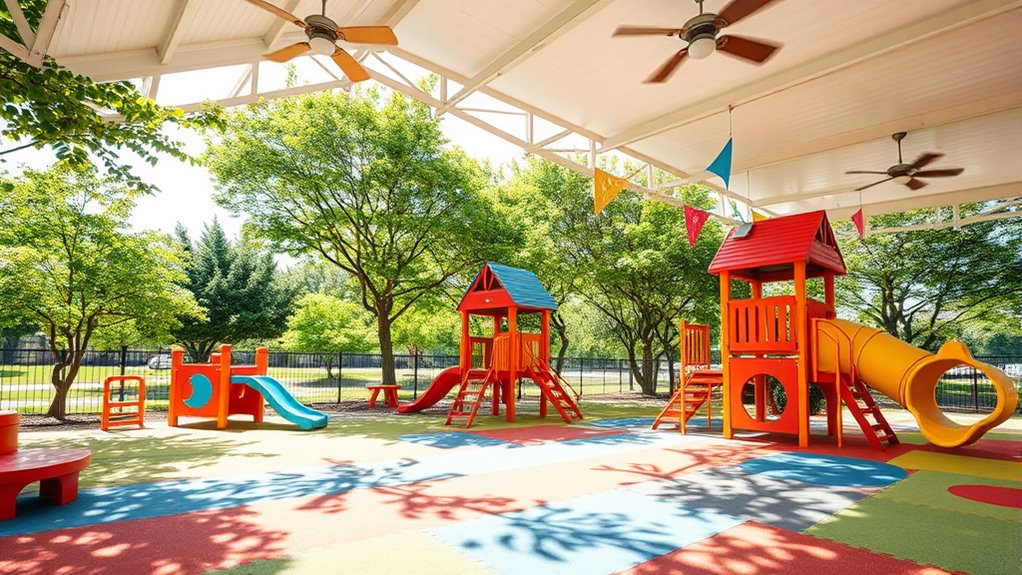

When designing child-friendly play areas with proper ventilation, focus on incorporating natural airflow through well-placed windows, vents, and open spaces for cross-ventilation. Keep the layout uncluttered and avoid obstructions that could block airflow. Use operable windows and strategically position high and low openings to exchange stale indoor air with fresh outdoor air. Regular maintenance ensures continuous efficiency. To create a safe, healthy environment, explore more practical tips that support ideal ventilation.
Key Takeaways
- Position windows and vents to maximize cross-ventilation and catch prevailing breezes for continuous fresh air flow.
- Use operable windows and adjustable vents to control airflow based on weather and air quality conditions.
- Maintain open, uncluttered spaces free of obstructions like heavy curtains and furniture to promote better air circulation.
- Incorporate high and low vents strategically to facilitate the exhaust of stale air and the intake of fresh outdoor air.
- Regularly clean and inspect ventilation features to ensure optimal airflow, air quality, and a healthy environment for children.

Creating a safe and healthy environment in child-friendly play areas depends heavily on proper ventilation. When designing these spaces, guaranteeing good air quality is essential to protect children from airborne pollutants, allergens, and bacteria. Poor ventilation can lead to stale air, increased humidity, and the buildup of indoor pollutants, which may cause respiratory issues, allergies, or other health problems. That’s why incorporating natural ventilation strategies is a smart choice for creating a healthier environment. Natural ventilation involves using windows, vents, and other openings to allow fresh air to flow freely through the space, reducing reliance on mechanical systems and promoting cleaner, more breathable air.
To optimize natural ventilation, you should consider the layout and orientation of the play area. Position windows and vents to catch prevailing breezes and facilitate cross-ventilation. This setup ensures a continuous exchange of indoor and outdoor air, helping to maintain high air quality without creating drafts or discomfort for children. When designing the space, avoid placing large obstructions or heavy curtains that could block airflow. Instead, opt for open, uncluttered areas that support air circulation. Using operable windows that can be easily opened and closed allows caregivers to control airflow based on weather conditions and indoor air quality levels.
In addition to strategic window placement, incorporating features like vents, air bricks, or louvered panels can enhance natural ventilation even further. These elements help in creating a steady flow of fresh air, especially in spaces where windows might be limited or where outdoor conditions fluctuate. You should also pay attention to the height and placement of openings; higher vents can help exhaust warm, stale air, while lower openings bring in cooler, fresh outdoor air. Incorporating high-quality equipment for monitoring air quality can assist in maintaining optimal ventilation levels and ensuring a safe environment.
Regular maintenance of these ventilation features is essential to sustain good air quality. Clean filters, clear vents of obstructions, and check for drafts or leaks that could compromise airflow. Incorporating natural ventilation not only improves air quality but also reduces energy consumption and creates a more comfortable, child-friendly environment. Remember, a well-ventilated play area encourages healthier play, supports children’s respiratory health, and fosters overall well-being. By prioritizing natural ventilation when designing your space, you’re making a vital investment in the safety and health of the children who use it daily.
Frequently Asked Questions
How Does Ventilation Impact Children’s Respiratory Health in Play Areas?
You might wonder how ventilation affects kids’ respiratory health in play areas. Good air circulation improves air quality by reducing pollutants, allergens, and moisture buildup. This helps prevent respiratory issues like asthma or allergies, keeping children healthier and more comfortable. By ensuring proper ventilation, you create a safer environment where kids can breathe freely, play happily, and stay well, making the space both fun and health-conscious.
What Are the Best Ventilation Systems for Outdoor Play Zones?
You should choose outdoor ventilation systems that maximize air quality while being energy efficient. Consider options like natural ventilation through strategic placement of openings or wind-driven ventilators that promote airflow without high energy costs. These systems help keep the air fresh, reduce pollutants, and support children’s respiratory health. By prioritizing energy-efficient solutions, you guarantee a sustainable environment that stays comfortable and safe for kids during playtime.
How Can Natural Ventilation Be Optimized in Enclosed Play Structures?
Think of your play area as a lively garden needing fresh air to thrive. To optimize natural ventilation, you should focus on airflow optimization by strategically placing openings, windows, and vents to encourage natural air exchange. Using cross-ventilation principles, you can create a continuous flow of fresh air, reducing stale air buildup and ensuring a healthier, more enjoyable environment for children. Proper design turns your space into a breezy oasis.
Are There Ventilation Standards Specifically for Children’s Play Spaces?
You might wonder if there are specific ventilation standards for children’s play spaces. While general safety regulations emphasize maintaining good air quality, some guidelines recommend higher air exchange rates and specific filtration levels for these areas. It’s essential to follow local codes and standards to guarantee safety and health. Proper ventilation minimizes airborne contaminants, creating a safer environment where kids can play comfortably and securely.
How Often Should Ventilation Systems Be Maintained in Child-Friendly Areas?
You should maintain ventilation systems in child-friendly areas regularly, ideally every 6 to 12 months. During these checks, you need to perform air quality monitoring to guarantee the space stays healthy. If air quality dips or equipment shows signs of wear, consider ventilation system upgrades promptly. Regular maintenance keeps the air fresh, reduces airborne illnesses, and creates a safer environment for children to play and learn comfortably.
Conclusion
By prioritizing proper ventilation in child-friendly play areas, you create a healthier, safer space where kids can thrive and enjoy themselves. Some might worry about the cost or effort involved, but the benefits far outweigh these concerns. Good ventilation reduces illness and boosts overall well-being, making your play area welcoming and vibrant. So, don’t let doubts hold you back—invest in fresh air today and give children the safe, fun environment they deserve.