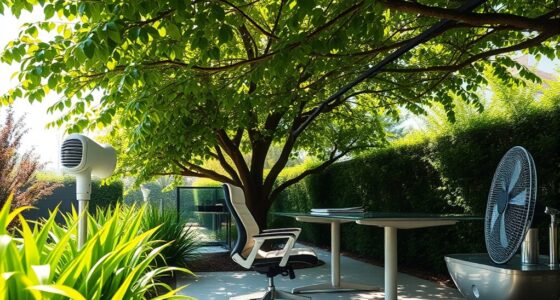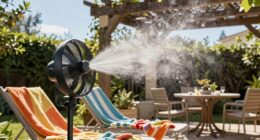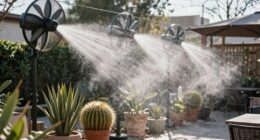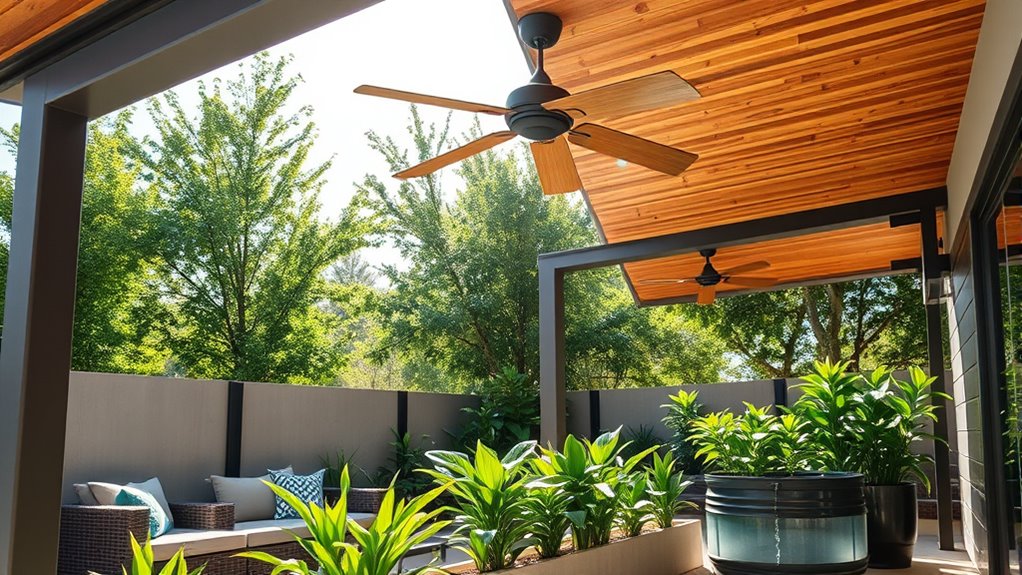

Pairing fans with rainwater collection systems creates an eco-friendly cooling approach that reduces energy use and lowers water costs. Fans circulate cool, moist air from rainwater harvesting, enhancing natural ventilation and lowering indoor temperatures. Rainwater helps cool outdoor spaces and supports evaporative cooling, making this combination effective in warm climates. By integrating these methods, you can save energy and stay comfortable sustainably. If you’d like to explore how to optimize this system, there’s more to discover below.
Key Takeaways
- Rainwater collection can be used to supply water for evaporative cooling, reducing reliance on municipal water and lowering environmental impact.
- Pairing fans with rainwater harvesting enhances natural ventilation by increasing indoor humidity and improving airflow efficiency.
- Rainwater systems can cool outdoor spaces, creating comfortable environments that complement fan use indoors.
- Combining rainwater harvesting with fans minimizes energy consumption compared to traditional air conditioning systems.
- Using rainwater for cooling supports a sustainable, eco-friendly approach by conserving water and reducing greenhouse gas emissions.
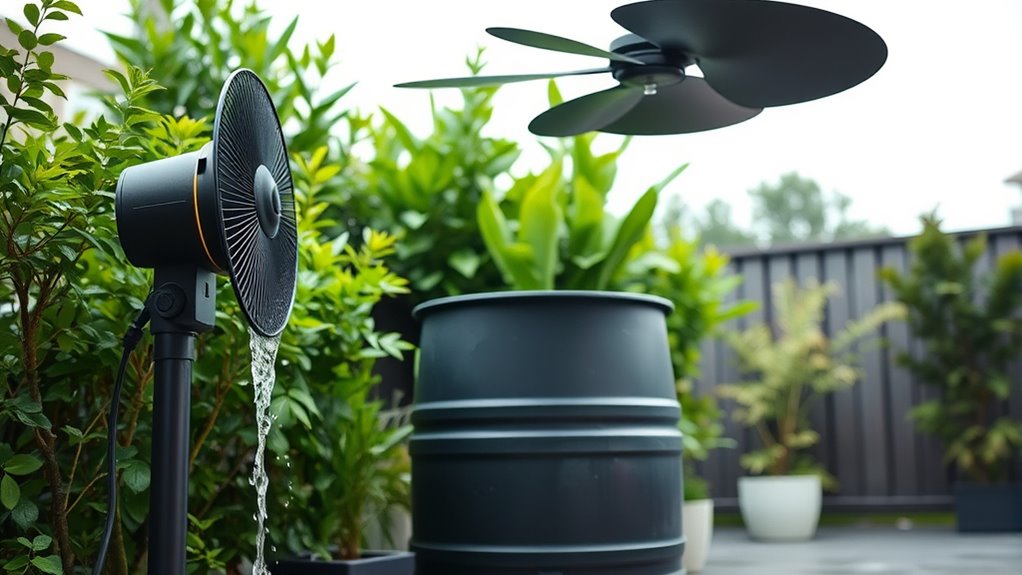
Have you ever wondered if there’s a better way to stay cool without harming the environment? If so, you’re not alone. Many people are turning to eco-friendly cooling methods that reduce energy consumption and minimize ecological impact. One effective approach is integrating solar shading and natural ventilation into your home design. Solar shading involves using architectural elements like overhangs, awnings, or deciduous trees to block direct sunlight during the hottest parts of the day. This simple strategy keeps indoor temperatures lower without relying on air conditioning. When combined with natural ventilation—opening windows strategically to create a cross-breeze—you can considerably reduce indoor heat gain and improve comfort naturally.
Imagine how much more comfortable your space becomes when you use solar shading to prevent excess heat from entering. Instead of constantly battling high temperatures with energy-consuming fans or AC units, you rely on the building’s design to maintain a cooler indoor environment. By thoughtfully positioning shading devices, you block harsh sunlight while still allowing daylight to filter in, reducing the need for artificial lighting and cooling. Natural ventilation complements this approach by harnessing prevailing breezes. When windows are open on opposite sides of your home, air flows through, removing warm, stale air and replacing it with cooler outdoor air. This method not only cools your space but also improves indoor air quality.
Using solar shading and natural ventilation creates a cooler, healthier indoor environment naturally.
Pairing these techniques is particularly effective in climates with moderate temperatures and seasonal breezes. You can enhance this setup with additional features like vented roof eaves or operable vents, which promote continuous airflow without mechanical systems. The key is to use design strategies that maximize natural airflow while protecting interior spaces from direct sun exposure. This way, you minimize reliance on fans and air conditioning, which consume substantial electricity and contribute to greenhouse gas emissions. Additionally, installing rainwater collection systems can help cool outdoor spaces through evaporative effects, further lowering indoor temperatures.
Moreover, employing solar shading and natural ventilation works well alongside rainwater collection systems. As rainwater cools the environment around your home and contributes to outdoor evaporative cooling, it further reduces indoor temperatures. Collecting rainwater also means you’re conserving water, adding another eco-friendly benefit. When you combine these methods—solar shading, natural ventilation, and rainwater harvesting—you create a sustainable cooling system that’s efficient, cost-effective, and kind to the planet. It’s a simple yet powerful way to stay comfortable while reducing your carbon footprint, proving that eco-friendly cooling is both practical and necessary for a greener future.
Frequently Asked Questions
How Much Rainwater Is Needed to Effectively Cool a Home?
You need about 1 to 2 inches of rainwater to improve cooling efficiency effectively. The exact rainwater volume depends on your home’s size and the system’s design, but generally, more rainwater permits your fans to operate with better efficiency by reducing indoor temperatures. Collecting enough rainwater guarantees consistent cooling, lowers energy use, and makes your eco-friendly system more sustainable. Keep in mind, regular maintenance maximizes rainwater’s cooling benefits.
Are Rainwater Collection Systems Legal in All Regions?
Rainwater collection systems aren’t legal everywhere due to regional restrictions and legal considerations. You need to check your local laws to see if installing such systems is permitted in your area. Some regions have specific regulations on water rights and collection practices, so it’s crucial to research or consult local authorities before setting up a rainwater system. Ignoring these legal considerations could lead to fines or other issues.
What Maintenance Is Required for Combined Cooling and Rainwater Systems?
You need to regularly inspect your combined cooling and rainwater systems, replacing system filters to prevent clogs and guarantee efficiency. Keep the pump well-lubricated to avoid wear and maintain smooth operation. Clean out debris from rainwater collection components and check for leaks or blockages. Regular maintenance like these helps your system work effectively, saves energy, and prolongs its lifespan, ensuring eco-friendly and reliable cooling all season long.
Can These Systems Be Used During Drought Conditions?
During drought conditions, you can still use these systems, but with caution. Their drought resilience relies on efficient water conservation, ensuring you don’t deplete stored rainwater prematurely. While they help cool your space sustainably, you should monitor water levels closely and prioritize conserving water. This balance allows you to benefit from eco-friendly cooling without overusing limited water resources, making your setup both effective and responsible during dry periods.
How Do Rainwater and Fan Systems Impact Indoor Air Quality?
Using rainwater and fan systems can improve indoor air quality by reducing indoor pollutants and enhancing ventilation efficiency. You help filter out dust, allergens, and other airborne contaminants while maintaining fresh airflow. Fans circulate air effectively, preventing stagnation, and rainwater collection minimizes reliance on traditional water sources. Together, these systems create a healthier indoor environment, making your space more comfortable and sustainable without compromising air quality.
Conclusion
So, while you spend money on energy-hungry air conditioning, you could be embracing simple, eco-friendly solutions like fans paired with rainwater collection. Ironically, the very thing that keeps you cool—conventional AC—contributes to climate change, making rainwater systems not just sustainable but necessary. Embrace these natural methods, and you’ll realize that sometimes, the easiest solutions are also the most effective. After all, cooling smarter might just be the coolest thing you do.