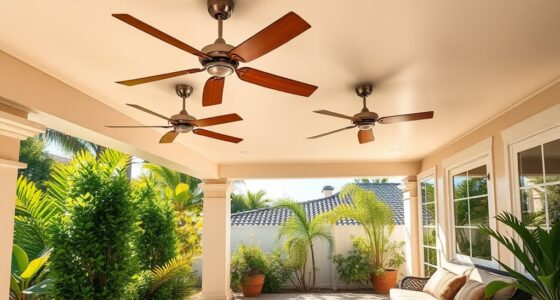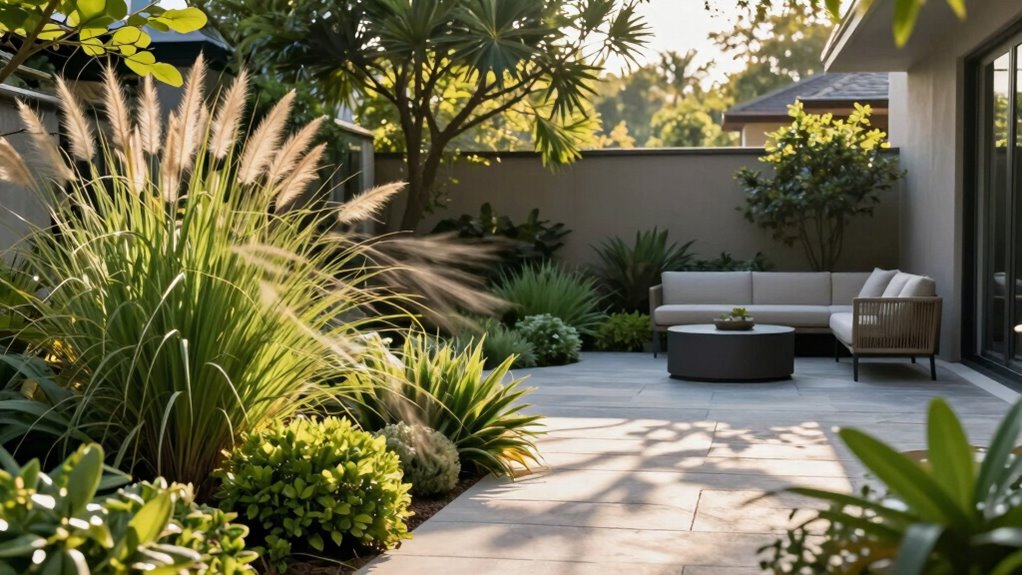

You might not realize it, but landscaping considerably impacts your patio airflow and comfort. Strategic placement of trees and shrubs can block harsh sun and winds, creating shaded, breezy spots. Wind barriers like hedges help redirect airflow, preventing hot, stagnant air pockets. Open grassy areas encourage gentle breezes that cool the space naturally. When landscaping aligns with local climate and design principles, it enhances outdoor comfort year-round. Keep exploring to discover how thoughtful plant choices can transform your patio experience.
Key Takeaways
- Landscaping design influences airflow patterns, breaking up stagnant air and promoting natural breezes on patios.
- Strategic plant placement provides shade and windbreaks, enhancing outdoor comfort and airflow.
- Dense wind barriers redirect wind flow, reducing gusts and creating a more consistent cooling breeze.
- Open grassy areas facilitate gentle airflow, preventing heat buildup and improving patio temperature regulation.
- Integrating landscape elements with design principles optimizes airflow, reducing reliance on artificial cooling.
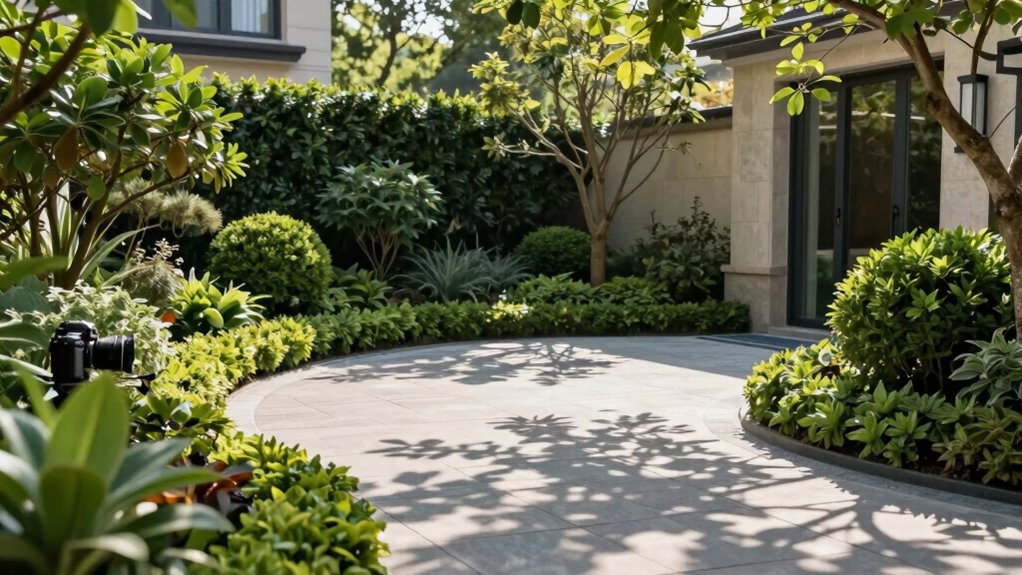
Creating a comfortable outdoor space often depends on more than just choosing the right furniture or plants; it also involves understanding how landscaping influences airflow around your patio. One of the biggest factors affecting comfort is how your yard manages urban heat and wind. When you design your landscape thoughtfully, you can markedly improve airflow, making your outdoor area cooler and more pleasant, especially during hot summer days. Properly selecting and positioning marine equipment, such as windbreaks or shade-providing structures, can also enhance this effect by working in harmony with your landscaping. Urban heat is a real challenge in many neighborhoods, where concrete, asphalt, and buildings trap heat and raise temperatures. If your patio is exposed to direct sunlight and little wind, you’ll notice it quickly becomes uncomfortably hot. Strategic landscaping can help mitigate this effect. Planting trees or tall shrubs on the sun-facing side of your patio acts as a natural shade, lowering surface temperatures and reducing the urban heat island effect. These plants not only provide cooling shade but also contribute to better airflow by breaking up stagnant hot air pockets, encouraging cooler breezes to circulate. Wind barriers are another essential element. Without them, strong gusts can make your outdoor experience unpleasant, especially if your yard is open or exposed. Placing dense evergreen hedges or windbreak walls along prevailing wind directions creates a barrier that slows down and redirects airflow. This doesn’t mean blocking all wind, which can make the space feel stuffy, but rather controlling it to prevent uncomfortable drafts. Properly positioned wind barriers help maintain a gentle breeze, which is key to cooling the area naturally. They also help protect delicate plants and outdoor furniture from wind damage, extending their lifespan. When landscaping for airflow, you need to contemplate the placement and types of plants carefully. Tall, leafy trees and shrubs should be positioned to block harsh afternoon sun and wind, while open, grassy areas encourage gentle breezes to flow through. Creating a balance between solid windbreaks and open spaces ensures you don’t completely block airflow, which could make the area feel stagnant. Instead, you want a flow that cools and refreshes, not one that traps hot or stale air. Additionally, understanding landscape design principles can help optimize airflow and temperature regulation, making your outdoor space more comfortable year-round. Incorporating strategic plant placement and choosing the right plant varieties can significantly enhance airflow and cooling effects, leading to a more inviting outdoor environment. Properly integrated landscaping elements can also contribute to sustainable outdoor design, reducing the need for artificial cooling and heating solutions. Moreover, considering local climate conditions during planning ensures your landscaping choices are effective throughout different seasons.

COOLBOYS 3'x16' Black Balcony Privacy Screen Fence HDPE Balcony Decor UV Protection Fencing Mesh Shade Net Cover for Outdoor Wall Garden Yard Backyard,Porch,Deck,Patio
【Premium HDPE Material】Balcony Privacy Screen is made of 100% new High-Density Polyethylene (HDPE) material,breathable and durable, block 95%…
As an affiliate, we earn on qualifying purchases.
As an affiliate, we earn on qualifying purchases.
Frequently Asked Questions
How Does Climate Influence Landscaping’s Effect on Patio Airflow?
Climate heavily influences how landscaping affects your patio airflow. Microclimate effects, like humidity and temperature, determine which plants thrive and how they impact wind flow. You can use wind barrier strategies, such as planting trees or shrubs, to block or redirect breezes based on your climate. In warmer areas, strategic landscaping can reduce heat and improve airflow, while in cooler climates, it helps retain warmth and control wind chill for a more comfortable patio experience.
Can Specific Plant Types Enhance Airflow More Effectively?
Yes, specific plant types can enhance airflow more effectively. Plants with open, airy foliage and strategic placement improve plant density, allowing breezes to pass through easily. Deep-rooted plants stabilize soil and create space for airflow, while their root systems prevent erosion that could block wind. Choosing lightweight, deciduous trees and shrubs ensures seasonal airflow benefits, helping you maintain a comfortable patio environment even during hot months.
What Materials Best Improve Patio Ventilation Alongside Landscaping?
You should focus on strategic plant placement and material selection to improve patio ventilation. Opt for lightweight, permeable materials like pavers, gravel, or porous concrete that allow air to flow freely. Position taller plants or shrubs around your patio to direct breezes and create natural airflow channels. Combining these landscaping techniques with thoughtful material choices enhances ventilation, ensuring a cooler, more comfortable outdoor space without sacrificing style or functionality.
How Often Should Landscaping Be Maintained for Optimal Airflow?
You should maintain your landscaping every 6 to 12 months for ideal airflow. Regular pruning, trimming, and removing debris prevent overgrowth that can block wind flow. Incorporate strategic wind barriers in your garden design to enhance natural ventilation, reducing hot spots and improving comfort. Notably, properly maintained landscapes can increase airflow by up to 30%, making your outdoor space more enjoyable and energy-efficient.
Does Landscaping Impact Indoor Airflow Connected to Outdoor Patios?
Yes, landscaping impacts indoor airflow connected to outdoor patios. When you design your garden aesthetics thoughtfully, you can enhance natural ventilation, improving airflow inside your home. Strategic plant placement promotes airflow and creates wildlife habitats that support local ecosystems. By maintaining your landscaping properly, you guarantee airflow flows smoothly from patio to indoors, making your living space more comfortable while also fostering a healthy environment for local wildlife.

HongWay 4FT x 100FT Weed Barrier Landscape Fabric, Weed Blocker Fabric Heavy Duty with 40 U-Shaped Staples, Landscaping Weed Control Mats Ground Cover for Garden Beds, Driveway, Underlayment
Package Include: The garden weed barrier fabric is 4ft wide and 100ft long(each piece is 50ft long), coming…
As an affiliate, we earn on qualifying purchases.
As an affiliate, we earn on qualifying purchases.
Conclusion
By carefully shaping your landscape, you become the conductor of airflow, guiding breezes like a gentle symphony through your patio. Think of your yard as a secret garden of whispers, where every plant and tree acts as a note in the melody of comfort. When you understand this overlooked connection, you discover a world where your outdoor space breathes with essential. Embrace the dance of nature and let your landscaping be the brushstroke that paints perfect airflow.

DECOHS 5×3.3 Ft Garden Plant Shade Cover with Drawstring, Non-Woven Garden Sunshade Sun Protection Plant Cover, White Light Refraction Fruit Tree Sunshade Cloth for Protect Plants from Direct Sunlight
Full Spectrum White Light Refraction: Our shade cover for garden can not only effectively block strong direct sunlight,…
As an affiliate, we earn on qualifying purchases.
As an affiliate, we earn on qualifying purchases.

Outdoor Misting Fan Kit for a Cool Patio Breeze,Water Mister Spray for Cooling Outdoor,19.36FT (5.9M) Misting Line + 5 Brass Mist Nozzles + a Brass Adapter(3/4) Fit to Any Outdoor Fan
★Updated Outdoor Fan to Misting Fans within Seconds★Landgarden pre-assembled misting fan kit is a misting circle with 5…
As an affiliate, we earn on qualifying purchases.
As an affiliate, we earn on qualifying purchases.