
TL;DR
Outdoor patio heaters warm people and nearby surfaces, but wind and open layouts can shrink the area that feels comfortable. Choose propane for portability, natural gas for a fixed setup, or electric infrared for direct warmth where a suitable power supply is available. Follow the product instructions for placement, ventilation, clearances, weather protection, and maintenance.
A patio can look inviting at dusk and feel chilly ten minutes later. An outdoor patio heater can keep nearby seats comfortable, but it won’t turn a breezy deck into a heated room.

Get garden gear delivered free with Prime
- Fast, free delivery on millions of items
- Prime Video, Amazon Music and more included
- Member-only deals all year
This guide helps you compare propane, natural gas, and electric infrared models, estimate what will feel warm, and choose a safe spot for the heater. You’ll also get practical steps for comparing running costs and using the equipment with children, pets, and neighbors nearby.
Think of patio heat like the warm circle around a campfire: people close to it benefit first, while a gust can steal the comfort. That’s why the right choice depends as much on shelter and placement as on the heater’s advertised output.
Plan for the seats you want to warm: wind, patio layout, and open sides can make advertised coverage feel smaller.
Choose propane for portability, natural gas for a fixed connection, or electric infrared for direct warmth with a suitable power supply.
Compare fuel or electricity prices, expected use hours, and installation costs before judging a model by its purchase price.
Follow the heater’s instructions for clearances, ventilation, weather protection, and mounting; don’t use outdoor-only heaters in enclosed spaces.
Check the specific safety features included, keep children and pets away, and inspect and store equipment as the manufacturer directs.
Know what a patio heater can—and can’t—warm
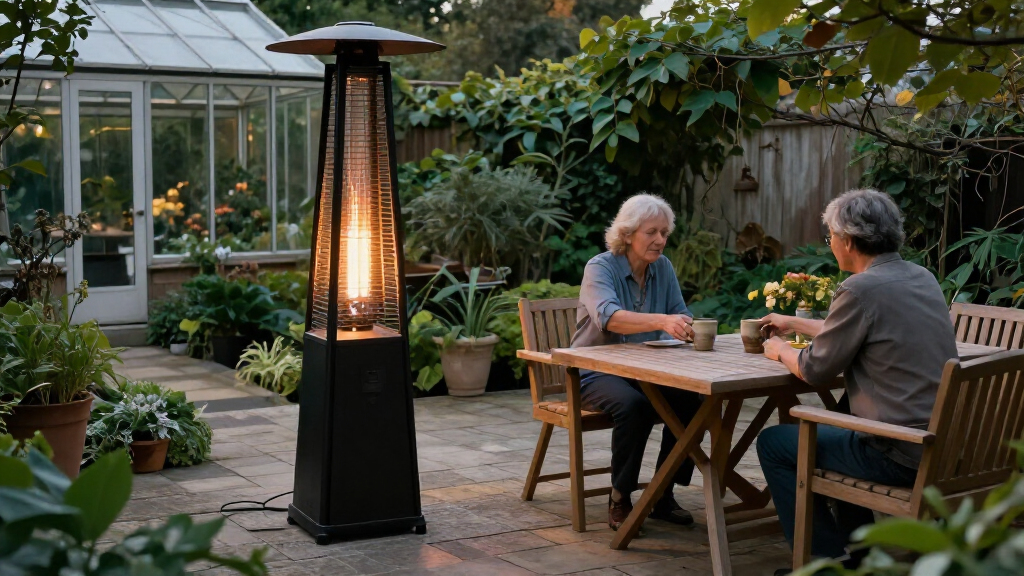
Outdoor patio heaters warm nearby people and objects, but they do not heat open air as evenly as a room’s central heating. Radiant warmth travels from the heater to people and surfaces, so you may feel comfortable while the air around you remains cool. This makes placement important: warmth falls off with distance, and wind can carry away heat or interrupt the path between heater and seat.
For example, a heater beside a table on a partly sheltered patio may make dinner pleasant, while the same unit can feel weak in the middle of an exposed deck. Manufacturer coverage figures are estimates, not guarantees; open sides let warmth disperse, and high ceilings can leave seated people farther from a mounted unit. Furniture can also block radiant heat, much as an object blocks sunlight.
When you scan reviews or product details, look for notes about the heater’s intended setting and how its output can be adjusted. Multiple heat settings let you use less output on calm evenings and increase it as conditions cool, which can improve comfort and reduce wasted fuel or electricity. They cannot compensate for a heater that is too far from the people or exposed to strong wind.
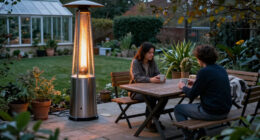
Plan around the area where people will sit, not the full footprint of your patio. If your dining set seats four, a clear warm zone around those chairs may matter more than heating an empty corner ten feet away. In a long or irregular seating area, one heater may leave people at the far end cold; moving the seating closer or choosing a layout with more than one warm zone may work better.
Key fact: A heater’s advertised coverage is an estimate. Wind, open sides, mounting height, and furniture placement can make a smaller area feel warm.
Products Worth Considering

Traeger Tailgater 20 Portable Wood Pellet Grill and Smoker, 300 sq. in.

Traeger Trailhead Portable Wood Pellet Grill and Smoker with Cover and Inverter

Husqvarna 130 Gas Chainsaw, 16-Inch Bar
As an affiliate, we earn on qualifying purchases.
Choose the fuel that fits your patio and routine
Propane suits patios where you want a portable heater without a power outlet, natural gas suits a fixed installation with an available gas line, and electric infrared suits a space with appropriate electrical supply. These choices affect more than convenience: they determine where the heater can go, what installation or storage it needs, and which recurring costs you’ll pay. Start with how often you use the patio and whether the seating layout changes, then check local fuel prices and the unit’s requirements.
Propane heaters are easy to move, which helps if you rearrange seating or want to store the unit seasonally. That flexibility comes with tank refills, safe storage, and the possibility of running out during use. Natural gas models avoid routine tank swaps and can suit frequent use in one location, but the gas line and installation can add upfront cost and make the heater less portable. A fixed installation makes most sense when the seating area and heater location are likely to stay put.
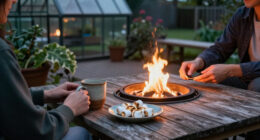
Electric infrared heaters warm people and surfaces directly and avoid on-site combustion. That can make them appealing for some covered patios, but the electrical supply must support the specific model, and its installation and location need to meet the manufacturer’s requirements. Electricity may cost more or less to run than gas depending on local rates and use, so compare actual energy prices rather than assuming one fuel is cheaper. Wood-burning models add a crackle and glow, but smoke, sparks, fuel storage, and local fire rules can make them impractical near neighbors or on a tight balcony.
The tradeoff is often flexibility versus setup effort: portable equipment is easier to reposition but asks for more frequent handling, while fixed equipment can simplify regular use but commits you to a location and installation. Check the points below against your own routine before comparing prices.
| Type | Can suit | Check before buying |
|---|---|---|
| Propane | Flexible seating areas | Tank refills, safe storage, and required clearances |
| Natural gas | Fixed patios with a gas line | Installation needs and ongoing fuel costs |
| Electric infrared | Sheltered areas with suitable power | Electrical requirements, product approval, and operating cost |
| Wood-burning | Settings where local rules permit solid fuel | Smoke, sparks, ventilation, and fire restrictions |
Estimate the running cost before you fall for the price tag
A heater’s purchase price only tells part of the story; fuel, electricity, installation, and hours of use shape the longer-term cost. There is no single running-cost figure that works for every household, because local energy prices and heater output vary. A model that costs less upfront can cost more over repeated evenings, while a more expensive fixed installation may be worthwhile if it fits frequent use.
Try this simple comparison before you choose: list the heater’s stated output, find the local price of its fuel or electricity, estimate how many hours you’ll use it, and add any installation cost. The output helps you compare the model’s energy use, but comfort and cost also depend on where you place it and whether wind carries warmth away. If you expect to warm a patio for two hours on four evenings a week, that schedule gives you a more useful estimate than a vague promise to “use it sometimes.”
- Check the energy source and output for the specific model.
- Look up local prices for the fuel or electricity it uses.
- Estimate your weekly hours in a typical month, not just a cold snap.
- Add installation and upkeep, such as a gas-line installation or periodic part checks.
- Compare the total for the models you’re actually considering.
Imagine you’re choosing between a low-priced propane heater and an electric unit mounted near the table. If propane refills are inconvenient where you live, the cheaper purchase might not feel like a bargain after a month of tank trips. On the other hand, an electric model may require electrical work or a supply that isn’t available where you want to mount it. The cost you’ll actually pay depends on local rates, setup, and your habits—not just the sticker price.
Place the heater where people feel the warmth safely
Good placement keeps warmth close to the seats and gives the heater the space, ventilation, and clearances its manufacturer requires. Follow the specific product manual for distances from ceilings, walls, awnings, furniture, and other combustible materials; those requirements vary by model because heaters differ in output, design, and permitted installation. A spot that seems spacious may still be too close to an overhead surface or may restrict airflow.
For a freestanding heater, choose a stable surface away from walkways where children or pets might bump it. Stability matters because a heater that tips can expose nearby people and materials to hot parts or flame. For a wall- or ceiling-mounted model, make sure the mounting instructions fit your patio and that the heater does not crowd a canopy or wooden beam. A clear path matters: a guest carrying a tray shouldn’t have to squeeze past a hot unit.
Imagine a family setting up an evening meal under a pergola. Before anyone lights the heater, they check the unit’s permitted use under a cover, confirm the required clearances, and move the dog’s bed and children’s toys out of the area. That small check makes the layout safer and keeps people from reaching across the heater for a plate. It also shows why the seating arrangement and safe placement need to be planned together.
Gas and solid-fuel heaters need the ventilation and placement allowed by their instructions. Never use an outdoor-only heater inside a home, garage, tent, or enclosed porch; combustion can produce carbon monoxide and enclosed use raises fire risk. Keep units away from children, pets, and walkways, and don’t leave them operating unattended.
Make a covered patio, balcony, or rainy forecast part of your decision
A heater is suitable for a covered patio or balcony only when that specific model is approved for the setting and installed according to its instructions. A roof overhead doesn’t automatically make a space safe: clearance and ventilation still matter, especially for fuel-burning units. A cover can trap heat or restrict the movement of combustion gases, so the manual’s limits determine whether that location is suitable.
In a small apartment balcony, mounting a heater might save floor space, but building rules, neighbors, power access, and required distances can narrow your choices. Ask whether the product is approved for the intended installation, and check local rules before bringing a solid-fuel heater or fixed gas installation into the plan. These constraints can rule out a model even when its heat output and price seem right.
Rain protection also varies. An “outdoor rated” label does not mean you can leave the unit exposed in every storm, so check its weather rating and storage instructions. Water exposure can affect electrical components or encourage corrosion, depending on the design. One owner might cover a model after each use; another may need to bring it into protected storage between seasons.
Noise and light can matter just as much as heat. A bright element may cast a glow over a quiet dinner, while operational noise can distract when friends are talking. These effects matter because the heater runs where people gather, often near neighbors or bedroom windows. Before buying, read the product description for these features and imagine the heater running beside a conversation, a sleeping child’s window, or a neighbor’s balcony.
Keep children, pets, and nearby guests away from hazards
Safe use means following the product manual, local fire rules, and any required clearances every time you operate the heater. Outdoor-only units stay outdoors, with adequate ventilation wherever the manufacturer permits them to run. This matters even when a heater appears to be operating normally: fuel-burning equipment can produce carbon monoxide, which cannot be reliably detected by sight or smell.
Set a freestanding model on stable ground, keep it clear of paths, and don’t leave it running unattended. If a heater smells of gas or looks damaged, shut it off if you can do so safely and follow the manufacturer’s instructions. Don’t try to keep using a unit that shows a problem; a fault or leak can turn a routine evening into a fire or exposure hazard.
Before guests arrive, you might move a child’s scooter from the patio and shift a cat’s favorite cushion away from the heater. Those are ordinary household details, but they reduce the chance that a person or pet wanders into the hot area. Make sure your seating plan leaves people room to move around the heater instead of squeezing past it, especially when guests are carrying food or drinks.
Confirm which safeguards the model actually includes. A tip-over switch, flame-failure shutoff, overheat protection, or timer can be useful, but features differ; check the specifications rather than assuming every heater has them. These controls can limit some problems if a heater tips, a flame goes out, or it runs longer than intended. They do not prevent contact burns or make an unsafe location acceptable, so careful placement and supervision still matter.
Get more seasons from your heater with simple upkeep
Regular checks help you spot damage and keep your heater ready for the evenings you plan to use it. Follow the manual’s cleaning, inspection, and storage instructions, since upkeep differs by fuel type and model. Outdoor exposure can leave a unit damp, dirty, or corroded; catching wear early can prevent a small problem from becoming a failure when the heater is running.
Before using a gas unit, check the hoses, burners, and connections as the manufacturer directs. For an electric model, inspect its cord, plug, and mounting. These checks focus on parts exposed to fuel, heat, movement, or weather. If you find visible damage, stop and follow the product maker’s guidance instead of improvising a repair.
For instance, you may put away the patio furniture at the end of fall and plan to cover the heater at the same time. Check whether the unit should be covered or stored indoors, and store tanks and equipment safely as instructed. A cover that traps moisture or a storage spot the manufacturer doesn’t permit can create new problems, so follow the guidance for that model rather than assuming one storage method suits all heaters.
Heaters can extend outdoor seating through chilly evenings, but local rules, prices, and available products change. Check current instructions and regulations when you buy, especially if you’re considering a fixed gas installation or wood-burning option. The useful question is whether the heater fits the way you use your patio—not whether a product page promises a perfect circle of warmth.
Frequently Asked Questions
Are patio heaters worth it?
They can be useful if you regularly sit or dine outdoors in cool weather, especially near a sheltered seating area. A heater may feel less effective on a large, exposed patio where wind carries warmth away.
Which is better: propane, natural gas, or electric?
Propane works well when you want portability and can handle tank refills. Natural gas may suit a fixed setup with a gas line, while electric infrared can suit a sheltered space with the right electrical supply. Local prices, installation needs, ventilation, and how you use the patio all affect the choice.
How much area will a patio heater warm?
Coverage varies by model and conditions, so treat the manufacturer’s estimate as a guide. Wind, open sides, mounting height, and furniture layout can shrink the area that feels warm.
Can I use a patio heater under a covered patio?
Only if the specific model permits that setting and you follow its installation, clearance, and ventilation requirements. A roof or pergola does not automatically make a heater safe to use there.
Can an outdoor patio heater be used indoors?
No. Never use an outdoor-only heater inside a home, garage, tent, or enclosed porch. Combustion can produce carbon monoxide, and enclosed use also increases fire risk.
Can patio heaters stay outside in the rain?
That depends on the model’s weather rating and instructions. “Outdoor rated” does not mean it is safe to leave exposed in every kind of weather, so check whether the manufacturer calls for a cover or protected storage.
Conclusion
Choose an outdoor patio heater around the people, seating, and shelter you already have. Compare fuel and installation costs, then follow the model’s clearances, ventilation rules, and care instructions.
When the evening air turns crisp, the goal isn’t to heat every corner of the yard. It’s to keep your guests comfortable around the table while the rest of the patio settles into the cool night.