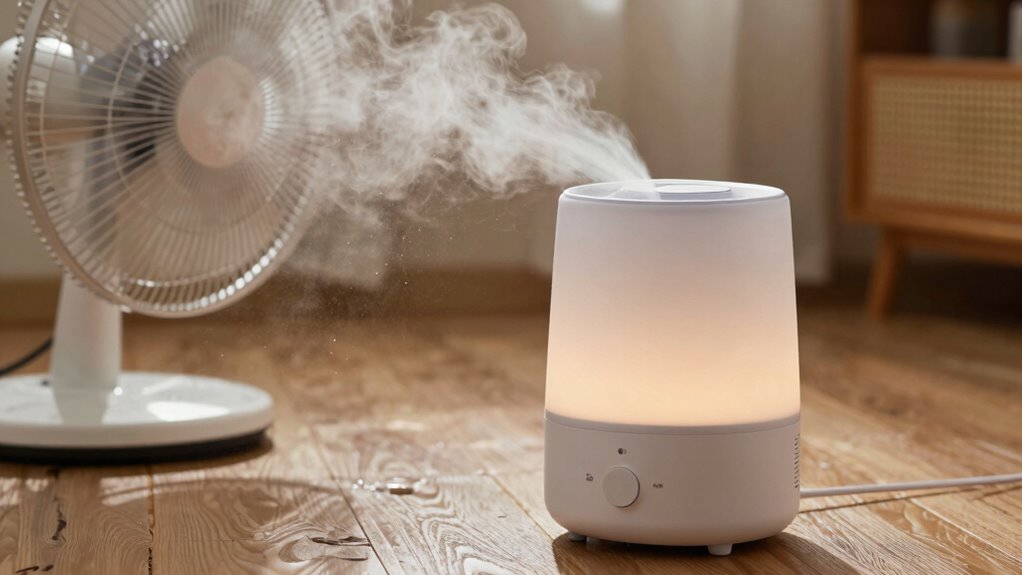

To prevent static shocks in dry winter air, using a humidifier is more effective than fans. Humidifiers add moisture to the air, helping static charges dissipate safely and reducing buildup on your skin and clothing. Fans, on the other hand, dry out the air further, worsening static issues. Combining a humidifier with natural fiber clothing can considerably lower shocks. Keep exploring to discover more practical ways to stay static-free during winter.
Key Takeaways
- Humidifiers increase indoor moisture, reducing static buildup on clothes and skin.
- Fans dry out indoor air, lowering humidity and increasing static shock risk.
- Maintaining balanced humidity levels with humidifiers helps prevent static electricity.
- Using fans without humidifiers worsens static issues in dry winter conditions.
- Combining humidifiers with proper clothing choices effectively minimizes static shocks indoors.
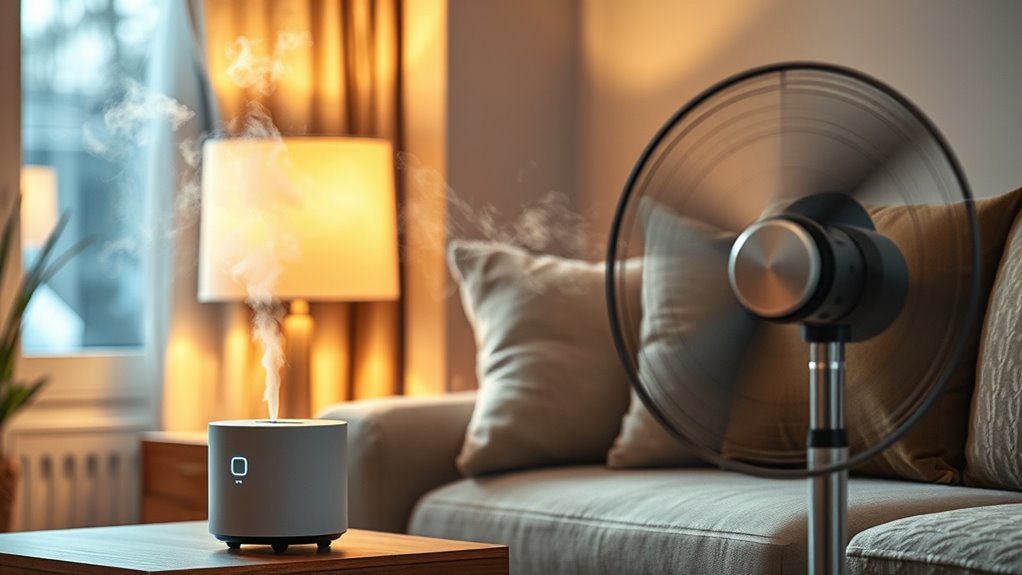
Have you ever experienced that sudden jolt of static shock when touching a doorknob or electronic device? If so, you’re familiar with electrostatic discharge, a tiny spark caused by the buildup of static electricity. During dry winter months, this happens more often because low humidity levels allow static charges to accumulate easily. One common culprit is the clothing materials you wear. Synthetic fabrics like polyester and nylon tend to generate more static, especially when rubbed against other surfaces or even during movement. These materials hold onto electrons more readily, increasing the chances of a static buildup that releases with a shock. On the other hand, natural fibers such as cotton, wool, or silk usually produce less static, making them better choices during winter to minimize shocks.
The key is understanding how your clothing choices influence static buildup. When you wear clothes made from synthetic fibers, you increase the likelihood of electrostatic discharge because these materials are insulators. They don’t allow static charges to dissipate easily, causing a greater buildup of static electricity. If you want to reduce static shocks, opt for natural fabrics or blend synthetic fibers with natural ones to help decrease static accumulation. Also, consider the way you handle your clothing—rubbing or sliding fabric against itself or other surfaces can generate more static. Wearing loose-fitting or layered clothing can also increase friction, leading to higher static charges.
To prevent static shocks, you can focus on increasing humidity levels in your home, which helps dissipate static charges more quickly. Using humidifiers adds moisture to dry air, reducing the likelihood of electrostatic discharge. When the air is more humid, static electricity doesn’t build up as easily, and your clothing materials won’t contribute as much to static generation. Conversely, fans and other air-moving devices tend to dry out the air further, amplifying static issues. If you rely on fans, try to balance them with humidifiers or other moisture sources to maintain a more stable environment. This way, you reduce the static buildup on your clothes and skin, and you’ll notice fewer shocks. Additionally, maintaining proper humidity levels can improve overall air quality, further benefiting your health during winter months. Furthermore, introducing moisture can help reduce static electricity by enabling charges to dissipate more efficiently and prevent damage to electronic devices caused by static discharge.
Frequently Asked Questions
Can Certain Fabrics Increase Static Shock Risk in Winter?
Certain fabrics can increase your static shock risk in winter, especially if they lack proper fabric treatments. Synthetic clothing materials like polyester and nylon tend to generate more static electricity, while natural fibers like cotton are less prone. To reduce shocks, choose clothing with moisture-wicking or anti-static treatments, and opt for natural fabrics. Staying mindful of your clothing materials can help minimize static buildup during dry winter months.
Are There Natural Remedies to Reduce Static Electricity Indoors?
You can try natural remedies like placing bowls of water around your home to add moisture, which helps reduce static electricity. Using natural indoor solutions such as cotton or wool fabrics instead of synthetic ones can also decrease static buildup. Additionally, rubbing a metal object, like a key, on your skin before touching electronics can discharge static safely. These simple steps make your indoor environment more comfortable and static-free.
How Does Humidity Level Affect Static Shock Frequency?
Imagine a dry winter day, your skin crackling like static sparks, and you’ll see how humidity impact influences static frequency. When humidity drops, static shocks become more frequent because dry air allows electrons to build up easily. Increasing humidity reduces static shocks by balancing electrical charges. So, maintaining proper humidity levels helps you stay shock-free, making your environment more comfortable and less prone to static-related surprises.
Do Static Shocks Cause Any Long-Term Health Effects?
Static shocks generally don’t cause long-term health effects. They result from electrostatic buildup that discharges suddenly, which can be startling but isn’t harmful. While frequent shocks might cause minor skin irritation or discomfort, they don’t pose significant health implications. To reduce static, keeping humidity levels balanced helps prevent electrostatic buildup, making shocks less frequent and more manageable. You can confidently experience the comfort of dry winter air without worrying about health risks.
Can Plants Help Reduce Static Electricity in the Home?
Imagine your home as a bustling city, and static electricity as mischievous sparks zipping around. Indoor greenery acts like friendly neighborhoods, increasing humidity and absorbing excess charge. Plants benefit your space by adding moisture, which reduces static buildup. So, yes, plants help reduce static electricity in your home, making it safer and more comfortable. Embrace indoor greenery and let your home flourish with natural static control.
Conclusion
To prevent static shocks, consider using a humidifier, which adds moisture to the air like a gentle rain restoring dry earth. Fans, on the other hand, can stir up static by drying out the air even more. By choosing a humidifier, you’re creating a cozy, conductive environment that reduces static buildup. Think of it as calming static’s wild energy, making your winter days more comfortable and shock-free. Stay moist, stay shock-free!