
To check an outdoor fan for water damage without taking it apart, start by inspecting the exterior for rust, corrosion, discoloration, or signs of water intrusion on the housing and blades. Listen for unusual rattling or loose parts when gently tapping the housing, and look for corrosion or residues around electrical connections. If you notice any of these signs, it’s best to take further steps to verify safety—more details await if you keep exploring.

Get garden gear delivered free with Prime
- Fast, free delivery on millions of items
- Prime Video, Amazon Music and more included
- Member-only deals all year
Key Takeaways
- Visually inspect the exterior for rust, corrosion, discoloration, or water stains on housing and blades.
- Check for any white, green, or black residues around wiring and terminals indicating moisture buildup.
- Gently shake or tap the housing to detect unusual rattling or loose internal components.
- Smell for musty odors suggesting mold or trapped moisture inside the fan.
- Use a dry cloth or compressed air to remove surface moisture and look for signs of corrosion or electrical hazards.
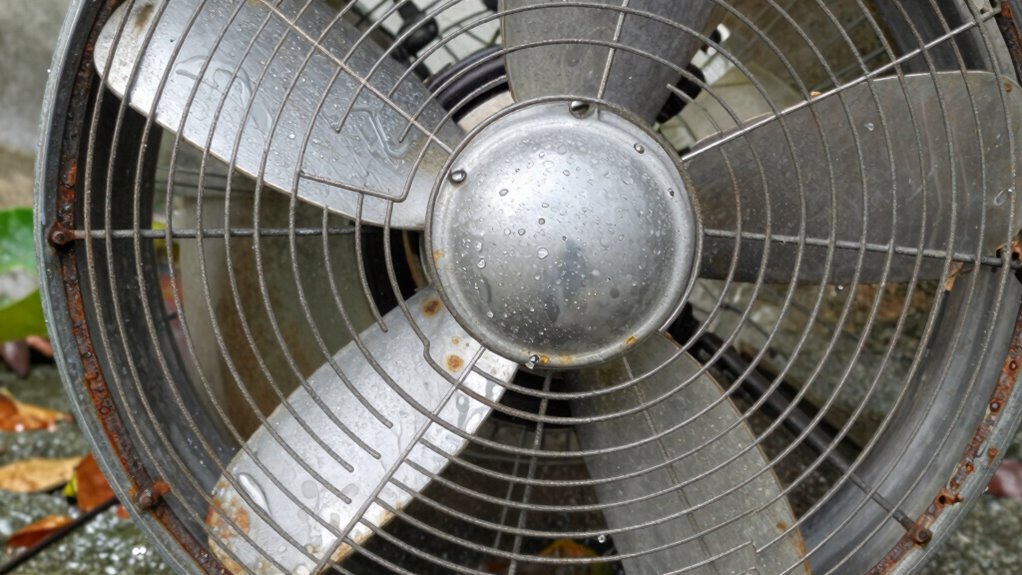
Outdoor fans are essential for keeping your space comfortable, but exposure to rain and humidity can lead to water damage over time. While your instinct might be to open it up and inspect every component, you can often spot signs of trouble without taking it apart. First, turn off the power supply to guarantee safety and prevent electrical hazards. Once the fan is completely powered down, carefully examine the exterior for any visible signs of water intrusion, such as rust, corrosion, or discoloration on the housing and blades. These are often early warning signs that moisture has compromised your fan’s integrity.
Turn off power and inspect for rust, corrosion, or water damage on the fan’s exterior and blades.
Next, pay close attention to the electrical connections. Look for any signs of corrosion or moisture buildup around the wiring, terminals, or switch components. You might notice white, green, or black residues, which indicate water has seeped inside and caused oxidation. If you see these, there’s a good chance that water has affected the internal wiring, creating potential electrical hazards. In such cases, it’s critical to avoid turning the fan back on until you’ve addressed the damage. Ignoring these signs and attempting to operate the fan could result in short circuits, electrical shocks, or even fires.
To further assess water damage without disassembling the fan, gently shake it or tap the housing and observe for any unusual rattling sounds or loose parts. Excess moisture might cause internal components to shift or become loose, which can be a sign that water has compromised the internal seal and may have led to rust or corrosion inside. Also, check for a musty smell around the unit, as this can indicate mold growth caused by trapped moisture. Additionally, water damage in outdoor appliances can sometimes be hidden beneath the surface, making it important to stay vigilant for any signs of internal issues.
If you suspect water damage, you should consider your replacement options carefully. Sometimes, the damage is minor enough that a thorough cleaning and drying can restore safe operation. Use a dry cloth or a compressed air blower to remove any residual moisture from accessible parts. However, if corrosion or electrical hazards are apparent, it’s safest to replace the fan entirely. Continuing to use a compromised outdoor fan can be dangerous, risking shock or fire. When in doubt, consult a professional electrician or outdoor fan specialist to evaluate the damage and recommend proper replacement options. Protect your safety and your investment by acting quickly if water damage is evident.
outdoor fan water damage inspection tools
As an affiliate, we earn on qualifying purchases.
As an affiliate, we earn on qualifying purchases.
Frequently Asked Questions
Can Water Damage Cause the Fan to Stop Working Suddenly?
Yes, water damage can cause your outdoor fan to stop working suddenly. When water enters the motor or electrical components, it leads to corrosion and short circuits. To prevent this, you should perform corrosion inspections and moisture testing regularly. If you notice signs of moisture or corrosion, it’s best to turn off the fan and have it inspected by a professional to avoid further damage and guarantee safe operation.
What External Signs Indicate Water Damage on an Outdoor Fan?
Think of your outdoor fan as a weathered sailor—water damage shows in corrosion buildup on metal parts and paint discoloration on the blades and housing. These external signs suggest moisture exposure. You might also notice rust spots or peeling paint, indicating water intrusion. Keep an eye out for these indicators to catch water damage early, helping you maintain your fan’s performance and extend its lifespan without needing to dismantle it.
Is It Safe to Operate the Fan After Water Exposure?
It’s not safe to operate your outdoor fan after water exposure because moisture accumulation can lead to electrical failures or short circuits. Water can cause corrosion risk on metal parts, which weakens the fan’s structure and affects performance. Before turning it back on, verify the fan is thoroughly dried, and inspect for signs of corrosion or damage. If you’re unsure, consult a professional to prevent potential hazards.
How Often Should I Inspect My Outdoor Fan for Water Damage?
Like a vigilant guard at your door, you should inspect your outdoor fan monthly for water damage. Regular maintenance tips include checking for corrosion, rust, or moisture buildup. Applying water-resistant coatings can help protect it, but don’t rely solely on them. Always look for signs of water seepage or corrosion, especially after storms or heavy rain. Staying proactive guarantees your fan runs smoothly and lasts longer.
Can Water Damage Lead to Electrical Hazards in Outdoor Fans?
Water damage can definitely lead to electrical hazards in outdoor fans. When water seeps in, it can cause corrosion, which damages electrical insulation and increases the risk of short circuits or shocks. To prevent this, you should regularly inspect your fan for signs of water infiltration, corrosion, or rust. Proper corrosion prevention and ensuring electrical insulation remains intact are key to keeping your outdoor fan safe and functional.
As an affiliate, we earn on qualifying purchases.
Conclusion
Regularly inspecting your outdoor fan for water damage can extend its lifespan and guarantee safe operation. Did you know that outdoor fans exposed to harsh weather conditions can experience up to a 20% reduction in efficiency if water damage isn’t caught early? By performing simple visual checks and listening for unusual noises, you can spot problems before they worsen. Keep your fan in top shape and avoid costly repairs with just a few quick inspections.
outdoor fan electrical contact cleaner
As an affiliate, we earn on qualifying purchases.
As an affiliate, we earn on qualifying purchases.
outdoor fan moisture detection kit
As an affiliate, we earn on qualifying purchases.
As an affiliate, we earn on qualifying purchases.
Halloween Picks
halloween
As an affiliate, we earn on qualifying purchases.