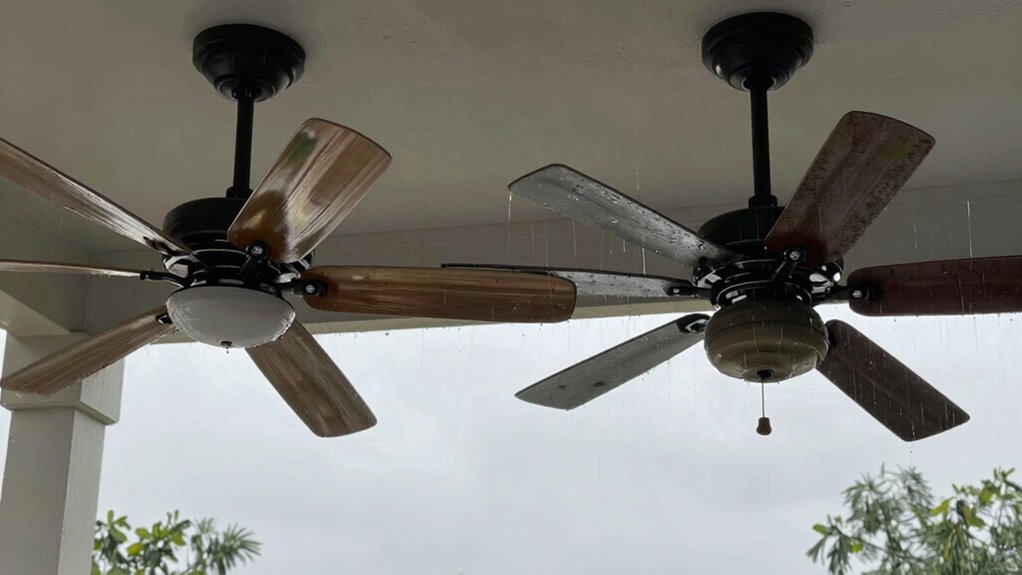
The main difference between damp-rated and wet-rated fans lies in their ability to handle moisture and harsh weather. Damp-rated fans are designed for covered outdoor areas where they resist humidity but aren’t exposed to direct water, making them ideal for porches or breezeways. Wet-rated fans, however, are built to withstand direct exposure to rain and snow, suitable for open decks or pergolas. Keep these differences in mind to guarantee your fan lasts longer and performs safely—more details await.

Get garden gear delivered free with Prime
- Fast, free delivery on millions of items
- Prime Video, Amazon Music and more included
- Member-only deals all year
Key Takeaways
- Damp-rated fans tolerate moisture but are not suitable for direct water exposure, while wet-rated fans withstand direct contact with rain and harsh weather.
- Wet-rated fans are more robust and designed for open areas exposed to water, unlike damp-rated fans meant for covered outdoor spaces.
- Wet-rated fans typically have advanced, weatherproof construction to endure harsh conditions, whereas damp-rated fans focus on moisture resistance.
- Proper application of each fan type ensures durability, safety, and optimal performance in their respective outdoor environments.
- Choosing the correct rating prevents damage, extends lifespan, and maintains safety in outdoor installation settings.

When choosing ceiling fans for outdoor or humid areas, understanding the difference between damp-rated and wet-rated fans is vital. Damp-rated fans are designed to withstand moisture and humidity but aren’t meant to be directly exposed to rain or water splashes. They’re ideal for covered porches, patios, or breezeways where rain doesn’t directly hit the fan. Wet-rated fans, on the other hand, are built to endure direct exposure to rain, snow, and other harsh weather conditions. They’re suitable for open decks, pergolas, or outdoor environments where water can splash or fall directly onto the fan. Recognizing these distinctions helps you make an informed decision that guarantees longevity and safety while enhancing energy use. Additionally, considering the sustainable living practices in your outdoor space can promote environmental benefits along with optimal fan performance.
Another important factor to weigh is energy efficiency. Both damp-rated and wet-rated fans come in various models with different energy-saving features, but selecting the right one depends on your specific needs. Wet-rated fans tend to be more robust and may often include advanced motors that consume less power, making them more energy-efficient, especially in open environments prone to extreme weather. Damp-rated fans usually have a simpler design but still offer energy-efficient options, especially if you look for models with modern motor technology and LED lighting. Properly choosing a fan suited to your environment guarantees you minimize energy waste and reduce your utility bills over time. In addition, understanding the weather resistance of the fans ensures you select a model that will perform reliably in your specific climate. It’s worth investing in fans that combine durability with high energy efficiency to get the best value. Moreover, examining the material durability of the fan components can further enhance longevity and reduce maintenance costs in demanding outdoor conditions. Being aware of the installation requirements is also essential to ensure your fan is set up correctly for optimal performance and safety.
Products Worth Considering

Orbit B-hyve Smart Indoor/Outdoor 12-Zone Sprinkler Controller

Orbit B-hyve XR 16-Zone Indoor/Outdoor Smart Sprinkler Controller

Husqvarna ST224 Two-Stage Gas Snow Blower, 24-Inch, 212 cc
As an affiliate, we earn on qualifying purchases.
Frequently Asked Questions
Can Damp-Rated Fans Be Used Outdoors Permanently?
Damp-rated fans can be used outdoors permanently, but they’re best suited for covered outdoor spaces like porches or patios. They provide good outdoor ventilation and are designed to withstand moisture, but they aren’t fully waterproof. For truly exposed areas like open decks or poolside, wet-rated fans offer greater fan durability and protection against direct water contact. Always consider your space’s exposure level to choose the right fan for long-term outdoor use.
How Do I Clean Damp-Rated Fans Safely?
To clean your damp-rated fan safely, start by turning off the power at the circuit breaker. Use a soft, damp cloth—avoid harsh chemicals or abrasive materials—to gently wipe down blades and the motor housing. Follow maintenance tips like regularly inspecting for dust buildup and loose parts. Always make certain the fan is dry before turning it back on to prevent electrical issues. Prioritize cleaning safety to keep your fan functioning well and avoid damage.
Are Damp-Rated Fans More Energy-Efficient Than Wet-Rated Fans?
Damp-rated fans aren’t necessarily more energy-efficient than wet-rated fans; their difference lies in where they’re installed. For energy savings, focus on choosing a fan with a high efficiency rating, regardless of its rating. An efficiency comparison shows that both types can be equally energy-efficient if they have similar motors and designs. Your choice should depend more on the environment and your specific needs rather than just energy efficiency.
What Materials Are Used in Damp-Rated Fan Blades?
You’ll find damp-rated fan blades often made from materials like aluminum, resin, or treated wood, chosen for their blade durability and resistance to material corrosion. Imagine a sailor’s boat—just like sturdy hulls withstand the sea’s salt, these materials resist moisture and corrosion, ensuring your fan keeps spinning smoothly over time. You benefit from blades that stay resilient and look great, even in humid environments.
Do Damp-Rated Fans Require Special Installation Procedures?
Yes, damp-rated fans do require special installation procedures. You should follow the manufacturer’s installation guidelines closely to guarantee proper corrosion resistance and safety. This often involves mounting the fan in a protected outdoor location, avoiding direct exposure to rain or standing water, and using appropriate hardware. Proper installation helps prevent rust and corrosion, extending your fan’s lifespan and maintaining its performance in damp environments.
Conclusion
So, now that you know the difference between damp-rated and wet-rated fans, you’re better equipped to choose the right one for your space. Remember, selecting the wrong fan is like trying to swim with a stone—you’ll only struggle. Whether you need protection from moisture or full immersion, understanding these ratings guarantees your fan stands the test of time and weather. Make an informed decision, and your fan will serve you well, no matter what Mother Nature throws your way.