
Every spring, you should inspect your outdoor wiring to guarantee safety after winter. Check garden lighting for cracks, corrosion, or flickering, and tighten loose connections. Examine outdoor outlets for water damage, corrosion, or faulty covers, testing them with a tester. Replace any worn or damaged wiring, and consider installing GFCIs for added protection. Regular inspections help prevent hazards and keep everything working safely. Keep going to discover more tips to keep your outdoor wiring in top shape.
Key Takeaways
- Inspect outdoor wiring for signs of wear, corrosion, or damage after winter exposure.
- Test all outdoor outlets and ensure weatherproof covers seal tightly.
- Check garden lighting fixtures for cracks, rust, or loose connections.
- Secure or replace damaged wiring and consider installing GFCIs for added safety.
- Turn off power before performing any repairs or inspections to ensure safety.
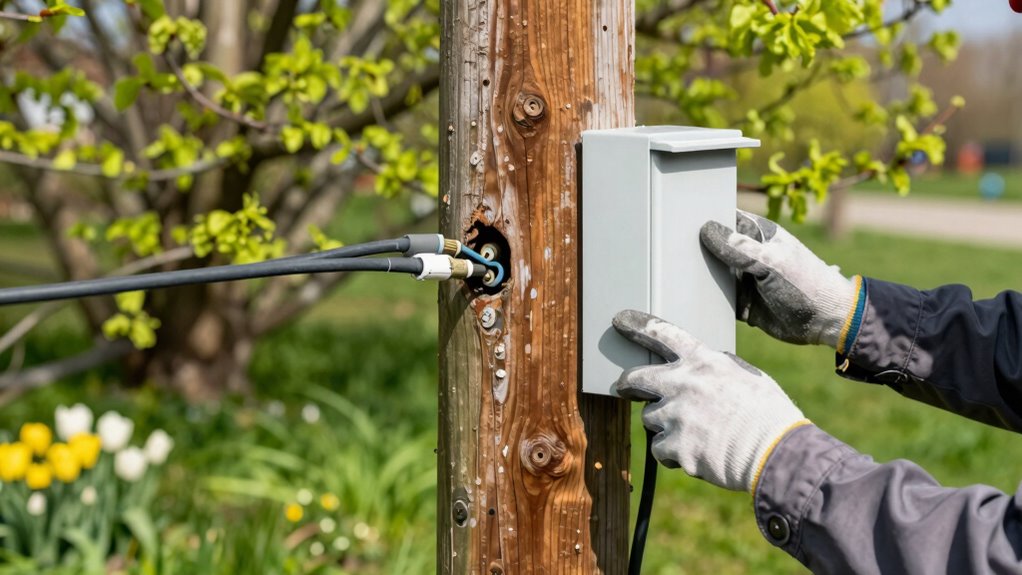
As spring arrives, it’s vital to inspect your outdoor wiring to guarantee everything is safe and functioning properly. After months of being exposed to winter’s harsh conditions, your outdoor wiring, especially garden lighting and outlets, may have sustained damage or become unsafe. Taking the time to check these elements now can prevent accidents, electrical failures, or potential fire hazards later in the season.
Start by examining your garden lighting. These fixtures often sit exposed to rain, snow, and debris, which can cause corrosion or loosen connections. Turn on your outdoor lights to confirm they’re working properly and look for any flickering or dimming, which could indicate wiring issues. Check the fixtures themselves for cracks, rust, or corrosion, and tighten any loose connections. If you notice exposed wiring or damaged cords, replace or repair them immediately to prevent electrical shorts or shocks. Properly functioning garden lighting not only enhances your outdoor space but also guarantees safety during evening activities.
Inspect and tighten garden light connections for safety and optimal outdoor illumination.
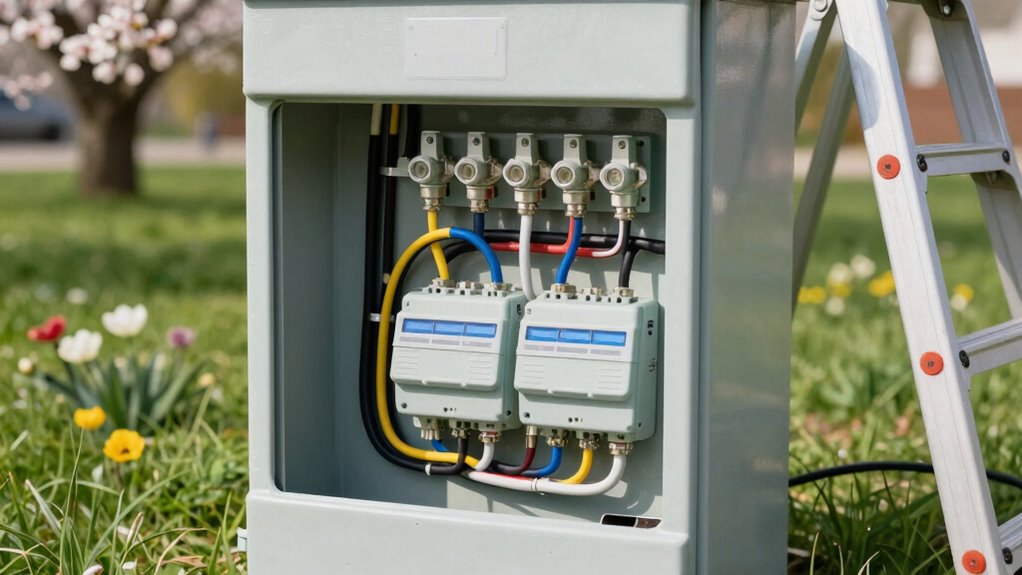
Next, focus on outdoor outlet safety. These outlets are particularly vulnerable to moisture, which can lead to shorts or electrocution risks. Inspect all outdoor outlets for signs of water ingress, corrosion, or damage. Use a flashlight if needed to look inside the outlet covers. Ensure that your outlets are equipped with weatherproof covers—preferably those that seal tightly when not in use—and that these covers are in good condition. Gently test each outlet with a tester to confirm they’re wired correctly and functioning safely. If you find any outlets that aren’t working or look damaged, turn off the power at the breaker before repairing or replacing them. Consider installing Ground Fault Circuit Interrupters (GFCIs) if you haven’t already, as they provide an added layer of safety by shutting off power when a ground fault is detected.
While inspecting, also review your outdoor wiring for signs of wear, such as frayed cords or cracked insulation. Keep all wiring away from areas where it can be trampled or exposed to standing water. Secure loose wires and replace any damaged sections. Remember, proper outdoor wiring setup is essential for safe and reliable operation of your garden lighting and outdoor outlets.
outdoor GFCI outlets
As an affiliate, we earn on qualifying purchases.
As an affiliate, we earn on qualifying purchases.
Frequently Asked Questions
How Often Should Outdoor Wiring Be Inspected Annually?
You should inspect your outdoor wiring at least once a year, ideally in spring before heavy use. Check your garden lighting and make sure all connections are secure, especially around weatherproof connectors. Look for signs of damage, corrosion, or wear from weather exposure. Regular inspections help prevent electrical hazards and keep your outdoor space safe and functional, guaranteeing your garden lighting and other outdoor electrical setups stay in top condition throughout the season.
What Tools Are Needed for Outdoor Wiring Inspection?
For outdoor wiring inspection, you need a voltage tester, wire strippers, a flashlight, and a multimeter. These tools help you check electrical safety, ensuring wires are intact and properly grounded. Regular tool maintenance is essential; keep tools clean and calibrated for accurate results. Using these tools correctly allows you to spot issues early, preventing hazards and maintaining safe outdoor electrical setups.
Can I Perform Outdoor Wiring Checks Myself Safely?
Yes, you can perform outdoor wiring checks yourself safely if you prioritize DIY safety. Always turn off power at the main breaker before inspecting any wiring to avoid electrical hazards. Use insulated tools and wear protective gear. Stay alert for signs of damage, corrosion, or loose connections. If you’re unsure or spot any issues, it’s best to call a licensed electrician. Prioritizing safety helps prevent accidents and keeps your outdoor wiring in top shape.
What Signs Indicate Outdoor Wiring Needs Repair or Replacement?
Think of your outdoor wiring as a garden’s delicate vines; if they show frayed wires or corrosion, they’re signaling trouble. Signs include cracked or damaged weatherproof connectors, frequent tripping of ground fault interrupters, or exposed wiring. If you notice these issues, it’s time to repair or replace. Keep your system safe by inspecting for these signs regularly, ensuring weatherproof connectors stay intact, and ground fault interrupters function properly.
Are There Any Safety Precautions Before Starting the Check?
Before you start your outdoor wiring check, make sure you wear proper safety gear like insulated gloves and goggles to protect yourself. Check the weather forecast and perform inspections during dry, calm conditions—avoid rainy or windy days to reduce risks of electrical shock or accidents. Also, turn off power at the main breaker before inspecting any wiring or electrical components, and stay alert for any signs of damage or wear.
weatherproof outdoor outlet covers
As an affiliate, we earn on qualifying purchases.
As an affiliate, we earn on qualifying purchases.
Conclusion
By giving your outdoor wiring a thorough check this spring, you’re planting the seeds for a safe and worry-free season ahead. Think of it as tending to your home’s foundation—neglect now could cause a storm of problems later. Keep your connections strong and protected, so your outdoor spaces can truly bloom without a hitch. Remember, a little effort today safeguards your comfort and safety tomorrow—like a sturdy tree, well-rooted and resilient.

Gardencoin Solid Brass Outdoor Landscape Spotlights, 12V Heavy Duty Low Voltage LED Spot Light Waterproof for Garden and Yard Up Lighting, Bronze Accent Lighting Fixture Without MR16 Bulb, 6 Pack
SOLID BRASS MATERIAL: Fixture housing made of die-cast brass, thickened tube walls make it stronger, unique finish pickling…
As an affiliate, we earn on qualifying purchases.
As an affiliate, we earn on qualifying purchases.
outdoor wiring repair kit
As an affiliate, we earn on qualifying purchases.
As an affiliate, we earn on qualifying purchases.