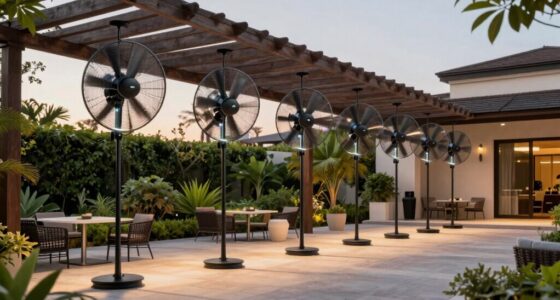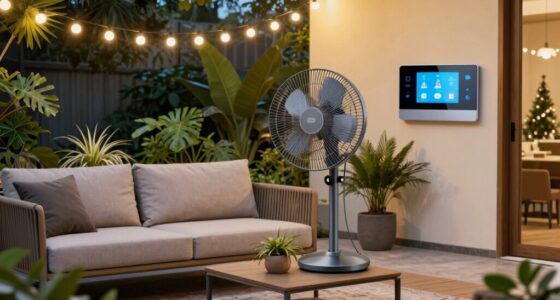
When choosing between DC and AC motors for outdoor fans, you should consider efficiency, noise, control, and durability. DC motors run quietly, offer precise speed control, and are more energy-efficient but tend to cost more upfront. AC motors are durable, cheaper initially, and operate quietly as well. Understanding their differences helps you pick the best option for your needs. Keep exploring to learn how these motors perform long-term and what suits your outdoor space best.
Key Takeaways
- DC motors provide precise speed control, higher efficiency, and quieter operation, ideal for eco-friendly and energy-saving outdoor fans.
- AC motors are simpler, more durable, and typically less expensive, suitable for long-term outdoor use with lower maintenance needs.
- DC motors are better for environments requiring adjustable speeds and quieter performance, while AC motors excel in durability and ease of installation.
- Both motor types improve energy efficiency; DC motors often consume less power and offer smoother control, enhancing outdoor fan performance.
- Proper maintenance, corrosion resistance, and installation considerations influence the longevity and operational costs of outdoor fans with either motor type.
How DC and AC Motors Work
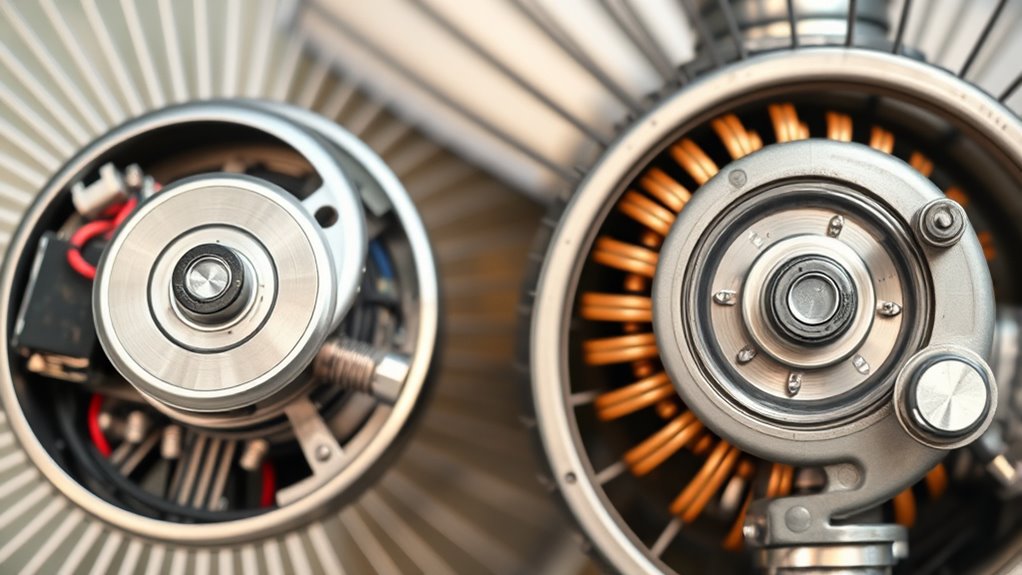
Understanding how DC and AC motors work begins with recognizing that both convert electrical energy into mechanical motion, but they do so through different mechanisms. DC motors have a simple motor construction, featuring a rotor and stator with brushes that deliver current directly to the windings. They run on direct current power supply types, which allows for precise control of speed and torque. In contrast, AC motors typically have a more robust construction, often with a squirrel cage rotor and a stator that creates a rotating magnetic field. They operate on alternating current power supply types, which simplifies their design and enhances durability. While both types generate motion, their construction and power supply differences determine their specific applications and performance characteristics. Efficiency and durability are also key factors influencing the choice between DC and AC motors for outdoor fans.
Key Advantages of DC Motors
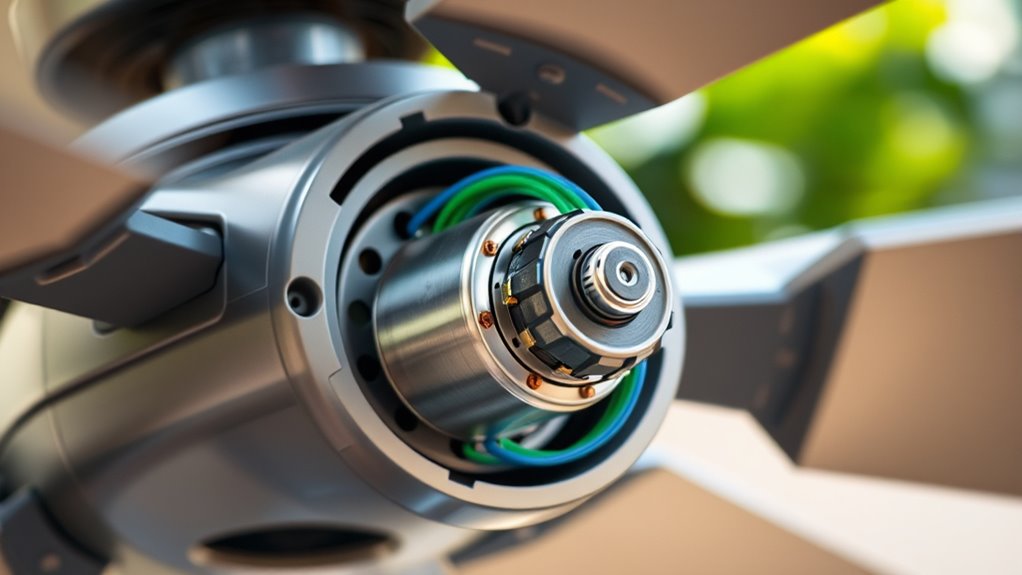
DC motors offer notable energy efficiency gains, helping you save on power costs. They also operate more quietly, making them ideal for noise-sensitive settings. Plus, you can achieve precise speed control, giving you better performance in various applications. Additionally, advancements in AI integration enhance the overall functionality and adaptability of motor systems.
Energy Efficiency Gains
Have you ever wondered why some motors consume less energy while delivering the same power? DC motors are designed for higher efficiency, converting more electrical energy into mechanical work with less waste. This efficiency translates into lower energy bills and a smaller environmental impact. Plus, DC motors work well with solar integration, making them ideal for eco-friendly outdoor fans. Their precise control reduces unnecessary power usage, especially at variable speeds. As a result, they help conserve energy and minimize carbon footprints. Additionally, motor efficiency improvements can significantly reduce operational costs over time. When you choose a DC motor, you’re not only benefiting from improved performance but also contributing to sustainability efforts. Overall, their energy efficiency gains make them a smarter choice for environmentally conscious consumers seeking reliable, low-impact outdoor fans.
Quieter Operation Levels
One of the most noticeable advantages of DC motors is their ability to operate more quietly than their AC counterparts. This quieter operation is thanks to better sound insulation within the motor design and reduced vibration levels. DC motors often have smoother starts and stops, which cut down on noise caused by mechanical stress. Vibration reduction is achieved through precise balancing and fewer mechanical components that generate noise. As a result, your outdoor fan runs with minimal sound disturbance, making it ideal for quiet outdoor spaces or patios. You’ll notice less rattling and humming, creating a more peaceful environment. Additionally, energy-efficient designs contribute to lower power consumption, supporting both quiet operation and sustainability. Overall, the quieter operation levels of DC motors enhance comfort without sacrificing performance.
Precise Speed Control
Because they can be precisely controlled, DC motors let you adjust their speed accurately for your needs. This variable speed capability guarantees you can set the fan to run at just the right level, improving comfort and energy efficiency. With precise control, you can fine-tune the motor’s performance for different conditions, avoiding unnecessary power use. Here’s a quick look at how this advantage plays out:
| Speed Range | Application | Benefit |
|---|---|---|
| Low | Night mode, gentle breeze | Quiet operation, energy savings |
| Medium | Daily airflow control | Comfort, flexibility |
| High | Max airflow, cooling | Rapid cooling, high performance |
| Custom | Specific settings | Tailored comfort |
This ability makes DC motors ideal for outdoor fans needing fine-tuned, variable speed control. Precise speed control is a key feature that enhances both user comfort and energy efficiency.
Benefits of AC Motors

AC motors offer significant energy efficiency, helping you save on electricity costs over time. They also operate quietly, making them ideal for environments where noise reduction matters. These benefits make AC motors a practical choice for many applications. Additionally, outdoor fans equipped with AC motors are suitable for various seasonal conditions, enhancing their versatility.
Energy Efficiency Benefits
Have you ever wondered why AC motors are often preferred for energy-saving applications? They are highly efficient, converting electrical energy into mechanical power with minimal waste. This efficiency means less energy is needed to operate outdoor fans, which benefits your electricity bill and reduces overall energy consumption. When paired with renewable sources like solar power, AC motors help maximize energy use and minimize environmental impact. Their ability to operate smoothly and consistently at various voltages also reduces energy loss. Plus, AC motors tend to have simpler designs with fewer components, increasing their lifespan and reliability. Additionally, their compatibility with variable speed controls allows for further energy savings and performance optimization. All these factors combine to make AC motors a smart choice for those seeking energy-efficient solutions, lowering both your carbon footprint and long-term costs.
Quiet Operation Advantages
One of the key advantages of AC motors is their quiet operation, making them ideal for environments where noise levels matter. AC motors typically produce less noise, thanks to their smooth operation and fewer moving parts. This noise reduction enhances comfort, especially in spaces like outdoor patios or bedrooms. Additionally, AC motors often come with better sound insulation features, which help dampen any vibrations or mechanical sounds. As a result, you won’t be disturbed by loud noises or humming sounds, creating a more peaceful atmosphere. If quiet operation is a priority for you, AC motors offer a significant benefit, ensuring your outdoor fan runs smoothly and silently without compromising performance or airflow. Color accuracy plays a role in the overall quietness, as well-calibrated motors can operate more smoothly with fewer vibrations.
Energy Efficiency and Cost Considerations
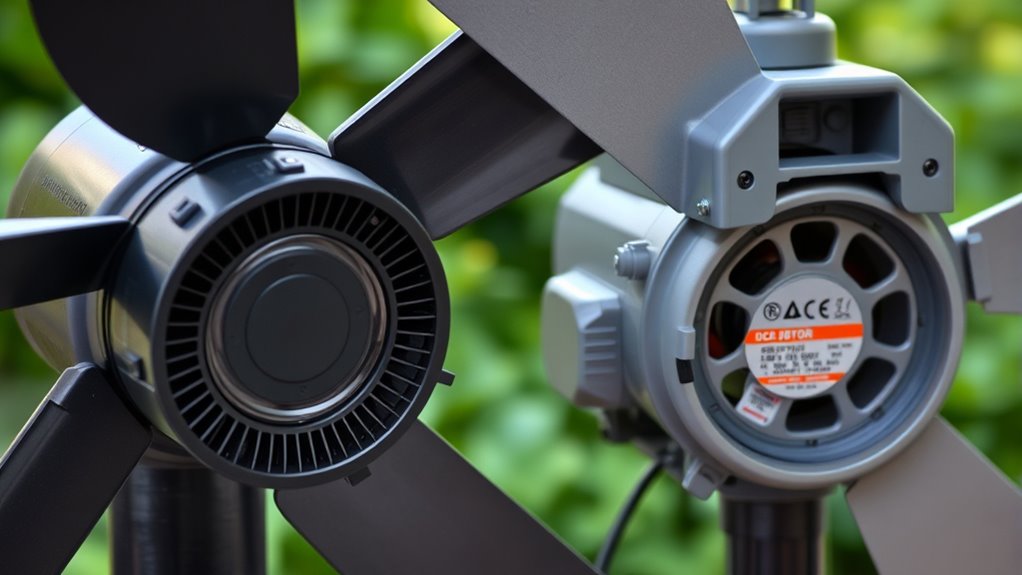
When comparing the energy efficiency and cost considerations of DC and AC motors, it’s important to recognize that each type offers distinct advantages depending on the application. DC motors generally consume less energy, making them more efficient over time, which can lead to lower operating costs. They also tend to have a longer motor lifespan due to their design and reduced wear on components. Additionally, product effectiveness can vary based on the quality and application of the motor. However, the initial cost of DC motors is usually higher because of their advanced technology and components. On the other hand, AC motors typically have a lower upfront price, but may consume more energy and require more maintenance, potentially increasing long-term expenses. Your choice depends on balancing these factors against your budget and efficiency goals.
Durability and Maintenance Needs
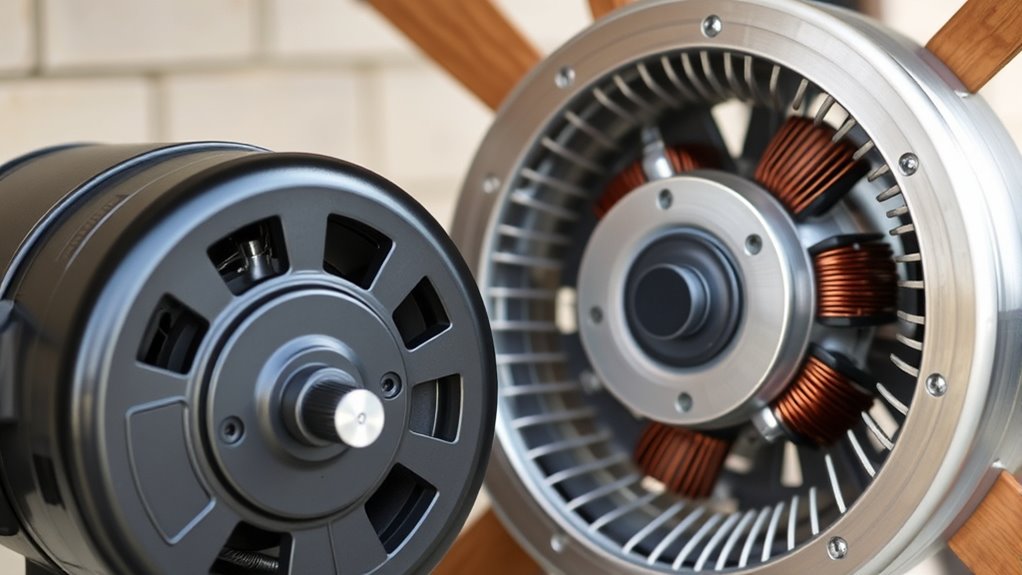
While both DC and AC motors are designed for durability, their maintenance needs can differ considerably. DC motors often have longer-lasting components and better corrosion resistance, reducing overall upkeep. Many DC motor models come with extensive warranty coverage that protects against defects and early failures, giving you peace of mind. AC motors, on the other hand, may require more frequent maintenance, especially if exposed to harsh outdoor conditions, as they can be more susceptible to corrosion. Regular inspections, cleaning, and lubrication keep them running smoothly. Proper care, including selecting models with superior corrosion resistance, can extend your outdoor fan’s lifespan and lower maintenance efforts. Ultimately, choosing a motor with good warranty coverage and superior corrosion resistance can extend your outdoor fan’s lifespan and lower maintenance efforts. Proper care ensures your fan continues to operate efficiently over time.
Choosing the Right Motor for Your Outdoor Fan
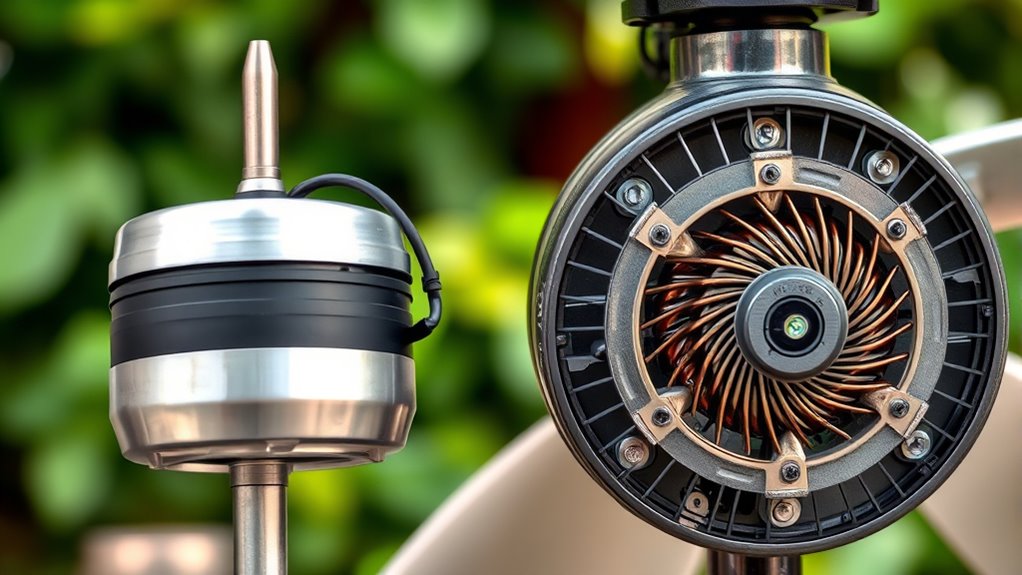
Choosing the right motor for your outdoor fan depends on your specific needs and environmental conditions. If you prioritize a longer motor lifespan with minimal maintenance, an AC motor might be ideal due to its durability. However, if you prefer a more efficient, quieter operation and easier on-off control, a DC motor could be better. Keep in mind that installation complexity varies: AC motors typically require simpler setup, while DC motors might need more detailed wiring. Consider this table to compare key factors:
| Aspect | AC Motor | DC Motor |
|---|---|---|
| Motor lifespan | Longer, with less frequent repair | Shorter, but efficient |
| Installation complexity | Easier to install | More complex wiring |
| Efficiency | Moderate | High |
| Noise level | Slightly louder | Quieter |
Choosing the right motor also involves evaluating performance metrics, which can influence your decision based on your environment and maintenance preferences.
Frequently Asked Questions
Are DC Motors Quieter Than AC Motors in Outdoor Fans?
You might wonder if DC motors are quieter than AC motors in outdoor fans. Generally, DC motors produce lower noise levels because of their advanced motor design, which reduces vibrations and smoothes operation. This makes them a better choice if you want a quieter fan. In contrast, AC motors tend to be louder due to simpler motor design and higher vibration levels. So, for quieter operation, DC motors are typically the better option.
Can Outdoor Fans With DC Motors Be Used in Humid Environments?
You might wonder if outdoor fans with DC motors work well in humid environments. The good news is, many DC motors are designed with corrosion resistance and moisture protection, making them suitable for such conditions. Their sealed housings prevent moisture from damaging internal components, ensuring longevity. So, yes, you can confidently use DC motor outdoor fans in humid areas, as their design helps withstand moisture and corrosion effectively.
Do DC Motors Require Special Wiring or Circuit Considerations?
You should know that DC motors often have specific wiring requirements, like using dedicated circuits or certain gauge wires to guarantee safety and proper operation. Circuit considerations include installing appropriate fuses or circuit breakers to handle their unique power needs. Always follow manufacturer instructions and local electrical codes to prevent issues. This way, your outdoor fan runs smoothly without risking electrical problems or damage to the motor.
How Do Motor Sizes Affect Fan Performance and Airflow?
Imagine you’re steering a ship through gusty winds—that’s how motor size influences fan performance and airflow. Larger motors often boost motor efficiency, powering bigger fans that move air more effectively, creating a invigorating breeze. Conversely, smaller motors may struggle to generate strong airflow, limiting performance. Your choice of fan size directly impacts how well it cools your space, making the right motor size essential for ideal airflow and comfort.
Are There Safety Concerns Specific to DC Motor Outdoor Fans?
You should consider electrical safety and corrosion resistance when choosing a DC motor outdoor fan. DC motors typically have better electrical safety due to lower voltage operation, reducing shock risks. They also often feature corrosion-resistant components, making them safer and more durable in outdoor environments. However, guarantee proper installation and maintenance to prevent electrical hazards and corrosion, keeping your outdoor fan safe and efficient year-round.
Conclusion
Ultimately, choosing between DC and AC motors is like picking between a trusty steed and a swift racehorse—you need what suits your needs best. DC motors offer quiet efficiency, while AC motors bring durability and affordability. Think of your outdoor fan as a trusted companion on hot days; selecting the right motor guarantees it’s always ready to keep you cool. So, weigh your options carefully—after all, your comfort deserves nothing less than the perfect match.