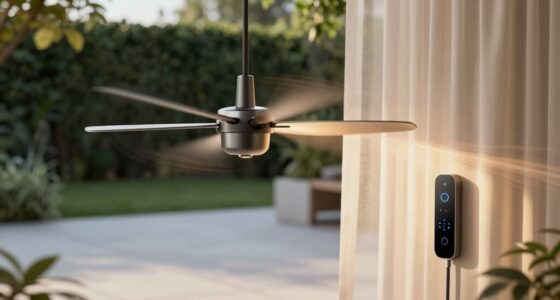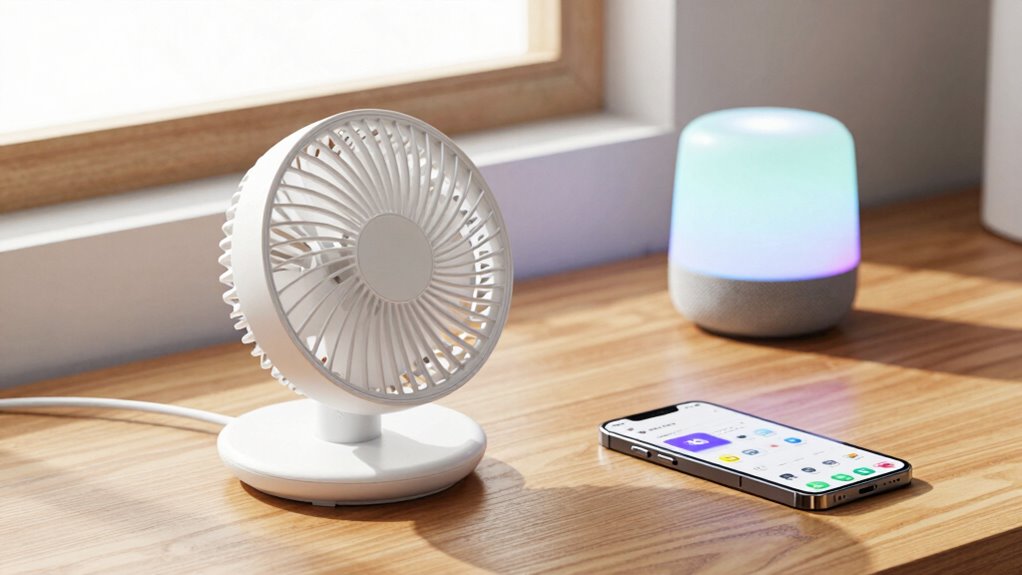

A connected fan lets you control it remotely through an app, but a truly useful smart fan offers much more. It actively improves your comfort and saves energy with features like sensors, automation, and integration with your smart home system. These advanced controls make managing your environment quick and simple. If you want to know how these extra features can truly enhance your daily life, there’s more to discover below.

Get garden gear delivered free with Prime
- Fast, free delivery on millions of items
- Prime Video, Amazon Music and more included
- Member-only deals all year
Key Takeaways
- Connected fans offer remote control, while truly useful smart fans include advanced features that improve comfort and efficiency.
- Easy-to-use interfaces and simple controls distinguish useful smart fans from basic connected fans.
- Smart fans with sensors and energy-saving modes optimize power use and reduce costs.
- Customizable schedules and smart home integration make useful fans more adaptable and seamless.
- Truly beneficial smart fans actively enhance comfort, save energy, and integrate smoothly into daily routines.

Smart fans have become a popular addition to modern homes, but not all are created equal. Some are simply connected devices that can be controlled remotely, while others are genuinely designed to improve your comfort and energy efficiency. The key difference lies in how well they serve your needs and how intuitively you can operate them. A connected fan might allow you to turn it on or off via an app, but a truly useful smart fan offers more advanced features that enhance your daily life.
Not all smart fans are equal; the best enhance comfort, energy efficiency, and ease of use seamlessly.
When evaluating a smart fan, you want to think about its user interface. Is it easy to navigate? Can you quickly adjust the settings without frustration? A good user interface should be intuitive, allowing you to control your fan without a steep learning curve. If you find yourself fiddling with complicated menus or struggling to connect the device, it’s probably not the most useful option. Instead, look for a fan that provides simple, straightforward controls—whether through a smartphone app, voice commands, or a physical remote—that make managing your environment effortless.
Energy efficiency is another essential factor. A smart fan isn’t just about remote control; it’s about reducing your energy bills while maintaining comfort. The most useful models incorporate features like adjustable speed settings, timers, and sensors that detect room occupancy or temperature changes. These tools help you avoid unnecessary energy consumption by turning the fan off when no one is around or adjusting speed based on the room’s needs. Such features guarantee you’re not just connected but are actively using the technology to save money and reduce your environmental impact. Additionally, models with energy-saving features can optimize operation and further decrease energy waste. Incorporating smart technology can also help ensure your fan adapts to your habits and preferences for even greater efficiency.
A truly useful smart fan also offers customization options that align with your lifestyle. For example, programmable schedules can automate fan operation so you don’t have to think about turning it on or off. Some models even integrate with smart home systems, allowing you to set scenes or routines that include your fan. This level of integration makes the device more than just a connected gadget—it becomes a seamless part of your daily comfort management. Additionally, a smart home integration feature can enhance the overall convenience and coherence of your connected devices. Incorporating automation capabilities can further streamline how your smart home functions, making routine adjustments effortless. Understanding the compatibility with other devices is also crucial to ensure a cohesive smart home experience.
Products Worth Considering

Rachio 3 Smart Sprinkler In-Ground WiFi Irrigation Controller, 8-Zone

Orbit B-hyve XR Smart Indoor/Outdoor Sprinkler Controller, 16 Zones
Orbit B-hyve XR 8-Zone Indoor/Outdoor Smart Sprinkler Controller
As an affiliate, we earn on qualifying purchases.
Frequently Asked Questions
How Much Do Smart Fans Typically Cost Compared to Regular Fans?
Smart fans usually cost between $100 and $300, which is more than regular fans that often range from $20 to $80. You’ll find that smart fans offer better energy efficiency and user convenience, allowing you to control the airflow remotely or set schedules. This upfront investment can save you money long-term on energy bills and provide a more comfortable, automated cooling experience.
Can Smart Fans Operate During Power Outages?
Smart fans usually can’t operate during power outages unless they have backup power options. If you want your smart fan to work during a power outage, you’ll need to connect it to a backup power source like a generator or an uninterruptible power supply (UPS). Without backup power, a power outage will stop the smart fan from functioning, just like with regular fans.
Are Smart Fans Compatible With All Smart Home Systems?
Smart fans aren’t compatible with all smart home systems; compatibility depends on the specific brand and model. You need to check if they support your smart home integration platform, like Alexa, Google Home, or Apple HomeKit. When they do, it boosts energy efficiency and gives you centralized control. If not, you might face limitations in automating or syncing your smart fan with other devices, reducing overall convenience.
Do Smart Fans Require Professional Installation?
Smart fans usually don’t require professional installation, especially models with simple setups. You can often install them yourself, considering fan aesthetics and the installation complexity. However, if your smart fan involves wiring or integration with existing electrical systems, professional help might be necessary to guarantee safety and proper setup. Overall, most smart fans are designed for easy installation, making them accessible for DIY enthusiasts.
How Secure Are Smart Fans From Hacking or Data Breaches?
Your smart fan’s security depends on your vigilance. While cybersecurity threats are real, most smart fans use data encryption to protect your information. Think of it as locking your digital doors; it’s not foolproof, but it considerably reduces risks. Regular updates and strong passwords boost security, making hacking less likely. Stay cautious, and your smart fan can be both convenient and secure, giving you peace of mind.
Conclusion
So, next time you marvel at your “smart” fan’s endless connectivity, remember: being connected isn’t the same as being useful. Sure, you can control it from your phone, but can it actually make you cooler when it’s 90 degrees outside? Don’t fall for the hype—sometimes, a good old fan and a breeze from the window do the trick better than a gadget that’s more about bragging rights than real comfort. Stay cool, folks.